Lesson · Grade 4 · Science
Why We Have Seasons: Earth's Tilt and Orbit
- Grade 4
- Science
- 1 min 11 s
- British Columbia
- BC4-SC-11
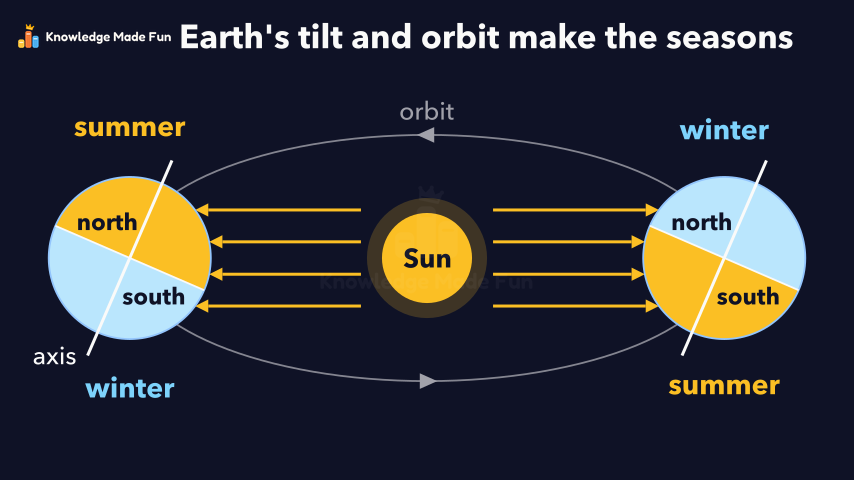
One diagram builds up step by step: Earth travels around the Sun on its orbit, spins on an axis that is tilted, and has a northern and a southern half. Where the northern half leans toward the Sun it gets more direct sunlight and has summer while the south has winter. Half a year later the axis still leans the same way, so the seasons swap, and Earth stays about the same distance from the Sun all year.
Concept: Why we have seasons: Earth's tilt and its orbit around the sun
Anyone can watch two lessons on the website without an account. Signing in is free, no payment and no card, and opens three a day; Plus has no limit.
Loading
In one sentence
The question this lesson answers
Why do we have seasons?
Earth travels around the Sun once a year, on a path called its orbit.
Transcript
What the lesson says
Why do we have seasons?
Earth travels around the Sun once a year, on a path called its orbit.
Earth also spins around an imaginary line called its axis.
Earth's axis is tilted, not straight up and down.
The equator splits Earth into a northern half and a southern half.
Here, the northern half leans toward the Sun.
It gets more direct sunlight, so it has summer.
At the same time, the southern half leans away and has winter.
Half a year later, Earth is on the other side of the Sun.
Its axis still leans the same way.
Now the northern half leans away from the Sun and has winter.
The southern half leans toward the Sun and has summer.
Seasons do not happen because Earth gets closer to the Sun.
Earth stays about the same distance from the Sun all year.
Earth's tilted axis and its trip around the Sun give us the seasons.
Curriculum
Where this fits
- British Columbia, Grade 4
Science, Earth science: local changes caused by Earth's axis, rotation, and orbitBC4-SC-11
Previous: Day and Night: Earth Spins on Its AxisNext: Phases of the Moon: Why the Moon Seems to Change Shape
The outcomes and strands follow the British Columbia curriculum.
Keep going
 1 min 43 s
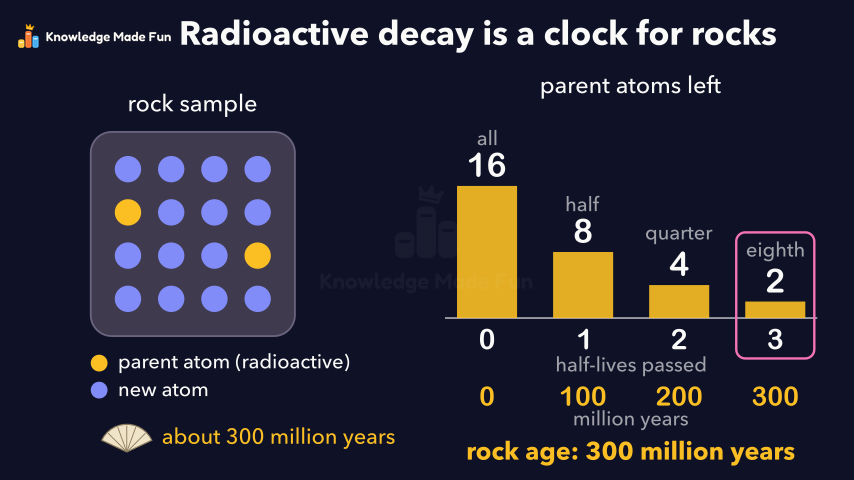
Absolute dating: radioactive decay is a clock for rocks
Grade 7 · 1 min 43 s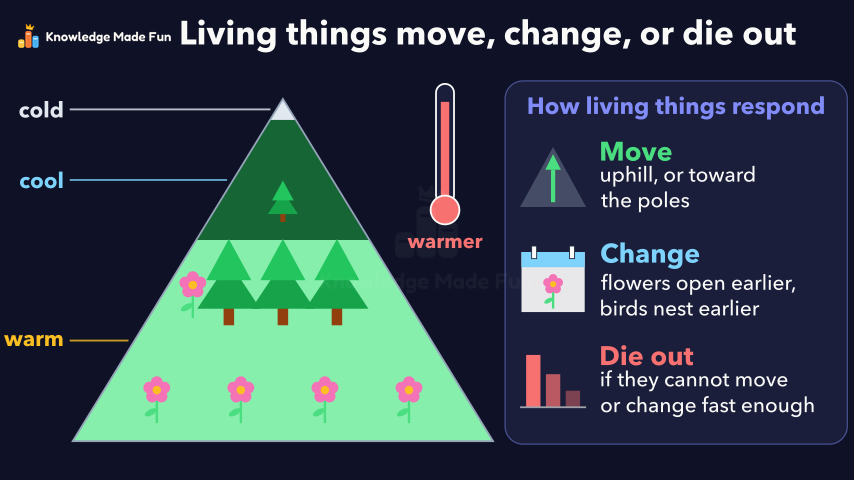 1 min 19 s
Climate Change and Living Things: Move, Change, or Die Out
Grade 7 · 1 min 19 s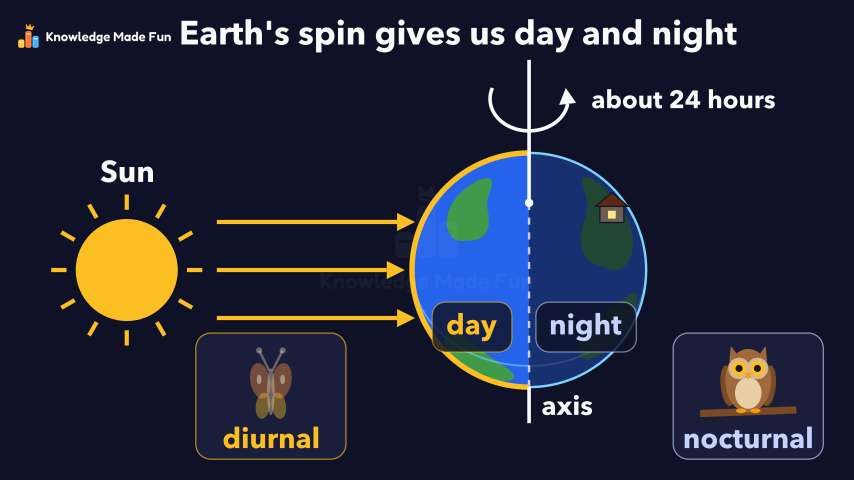 1 min 14 s
Day and Night: Earth Spins on Its Axis
Grade 4 · 1 min 14 s 1 min 50 s
Dynamic equilibrium: balanced but always changing
Grade 9 · 1 min 50 s 1 min 11 s
Earth Materials: From Boulders to Clay
Grade 5 · 1 min 11 s 1 min 11 s
Erosion and Deposition: How Wind, Water and Ice Move Land
Grade 3 · 1 min 11 s 1 min 53 s
From quarks to galaxies: how the universe's matter formed
Grade 10 · 1 min 53 s 47 s
Hot, Warm, Cool and Cold: What Do We Wear?
Kindergarten · 47 s
- All Grade 4 Science lessons
- Create a free account to watch three lessons a day, no payment and no card.