Lesson · Grade 4 · Science
Solar and Lunar Eclipses
- Grade 4
- Science
- 1 min 8 s
- British Columbia
- BC4-SC-14
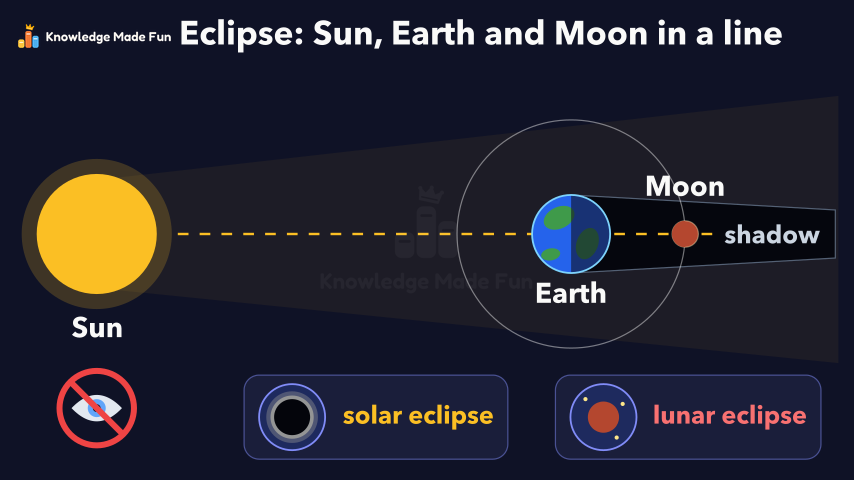
When the Moon passes between the Sun and Earth, its shadow falls on a small part of Earth and people there see the Moon hide the Sun: a solar eclipse. When Earth is between the Sun and the Moon, Earth's shadow falls on the Moon and the Moon can look red: a lunar eclipse.
Anyone can watch two lessons on the website without an account. Signing in is free, no payment and no card, and opens three a day; Plus has no limit.
Loading
In one sentence
The question this lesson answers
What is an eclipse?
The Sun gives off its own light.
Transcript
What the lesson says
What is an eclipse?
The Sun gives off its own light.
The Moon travels around Earth.
Earth and the Moon block sunlight, so they cast shadows.
Sometimes the Moon moves right between the Sun and Earth.
The Moon's shadow falls on a small part of Earth.
People there see the Moon hide the Sun.
This is called a solar eclipse.
Never look straight at the Sun, because it can hurt your eyes.
Other times, Earth is right between the Sun and the Moon.
Then Earth's shadow falls on the Moon.
The Moon can look red.
This is called a lunar eclipse.
Many Indigenous peoples have their own stories about eclipses.
An eclipse happens when the Sun, Earth and Moon line up.
Curriculum
Where this fits
- British Columbia, Grade 4
Science, Earth science: the effects of the relative positions of the sun, moon, and Earth including local First Peoples perspectivesBC4-SC-14
The outcomes and strands follow the British Columbia curriculum.
Keep going
 1 min 43 s
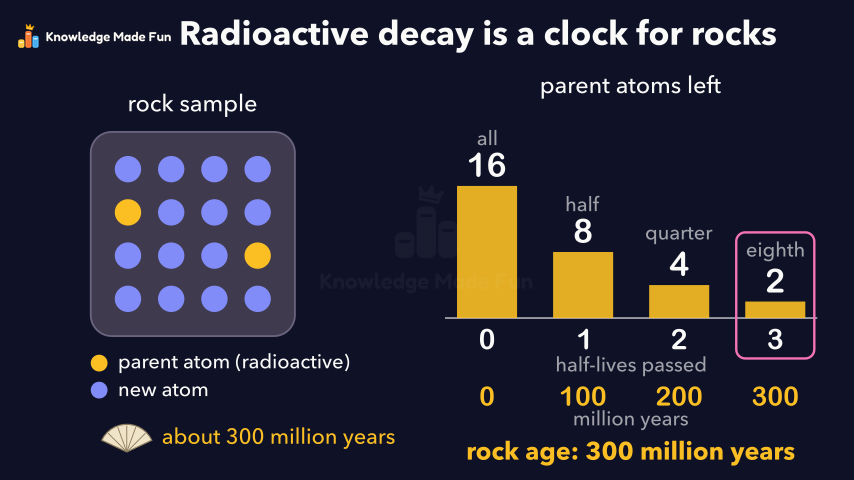
Absolute dating: radioactive decay is a clock for rocks
Grade 7 · 1 min 43 s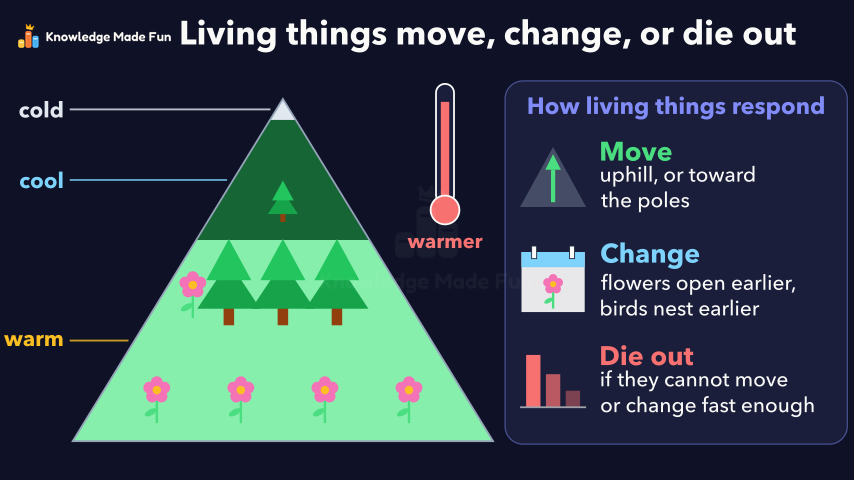 1 min 19 s
Climate Change and Living Things: Move, Change, or Die Out
Grade 7 · 1 min 19 s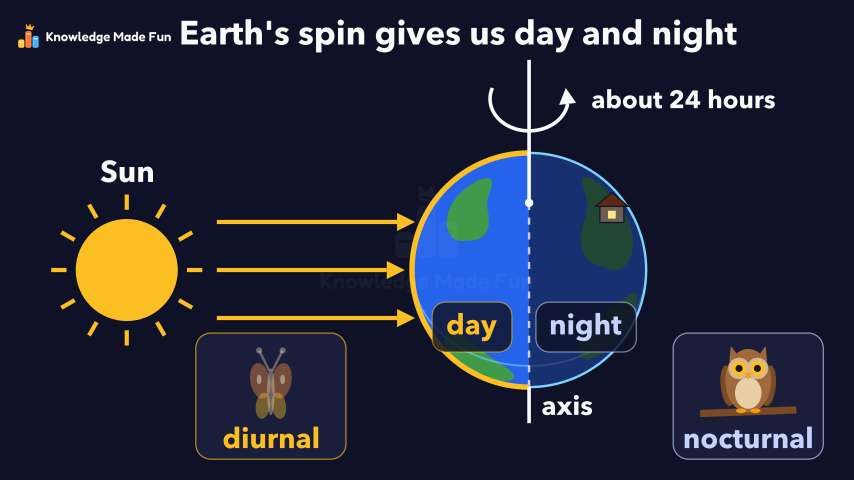 1 min 14 s
Day and Night: Earth Spins on Its Axis
Grade 4 · 1 min 14 s 1 min 50 s
Dynamic equilibrium: balanced but always changing
Grade 9 · 1 min 50 s 1 min 11 s
Earth Materials: From Boulders to Clay
Grade 5 · 1 min 11 s 1 min 11 s
Erosion and Deposition: How Wind, Water and Ice Move Land
Grade 3 · 1 min 11 s 1 min 53 s
From quarks to galaxies: how the universe's matter formed
Grade 10 · 1 min 53 s 47 s
Hot, Warm, Cool and Cold: What Do We Wear?
Kindergarten · 47 s
- All Grade 4 Science lessons
- Create a free account to watch three lessons a day, no payment and no card.