Lesson · Grade 9 · Science
Short Circuits: Why a Shortcut for Current Is Dangerous
- Grade 9
- Science
- 1 min 47 s
- British Columbia
- BC9-SC-19
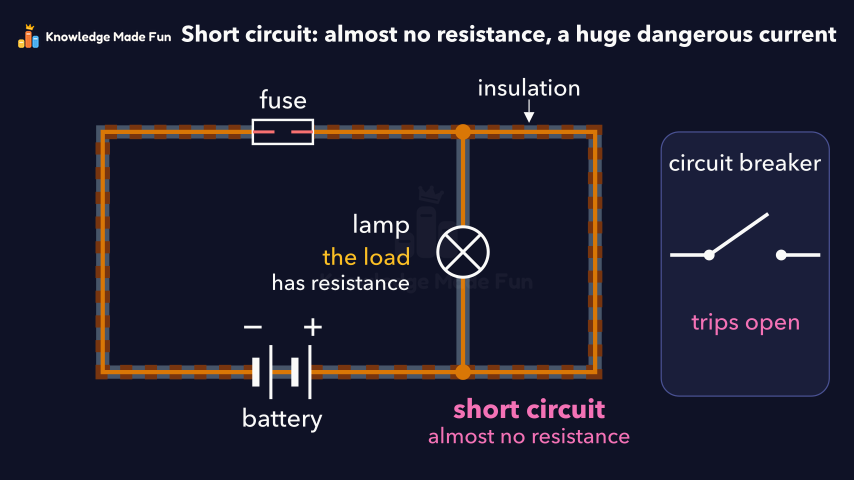
A labelled circuit of a battery, insulated wires and a lamp builds up step by step: electrons flow round the complete loop until a wire touches both sides of the lamp and gives the current a path with almost no resistance. The lamp goes out, the current becomes very large and the wires and battery heat up, risking melted insulation and fire, until a fuse melts and breaks the loop; it also shows a circuit breaker tripping and that "short" means a shortcut, not a short wire.
Anyone can watch two lessons on the website without an account. Signing in is free, no payment and no card, and opens three a day; Plus has no limit.
Loading
In one sentence
The question this lesson answers
What makes a short circuit so dangerous?
Here is a simple circuit: a battery, wires and a lamp.
Transcript
What the lesson says
What makes a short circuit so dangerous?
Here is a simple circuit: a battery, wires and a lamp.
The loop is complete, so electrons can flow all the way around it.
This flow of electrons is called an electric current.
The lamp is the load, the part that uses the energy to make light.
The lamp has resistance: it opposes the current, which keeps the current small.
Now a wire touches both sides of the lamp.
That gives the current a path with almost no resistance, called a short circuit.
Almost all the current now takes the shortcut, so the lamp goes out.
A short circuit does not mean a short wire. This wire is longer than the path through the lamp, yet it still skips the load.
With almost no resistance to limit it, the current becomes very large.
This large current heats the wires, and the battery gets hot too.
The insulation, the plastic coating on the wires, can melt, and a fire can start.
To stop this, many circuits have a fuse, a thin wire that melts if the current gets too large.
The fuse melts and breaks the loop. The loop is no longer complete, so the current stops.
Many buildings use circuit breakers instead: switches that trip, or flip open, when the current is too large.
A short circuit has almost no resistance, so the current becomes huge and dangerous.
Curriculum
Where this fits
- British Columbia, Grade 9
Science, Physics: circuits: must be complete for electrons to flowBC9-SC-19
Previous: Series and Parallel CircuitsNext: AC and DC: Two Ways Current Can Flow
The outcomes and strands follow the British Columbia curriculum.
Keep going
 1 min 51 s
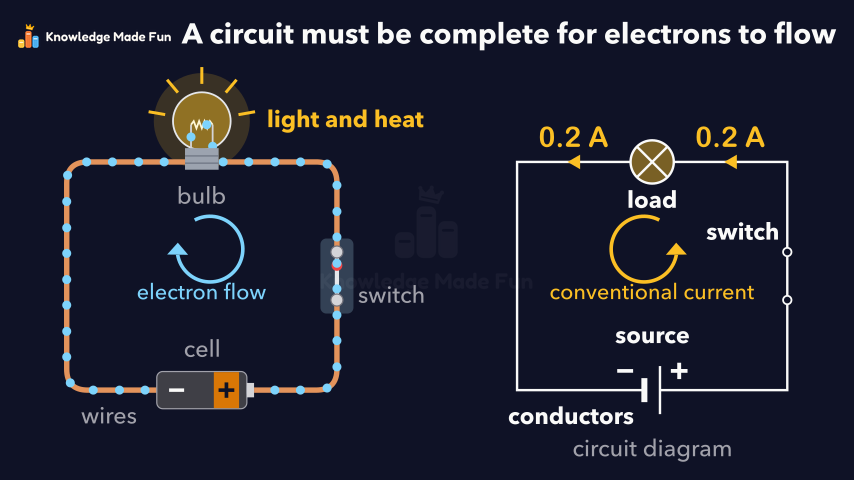
A Complete Circuit: Source, Load, Conductors and Switch
Grade 9 · 1 min 51 s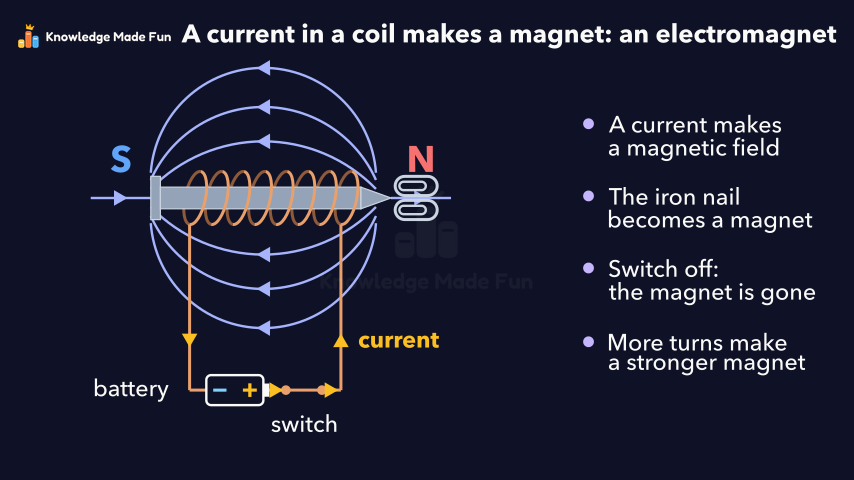 1 min 18 s
A current makes a magnet: the electromagnet
Grade 7 · 1 min 18 s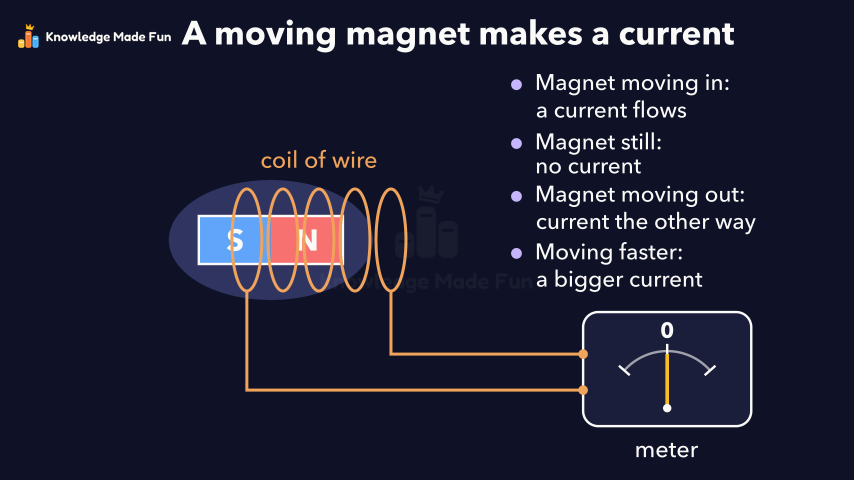 1 min 12 s
A Moving Magnet Makes a Current
Grade 7 · 1 min 12 s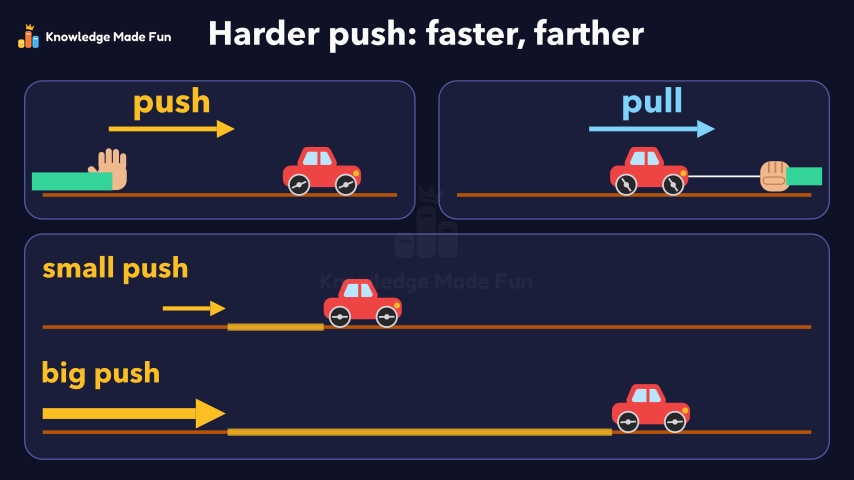 54 s
A Push or a Pull Makes Things Move
Kindergarten · 54 s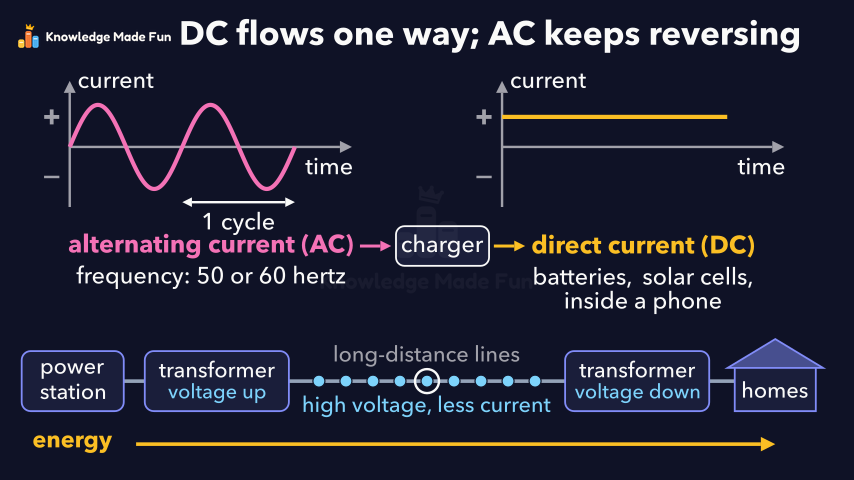 1 min 48 s
AC and DC: Two Ways Current Can Flow
Grade 9 · 1 min 48 s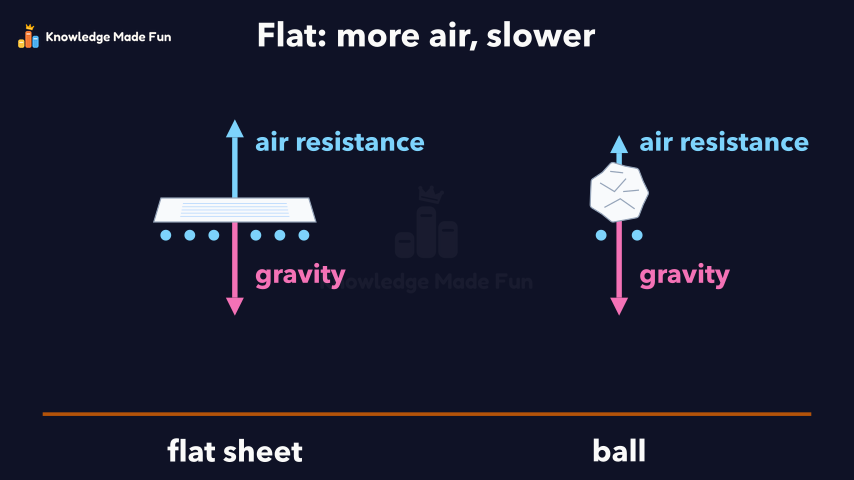 1 min 3 s
Air Resistance: Why a Flat Sheet Falls Slower
Grade 2 · 1 min 3 s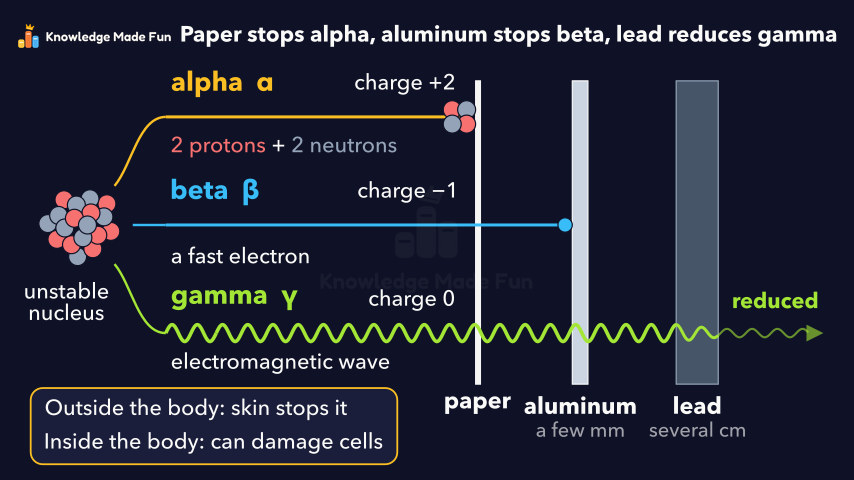 1 min 40 s
Alpha, Beta and Gamma Radiation
Grade 10 · 1 min 40 s 1 min 6 s
Balanced and Unbalanced Forces in Sport and Play
Grade 6 · 1 min 6 s
- All Grade 9 Science lessons
- Create a free account to watch three lessons a day, no payment and no card.