Lesson · Grade 9 · Science
Series and Parallel Circuits
- Grade 9
- Science
- 1 min 52 s
- British Columbia
- BC9-SC-18
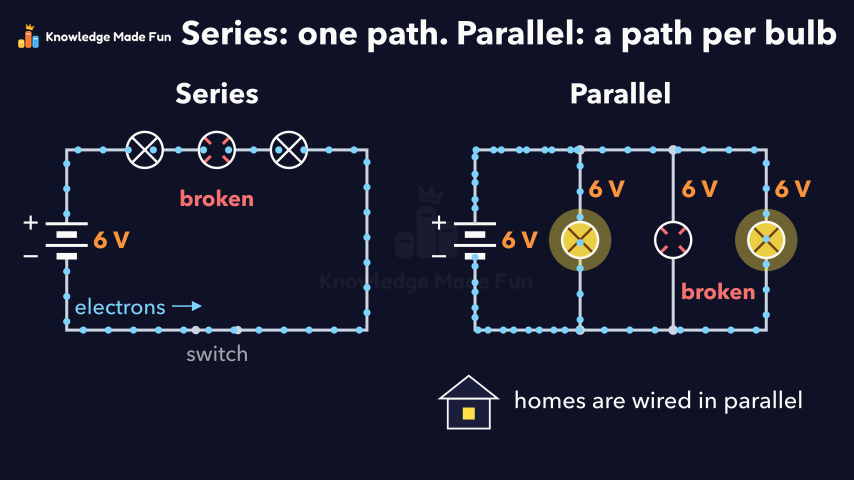
The same three identical bulbs and 6 V battery are wired two ways side by side. In series there is one path: the bulbs share the voltage at 2 V each, carry 0.2 A everywhere, light together (not the nearest first) and all go out when one breaks. In parallel each bulb has its own branch with the full 6 V: the branch currents add up to 0.6 + 0.6 + 0.6 = 1.8 A, the other bulbs stay lit when one breaks, and that is why homes are wired in parallel.
Anyone can watch two lessons on the website without an account. Signing in is free, no payment and no card, and opens three a day; Plus has no limit.
Loading
In one sentence
The question this lesson answers
Three identical bulbs can be wired to a battery in series or in parallel.
Electrons flow only around a complete loop. Closing the switch completes it.
Transcript
What the lesson says
Three identical bulbs can be wired to a battery in series or in parallel.
Electrons flow only around a complete loop. Closing the switch completes it.
The battery's push on the electrons is called voltage, measured in volts. One bulb alone gets all 6 volts.
In series, we add bulbs one after another on the same single path.
Now the three bulbs share the 6 volts, 2 volts each, so each one glows more dimly.
Current is the charge passing a point each second, in amps. In series it is 0.2 amps everywhere.
Many think the bulb nearest the battery lights first or glows brightest.
In fact, all three light at once and glow equally: the current is the same all the way round.
If one bulb breaks, the only path has a gap, so every bulb goes out.
In parallel, each bulb sits on its own branch: a separate path back to the battery.
Each branch gets the full 6 volts, so every bulb glows as brightly as one bulb alone.
The branch currents add up: 0.6 plus 0.6 plus 0.6 makes 1.8 amps through the battery.
If one bulb breaks, only its branch has a gap. The others are still complete, so they stay lit.
That is why homes are wired in parallel: each light gets the full voltage and its own switch.
In series, bulbs share one path. In parallel, each bulb has its own path and the full voltage.
Curriculum
Where this fits
- British Columbia, Grade 9
Science, Physics: circuits: must be complete for electrons to flowBC9-SC-18
Previous: A Complete Circuit: Source, Load, Conductors and SwitchNext: Short Circuits: Why a Shortcut for Current Is Dangerous
The outcomes and strands follow the British Columbia curriculum.
Keep going
 1 min 51 s
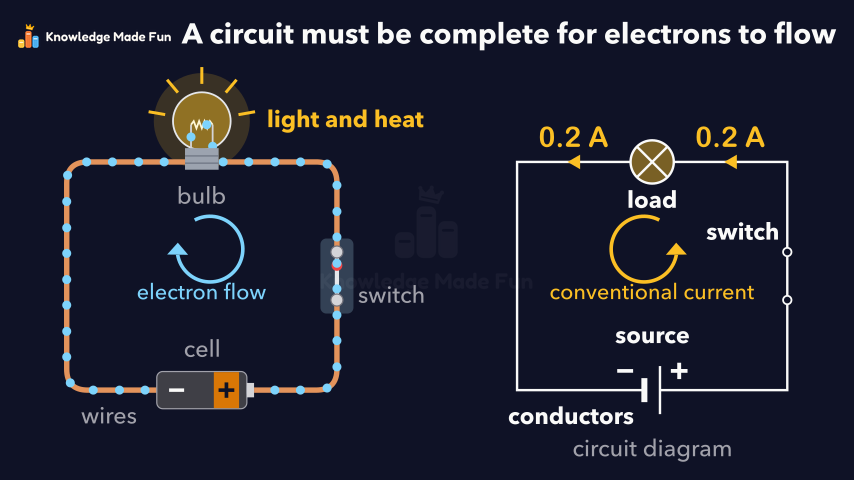
A Complete Circuit: Source, Load, Conductors and Switch
Grade 9 · 1 min 51 s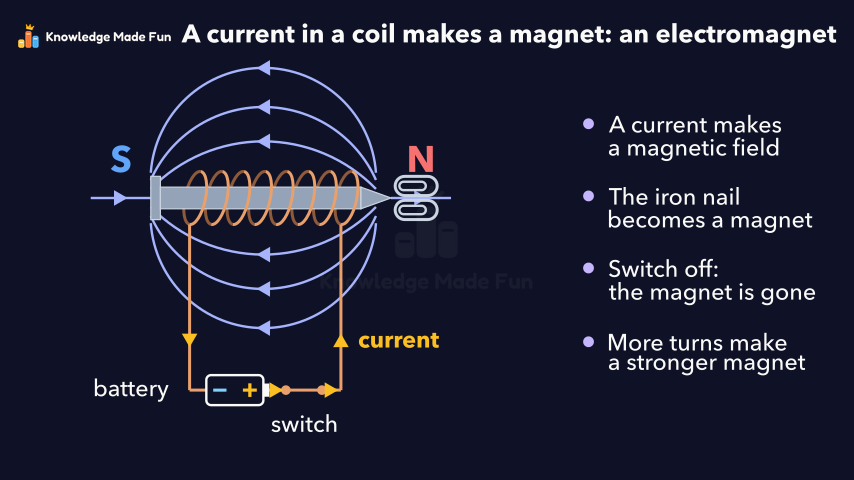 1 min 18 s
A current makes a magnet: the electromagnet
Grade 7 · 1 min 18 s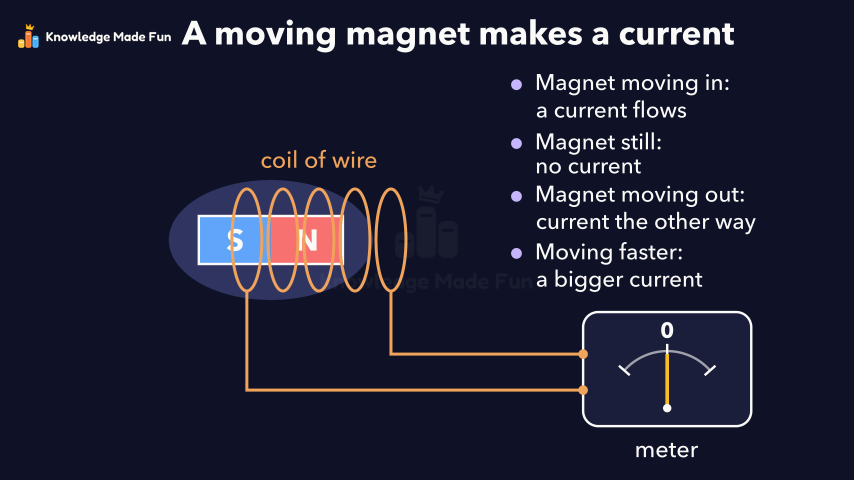 1 min 12 s
A Moving Magnet Makes a Current
Grade 7 · 1 min 12 s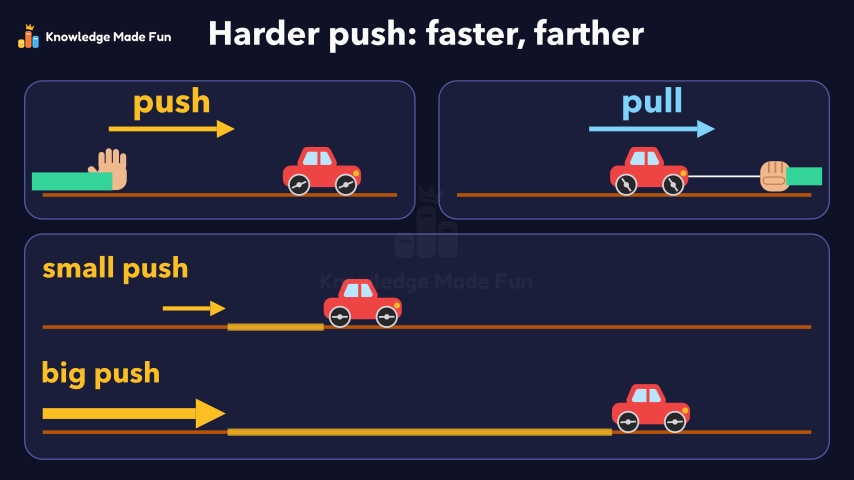 54 s
A Push or a Pull Makes Things Move
Kindergarten · 54 s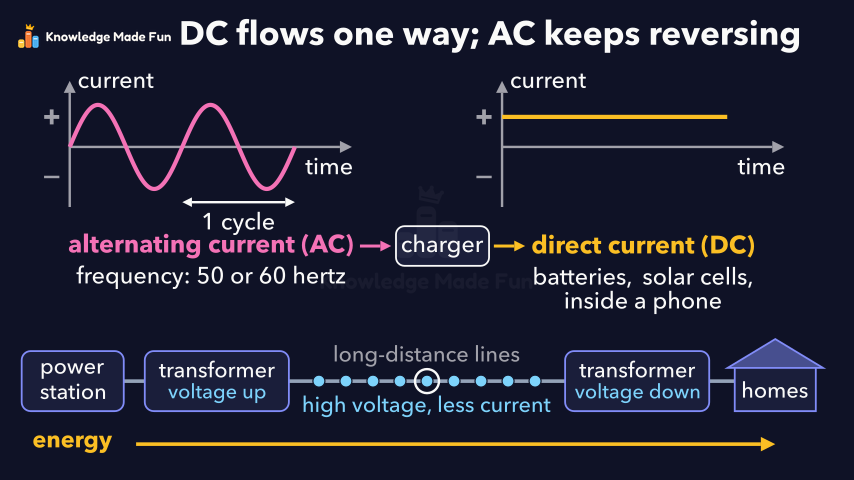 1 min 48 s
AC and DC: Two Ways Current Can Flow
Grade 9 · 1 min 48 s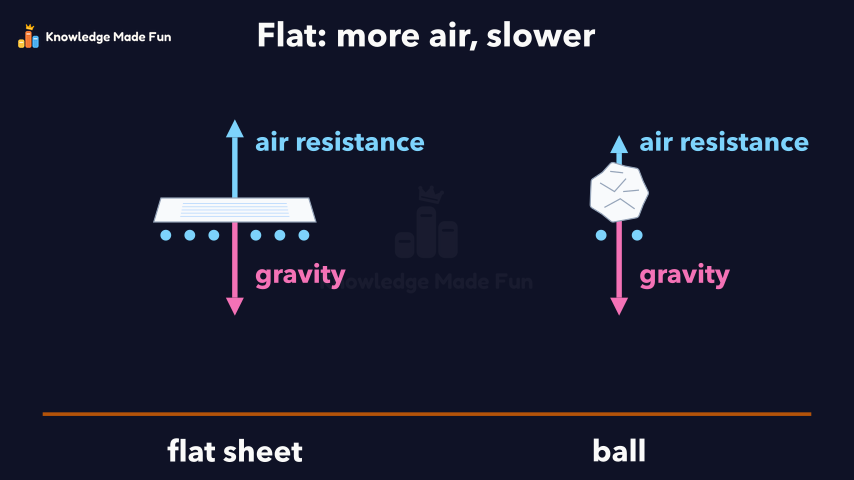 1 min 3 s
Air Resistance: Why a Flat Sheet Falls Slower
Grade 2 · 1 min 3 s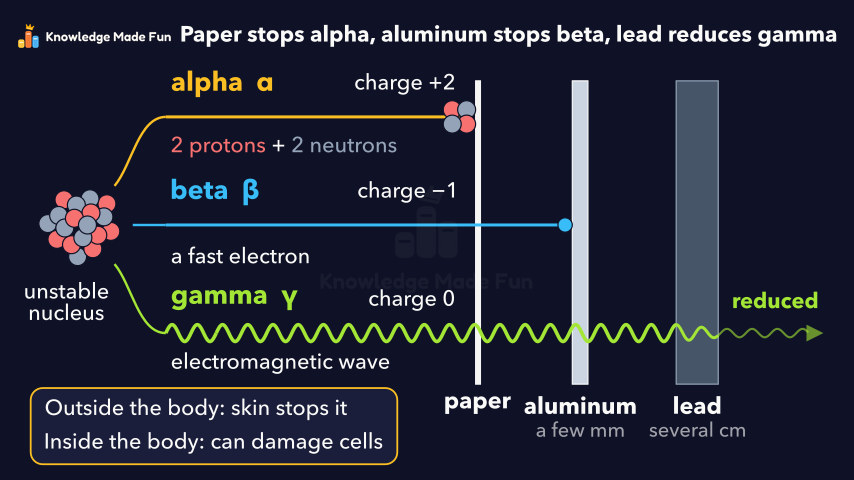 1 min 40 s
Alpha, Beta and Gamma Radiation
Grade 10 · 1 min 40 s 1 min 6 s
Balanced and Unbalanced Forces in Sport and Play
Grade 6 · 1 min 6 s
- All Grade 9 Science lessons
- Create a free account to watch three lessons a day, no payment and no card.