Lesson · Grade 7 · Science
Relative Dating: Reading Rock Layers
- Grade 7
- Science
- 1 min 19 s
- British Columbia
- BC7-SC-34
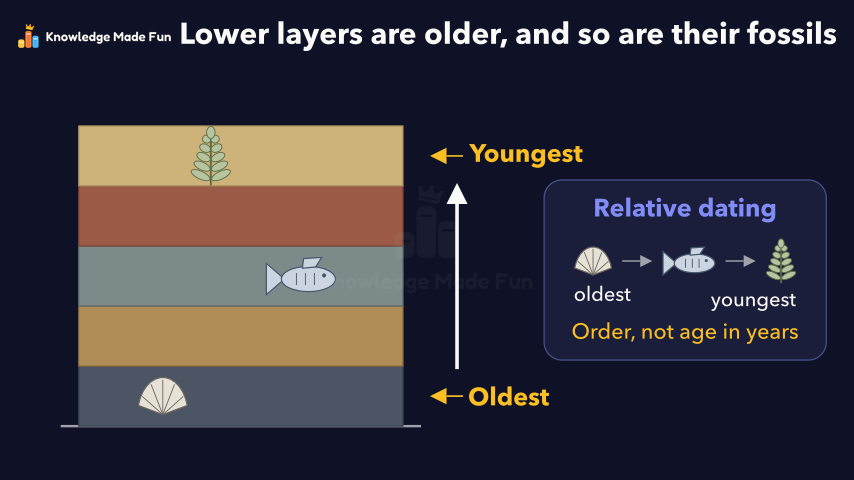
Sediment settles under water and hardens into five rock layers that build up one at a time, burying a shell, a fish and a fern leaf as they form, so the bottom layer is tagged oldest and the top layer youngest with an arrow of time between them. A working panel then puts the three fossils in order from oldest to youngest, names this relative dating, notes that it gives the order but not an age in years, and links the different fossils in different layers to living things changing over time.
Anyone can watch two lessons on the website without an account. Signing in is free, no payment and no card, and opens three a day; Plus has no limit.
Loading
In one sentence
The question this lesson answers
Here is a place where sand and mud settle under water. How can we tell which rock layers are older?
Sand, mud and the remains of living things settle on the bottom, and slowly harden into a layer of rock.
Transcript
What the lesson says
Here is a place where sand and mud settle under water. How can we tell which rock layers are older?
Sand, mud and the remains of living things settle on the bottom, and slowly harden into a layer of rock.
Over a very long time, each new layer forms on top of the one before.
Layer after layer builds up, over millions of years.
So the layer at the bottom is the oldest. It was there first.
The layer at the top is the youngest. It formed last.
In rock that has not been disturbed, older layers are below and younger layers are above. This rule is called superposition.
A fossil is as old as the layer it is buried in.
So the shell is older than the fish, and the fish is older than the leaf.
Putting rocks and fossils in order from oldest to youngest is called relative dating.
It tells us the order, but not the age in years.
Different layers hold different fossils. That shows that living things on Earth have changed over time.
Remember: lower layers are older, and so are the fossils inside them.
Curriculum
Where this fits
- British Columbia, Grade 7
Science, Earth science: the fossil record provides evidence for changes in biodiversity over geological timeBC7-SC-34
Previous: The Geologic Time Scale: Reading Earth's History in Rock LayersNext: Absolute dating: radioactive decay is a clock for rocks
The outcomes and strands follow the British Columbia curriculum.
Keep going
 1 min 43 s
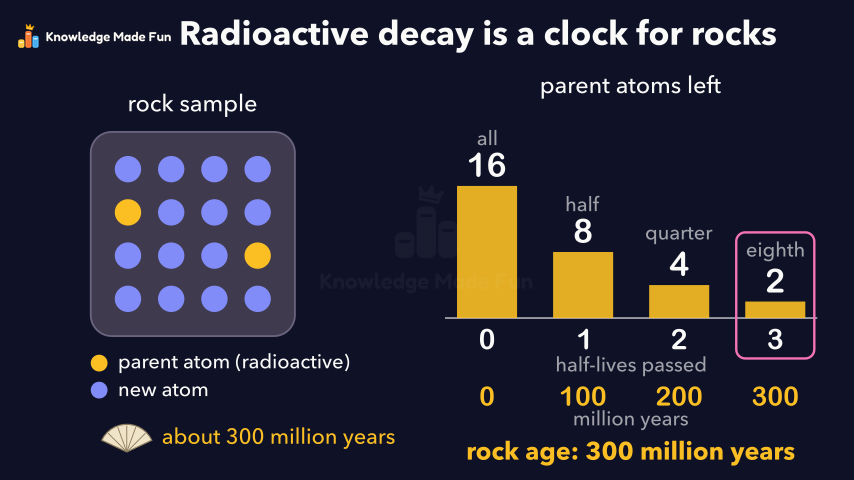
Absolute dating: radioactive decay is a clock for rocks
Grade 7 · 1 min 43 s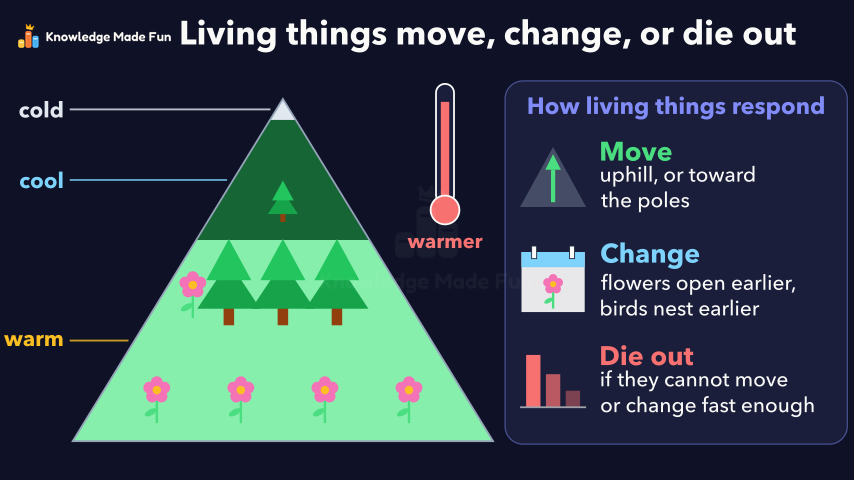 1 min 19 s
Climate Change and Living Things: Move, Change, or Die Out
Grade 7 · 1 min 19 s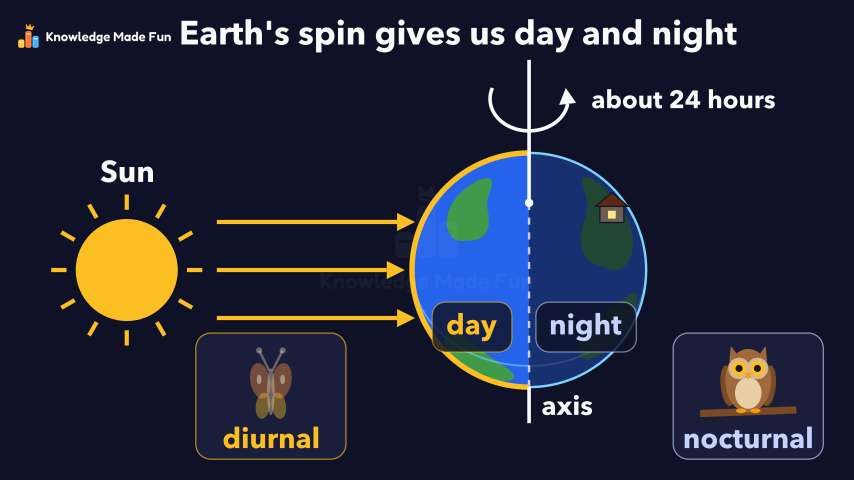 1 min 14 s
Day and Night: Earth Spins on Its Axis
Grade 4 · 1 min 14 s 1 min 50 s
Dynamic equilibrium: balanced but always changing
Grade 9 · 1 min 50 s 1 min 11 s
Earth Materials: From Boulders to Clay
Grade 5 · 1 min 11 s 1 min 11 s
Erosion and Deposition: How Wind, Water and Ice Move Land
Grade 3 · 1 min 11 s 1 min 53 s
From quarks to galaxies: how the universe's matter formed
Grade 10 · 1 min 53 s 47 s
Hot, Warm, Cool and Cold: What Do We Wear?
Kindergarten · 47 s
- All Grade 7 Science lessons
- Create a free account to watch three lessons a day, no payment and no card.