Lesson · Grade 10 · Science
Kinetic energy: why doubling speed gives four times the energy
- Grade 10
- Science
- 2 min 3 s
- British Columbia
- BC10-SC-38
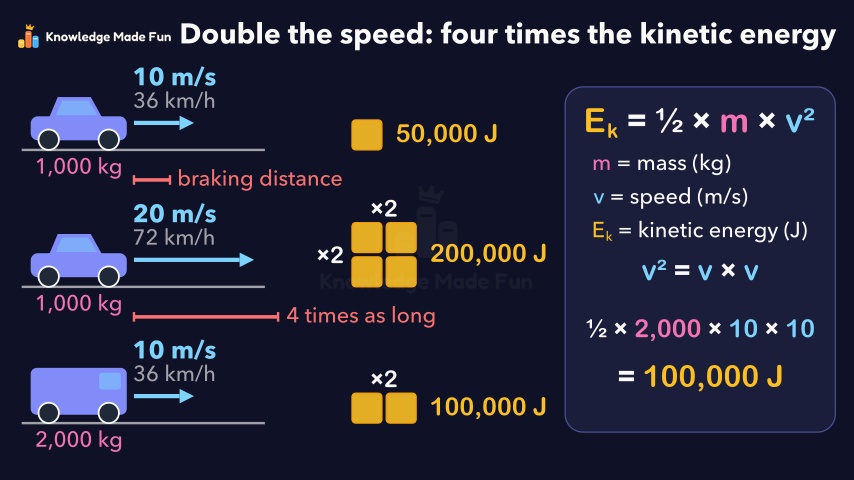
Using Ek = ½ × m × v², the video works out that a 1,000 kg car has 50,000 J of kinetic energy at 10 m/s and 200,000 J at 20 m/s, drawn as one energy block and then a 2 × 2 square of four blocks, because speed is squared. It then shows that a 2,000 kg van at 10 m/s has only twice the energy, and that with the same braking force, twice the speed needs four times the braking distance.
Anyone can watch two lessons on the website without an account. Signing in is free, no payment and no card, and opens three a day; Plus has no limit.
Loading
In one sentence
The question this lesson answers
If a car goes twice as fast, does it have twice as much energy?
Kinetic energy is the energy an object has because it is moving.
Transcript
What the lesson says
If a car goes twice as fast, does it have twice as much energy?
Kinetic energy is the energy an object has because it is moving.
Kinetic energy is one half, times mass, times speed squared.
Here m is the mass in kilograms, v is the speed in metres per second, and kinetic energy is measured in joules.
Speed squared means speed times speed.
Take a 1,000 kilogram car moving at 10 metres per second, which is 36 kilometres per hour.
Its kinetic energy is one half, times 1,000, times 10, times 10, which is 50,000 joules.
We will draw 50,000 joules as one block.
Now double the speed to 20 metres per second, which is 72 kilometres per hour.
Now it is one half, times 1,000, times 20, times 20, which is 200,000 joules.
That is one, two, three, four blocks: four times the energy, not twice.
Why? Speed appears twice in v times v, so doubling it gives two times two, which is four.
Now take a 2,000 kilogram van, twice the mass, at the same 10 metres per second.
Its energy is one half, times 2,000, times 10, times 10, which is 100,000 joules: only two blocks.
Mass is not squared, so doubling the mass only doubles the energy.
The brakes must remove all this energy, so with the same braking force, the braking distance is four times as long.
So remember: double the speed, and the kinetic energy becomes four times as big.
Curriculum
Where this fits
- British Columbia, Grade 10
Science 10, Physics: potential and kinetic energyBC10-SC-38
Previous: Gravitational Potential Energy: Ep = mghNext: Open and Closed Systems: Following Energy Across the Boundary
The outcomes and strands follow the British Columbia curriculum.
Keep going
 1 min 51 s
A Complete Circuit: Source, Load, Conductors and Switch
Grade 9 · 1 min 51 s 1 min 18 s
A current makes a magnet: the electromagnet
Grade 7 · 1 min 18 s 1 min 12 s
A Moving Magnet Makes a Current
Grade 7 · 1 min 12 s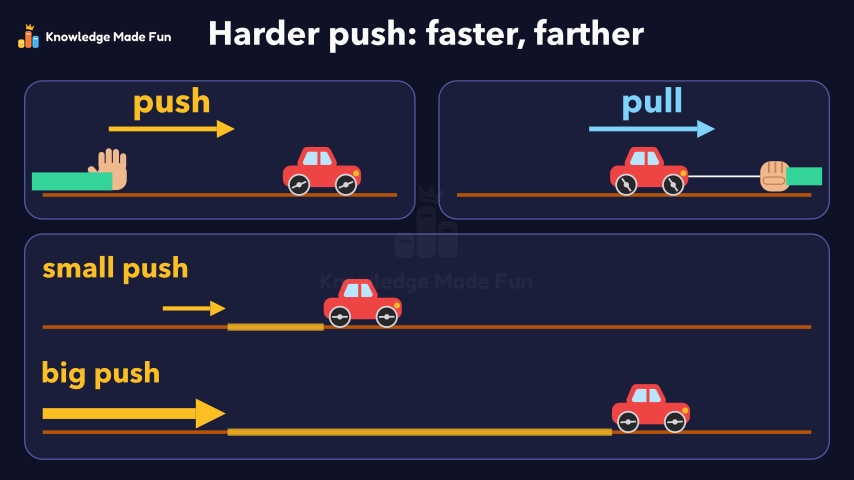 54 s
A Push or a Pull Makes Things Move
Kindergarten · 54 s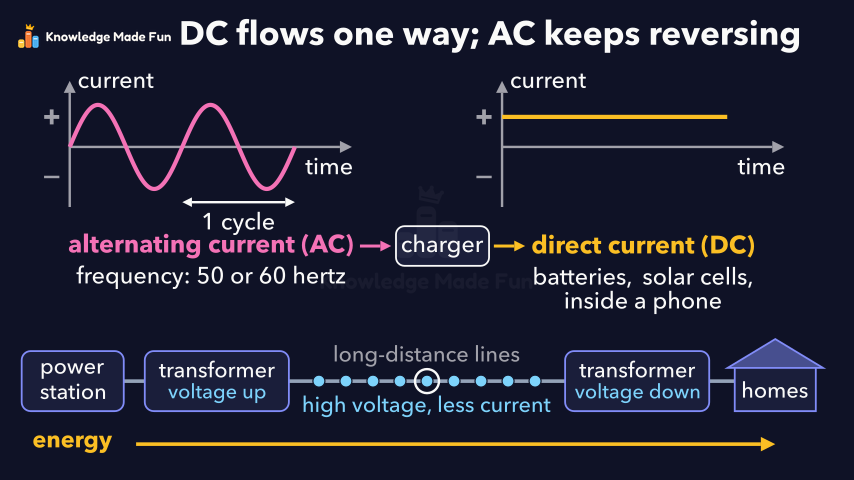 1 min 48 s
AC and DC: Two Ways Current Can Flow
Grade 9 · 1 min 48 s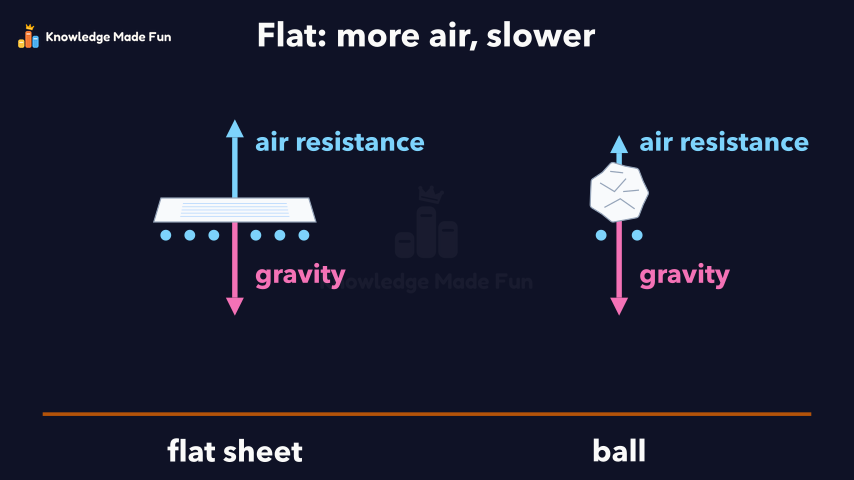 1 min 3 s
Air Resistance: Why a Flat Sheet Falls Slower
Grade 2 · 1 min 3 s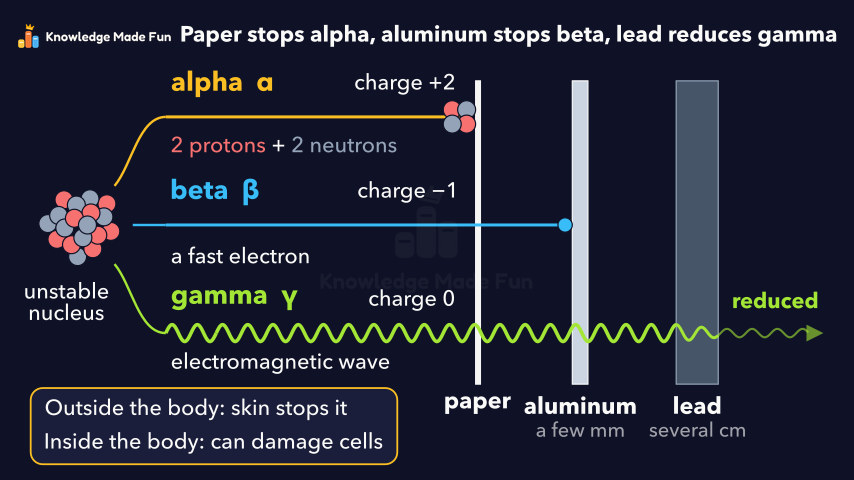 1 min 40 s
Alpha, Beta and Gamma Radiation
Grade 10 · 1 min 40 s 1 min 6 s
Balanced and Unbalanced Forces in Sport and Play
Grade 6 · 1 min 6 s
- All Grade 10 Science lessons
- Create a free account to watch three lessons a day, no payment and no card.