Lesson · Grade 9 · Science
How People Tip the Carbon Balance
- Grade 9
- Science
- 2 min
- British Columbia
- BC9-SC-33
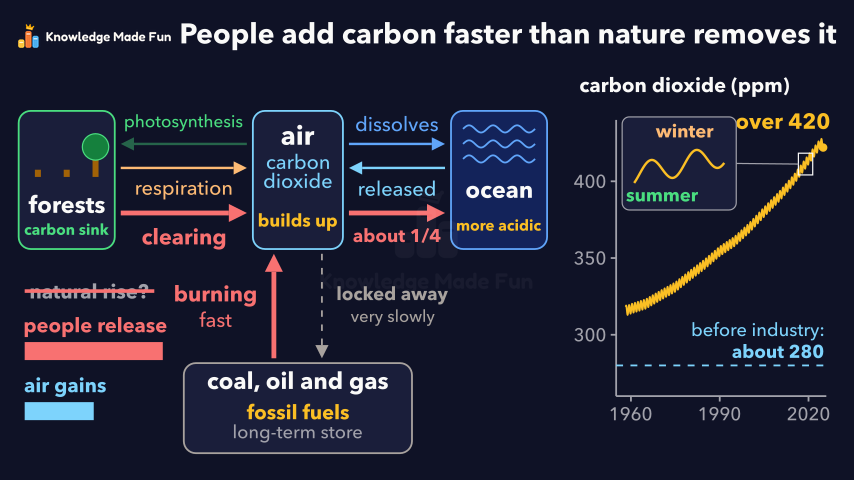
A carbon cycle diagram builds up step by step, from the stores and natural flows that roughly balanced before industry to burning fossil fuels and clearing forests, which add carbon far faster than nature locks it away, while the ocean takes up about a quarter and becomes more acidic. A graph shows carbon dioxide rising from about 280 ppm to over 420 ppm, with its yearly wiggle, and the evidence that the rise is not natural: people release about twice what the air gains, and the ocean is taking carbon in.
Concept: How people tip the carbon balance: fossil fuels and forests
Anyone can watch two lessons on the website without an account. Signing in is free, no payment and no card, and opens three a day; Plus has no limit.
Loading
In one sentence
The question this lesson answers
Carbon dioxide in the air is rising. Is that natural, or caused by people?
Carbon is held in stores: the air, forests, the ocean, and coal, oil and gas.
Transcript
What the lesson says
Carbon dioxide in the air is rising. Is that natural, or caused by people?
Carbon is held in stores: the air, forests, the ocean, and coal, oil and gas.
Plants take in carbon dioxide by photosynthesis, and respiration returns it to the air.
The ocean swaps carbon dioxide with the air too. Before industry, these flows roughly balanced.
Coal, oil and gas are fossil fuels, a long-term store of carbon from ancient living things.
Burning them moves this carbon into the air far faster than nature locks it away.
Growing forests are a carbon sink: they take in more carbon than they release.
Clearing forests removes a sink, and burning or rotting wood releases more carbon dioxide.
The ocean takes up about a quarter of the carbon dioxide people release.
It forms a weak acid in seawater, so the ocean becomes more acidic.
Much of the rest builds up in the air.
The graph shows parts per million, or ppm: carbon dioxide molecules in every million molecules of air.
It was about 280 ppm before industry. Measurements since 1958 show it rising to over 420 in the 2020s.
The yearly wiggle is northern plants taking in carbon dioxide in summer and returning it in winter.
Some people think this rise is natural. The evidence says no.
Each year, people release about twice as much carbon dioxide as the air gains.
And the ocean is taking carbon in, not giving it out.
People add carbon faster than nature removes it, by burning fossil fuels and clearing forests.
Curriculum
Where this fits
- British Columbia, Grade 9
Science, Earth science: sustainability of systemsBC9-SC-33
The outcomes and strands follow the British Columbia curriculum.
Keep going
 1 min 43 s
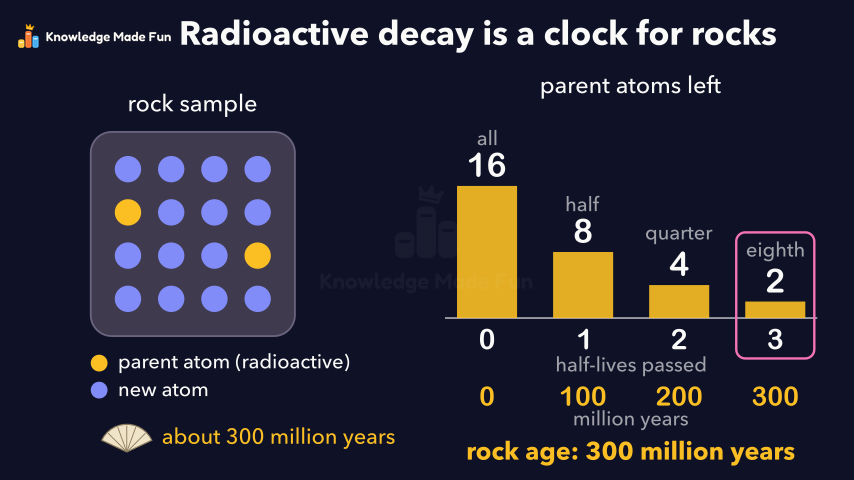
Absolute dating: radioactive decay is a clock for rocks
Grade 7 · 1 min 43 s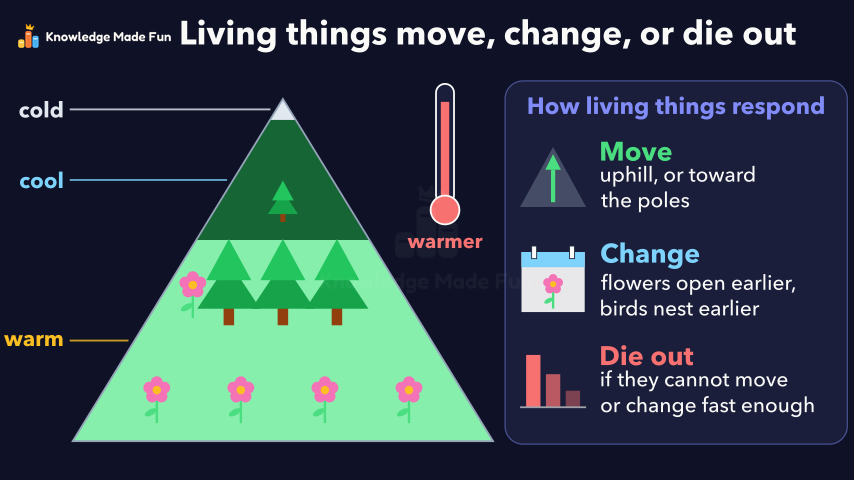 1 min 19 s
Climate Change and Living Things: Move, Change, or Die Out
Grade 7 · 1 min 19 s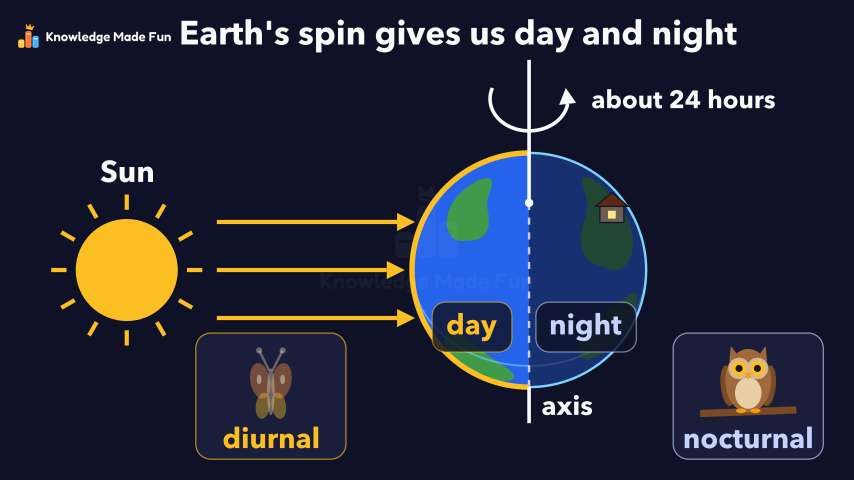 1 min 14 s
Day and Night: Earth Spins on Its Axis
Grade 4 · 1 min 14 s 1 min 50 s
Dynamic equilibrium: balanced but always changing
Grade 9 · 1 min 50 s 1 min 11 s
Earth Materials: From Boulders to Clay
Grade 5 · 1 min 11 s 1 min 11 s
Erosion and Deposition: How Wind, Water and Ice Move Land
Grade 3 · 1 min 11 s 1 min 53 s
From quarks to galaxies: how the universe's matter formed
Grade 10 · 1 min 53 s 47 s
Hot, Warm, Cool and Cold: What Do We Wear?
Kindergarten · 47 s
- All Grade 9 Science lessons
- Create a free account to watch three lessons a day, no payment and no card.