Lesson · Grade 7 · Science
Geothermal Power: Electricity from Hot Rock
- Grade 7
- Science
- 1 min 34 s
- British Columbia
- BC7-SC-30
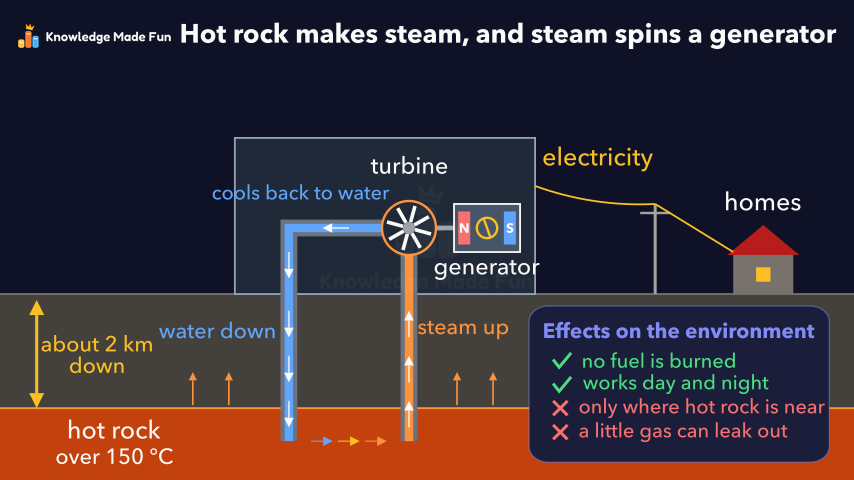
A cross-section diagram builds up step by step: hot rock about 2 km down at over 150 °C, two wells drilled into it, cold water pumped down one well, hot water and steam rushing up the other into a turbine and generator, power lines to homes, and the used steam cooling back to water to go round again. A short panel then weighs the environmental effects, no fuel burned and power day and night against only working where hot rock is near and a little gas leaking out, before a one-line recap.
Concept: Geothermal power
Anyone can watch two lessons on the website without an account. Signing in is free, no payment and no card, and opens three a day; Plus has no limit.
Loading
In one sentence
The question this lesson answers
How can heat from deep in the ground make electricity? Let us find out.
Deep underground, the rock is very hot. In some places it is over 150 degrees Celsius only a couple of kilometres down.
Transcript
What the lesson says
How can heat from deep in the ground make electricity? Let us find out.
Deep underground, the rock is very hot. In some places it is over 150 degrees Celsius only a couple of kilometres down.
Two deep wells are drilled down into the hot rock.
Cold water is pumped down one of the wells.
The water soaks through cracks in the hot rock and gets very hot.
Hot water and steam rush up the other well to the surface.
At the power plant, the steam pushes on the blades of a turbine and spins it.
The turbine turns a generator. Inside, a coil spinning near magnets makes electricity.
Power lines carry the electricity to homes and schools.
The used steam cools back into water and is pumped down again, so the same water goes round and round.
The inside of the Earth stays hot for millions of years, so geothermal power is renewable.
No fuel is burned, so there is almost no smoke, and it works day and night, in any weather.
But it only works in places where hot rock is close to the surface, and a little gas from underground can leak out of the wells.
Heat from hot rock turns water into steam, the steam spins a turbine and a generator, and that makes electricity.
Curriculum
Where this fits
- British Columbia, Grade 7
Science, Physics: electricity is generated in different ways with different environmental impactsBC7-SC-30
Previous: Coal Power: From Burning Coal to ElectricityNext: Comparing the Impact of Each Energy Source
The outcomes and strands follow the British Columbia curriculum.
Keep going
 1 min 51 s
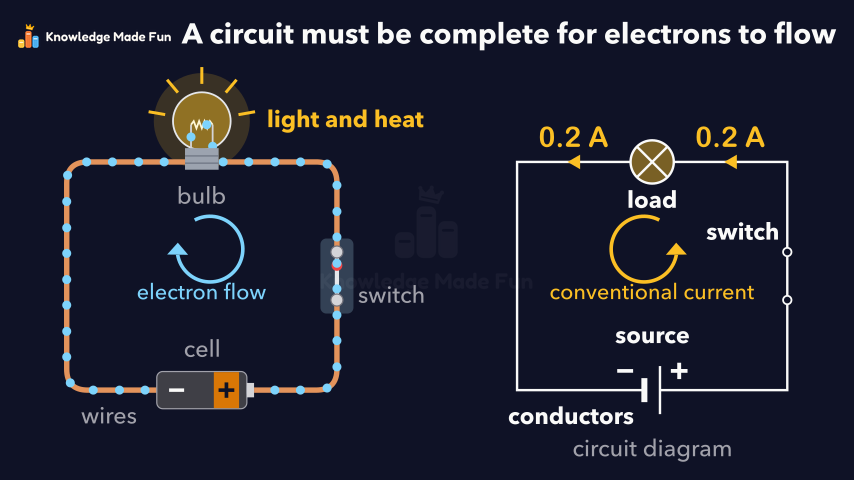
A Complete Circuit: Source, Load, Conductors and Switch
Grade 9 · 1 min 51 s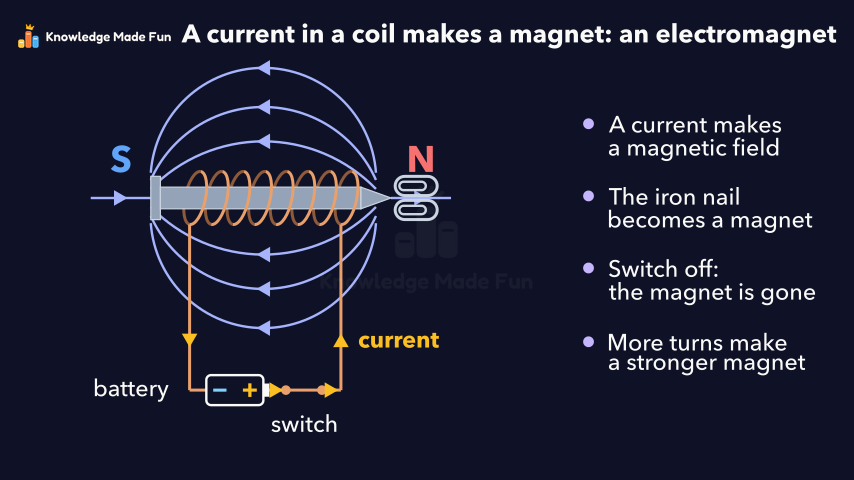 1 min 18 s
A current makes a magnet: the electromagnet
Grade 7 · 1 min 18 s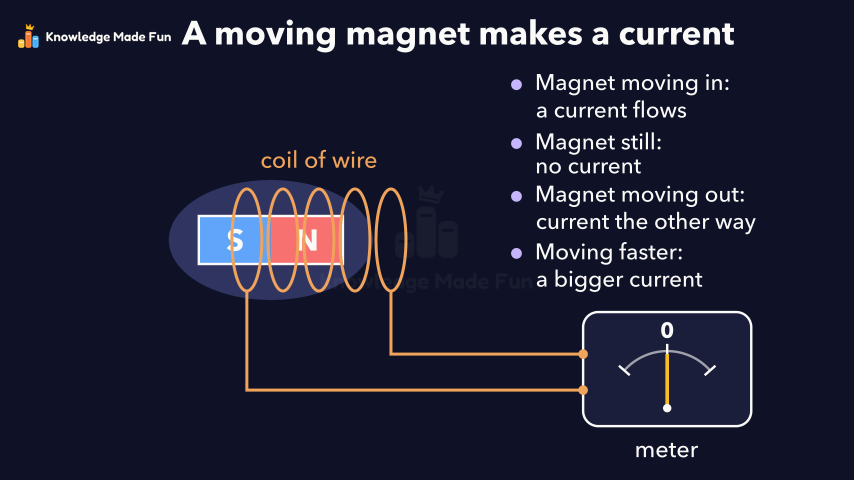 1 min 12 s
A Moving Magnet Makes a Current
Grade 7 · 1 min 12 s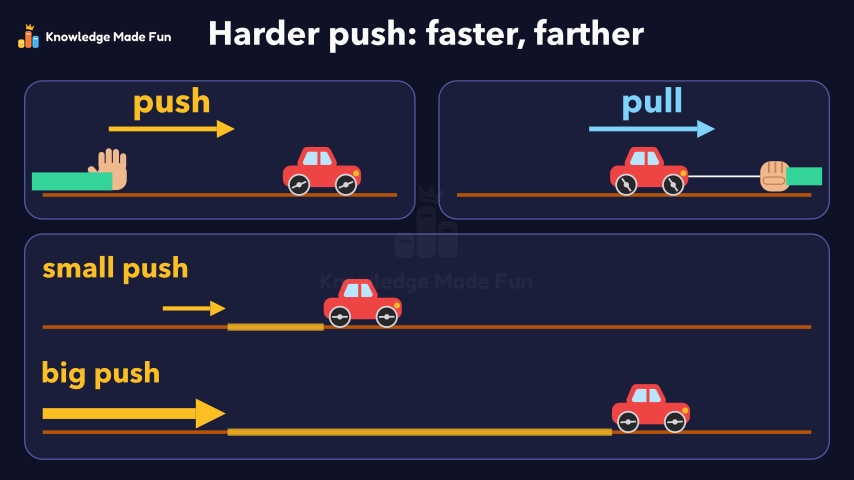 54 s
A Push or a Pull Makes Things Move
Kindergarten · 54 s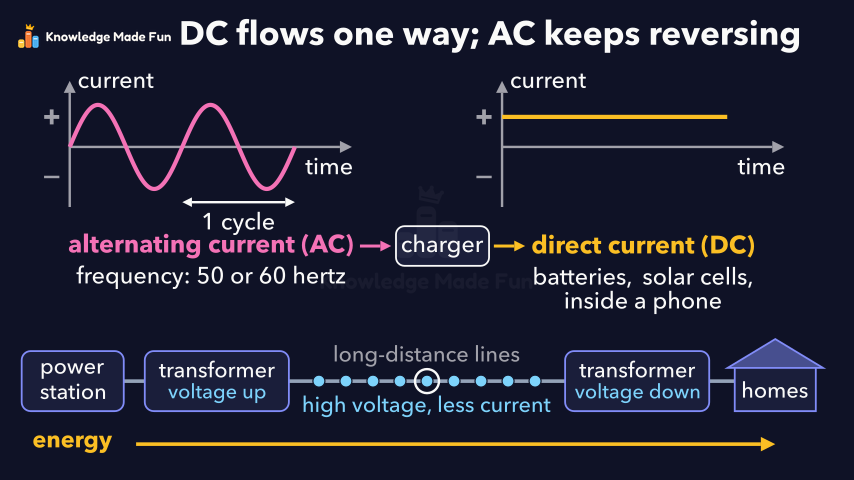 1 min 48 s
AC and DC: Two Ways Current Can Flow
Grade 9 · 1 min 48 s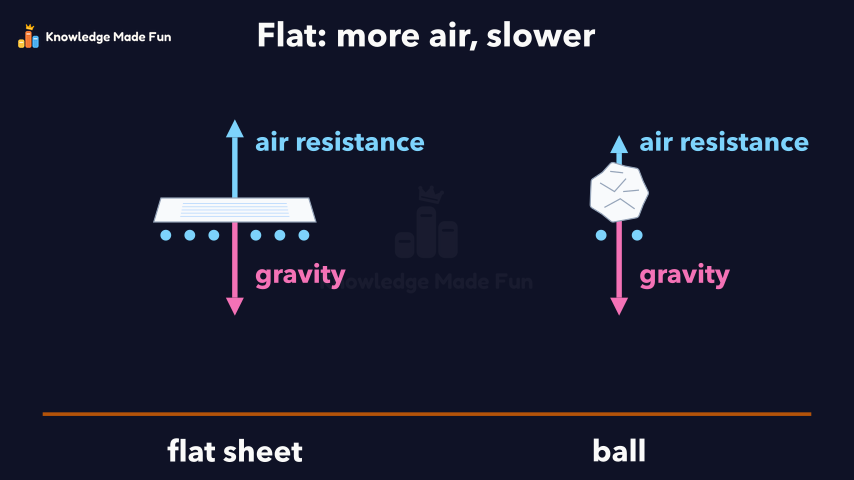 1 min 3 s
Air Resistance: Why a Flat Sheet Falls Slower
Grade 2 · 1 min 3 s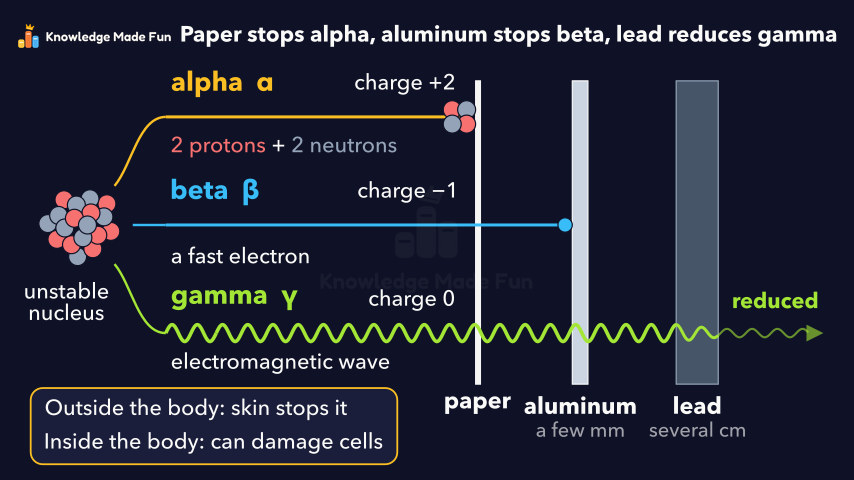 1 min 40 s
Alpha, Beta and Gamma Radiation
Grade 10 · 1 min 40 s 1 min 6 s
Balanced and Unbalanced Forces in Sport and Play
Grade 6 · 1 min 6 s
- All Grade 7 Science lessons
- Create a free account to watch three lessons a day, no payment and no card.