Lesson · Grade 7 · Science
Comparing the Impact of Each Energy Source
- Grade 7
- Science
- 1 min 20 s
- British Columbia
- BC7-SC-31
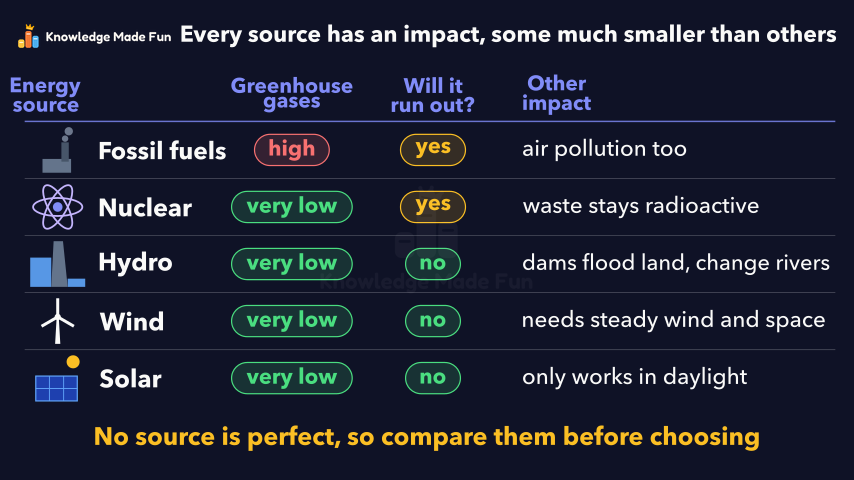
A comparison chart builds up one row at a time for five ways of making electricity (fossil fuels, nuclear, hydro, wind and solar), each drawn as a small icon and answered against three questions: how much greenhouse gas it adds, whether it will run out, and one other impact. The columns are then compared to show that fossil fuels add by far the most greenhouse gases and that water, wind and sunlight never run out, ending on the recap that every source has an impact but some are much smaller than others.
Anyone can watch two lessons on the website without an account. Signing in is free, no payment and no card, and opens three a day; Plus has no limit.
Loading
In one sentence
The question this lesson answers
Electricity can be made in many different ways, and each one affects the environment differently.
Let us compare them with three questions about their impact.
Transcript
What the lesson says
Electricity can be made in many different ways, and each one affects the environment differently.
Let us compare them with three questions about their impact.
Burning coal, oil or gas releases lots of greenhouse gases, and air pollution too.
Fossil fuels took millions of years to form, so one day they will run out.
A nuclear power station releases very few greenhouse gases.
But its waste stays radioactive for thousands of years, and the uranium fuel will run out too.
Hydro power from flowing water is clean and will not run out, but its dams flood land and change rivers.
Wind turbines are clean and will not run out, but they need steady wind and plenty of space.
Solar panels are clean and will not run out, but they only make electricity in daylight.
Look down the first column: fossil fuels add by far the most greenhouse gases.
Water, wind and sunlight are renewable, so they will never run out.
Every way of making electricity has an impact, but some impacts are much smaller than others.
Curriculum
Where this fits
The outcomes and strands follow the British Columbia curriculum.
Keep going
 1 min 51 s
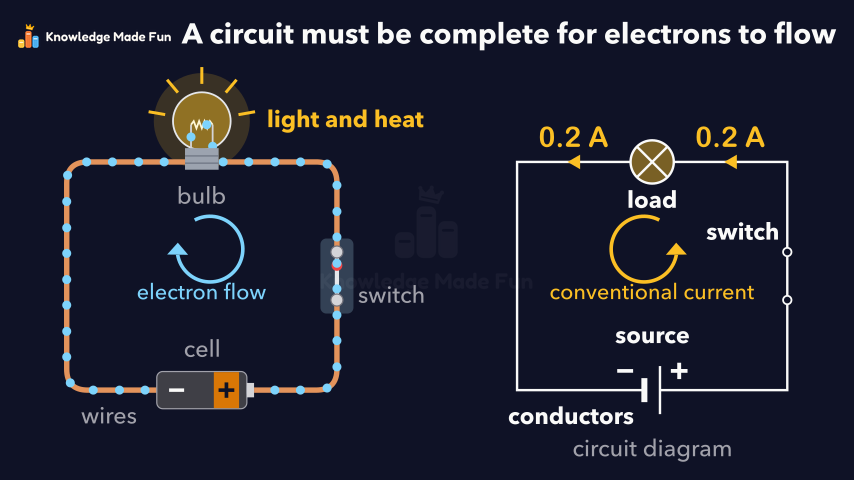
A Complete Circuit: Source, Load, Conductors and Switch
Grade 9 · 1 min 51 s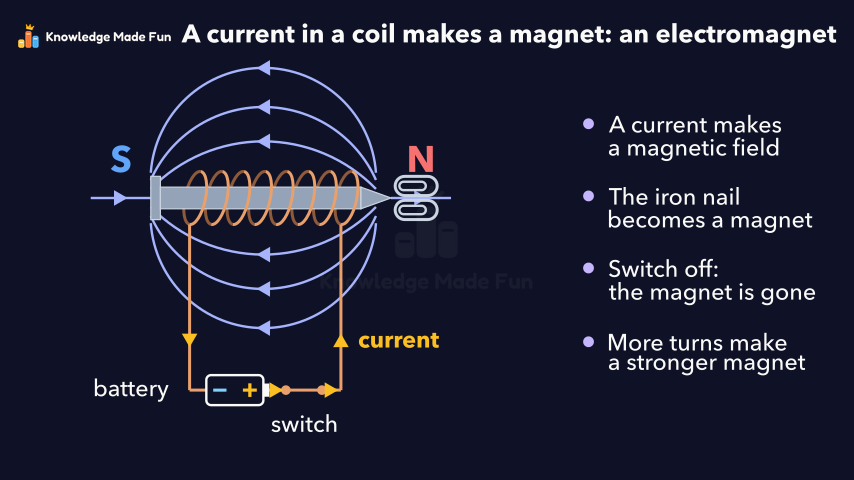 1 min 18 s
A current makes a magnet: the electromagnet
Grade 7 · 1 min 18 s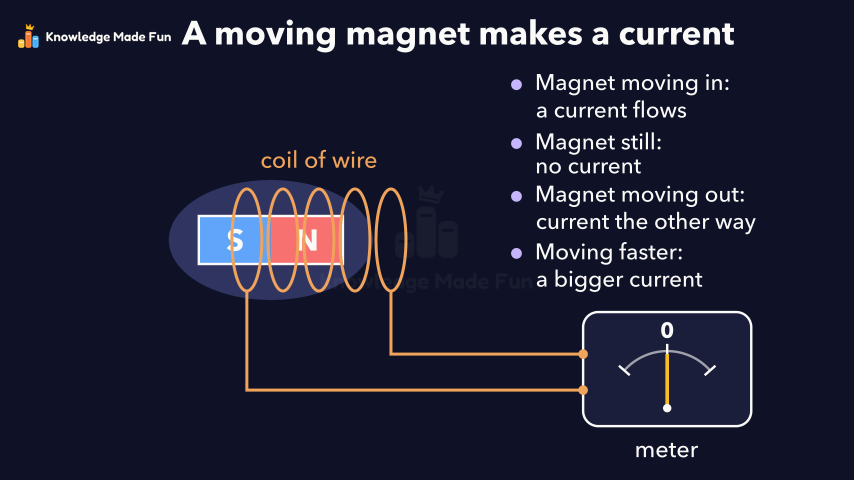 1 min 12 s
A Moving Magnet Makes a Current
Grade 7 · 1 min 12 s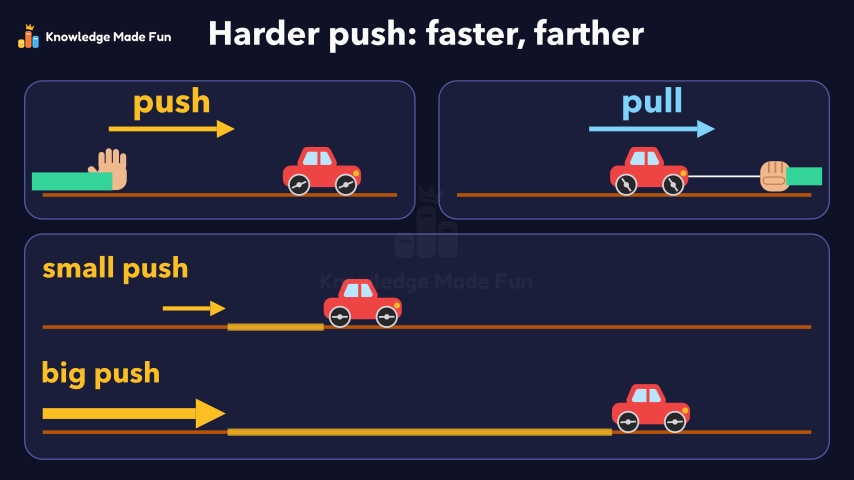 54 s
A Push or a Pull Makes Things Move
Kindergarten · 54 s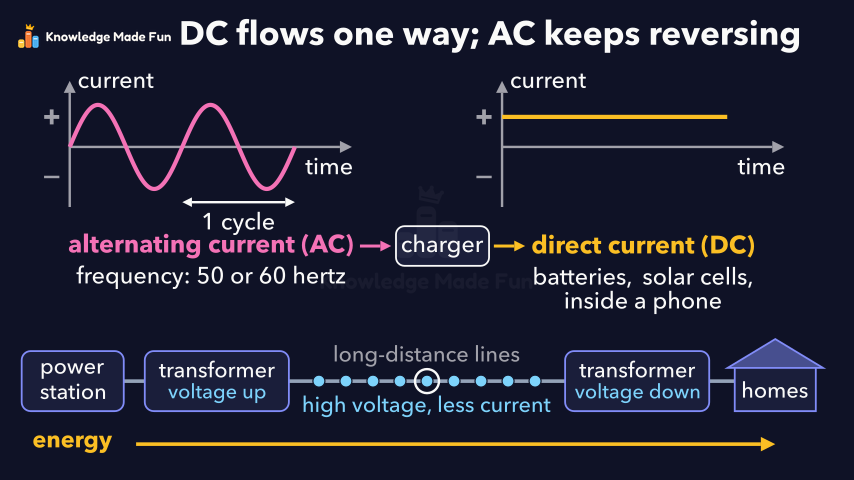 1 min 48 s
AC and DC: Two Ways Current Can Flow
Grade 9 · 1 min 48 s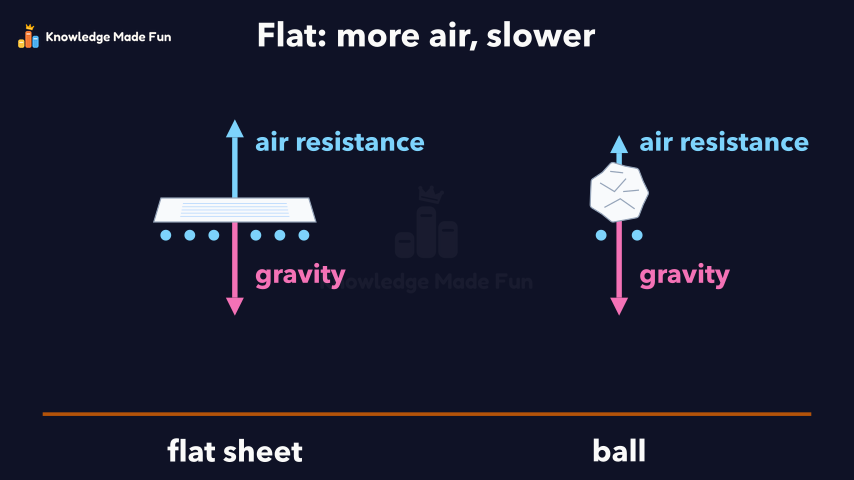 1 min 3 s
Air Resistance: Why a Flat Sheet Falls Slower
Grade 2 · 1 min 3 s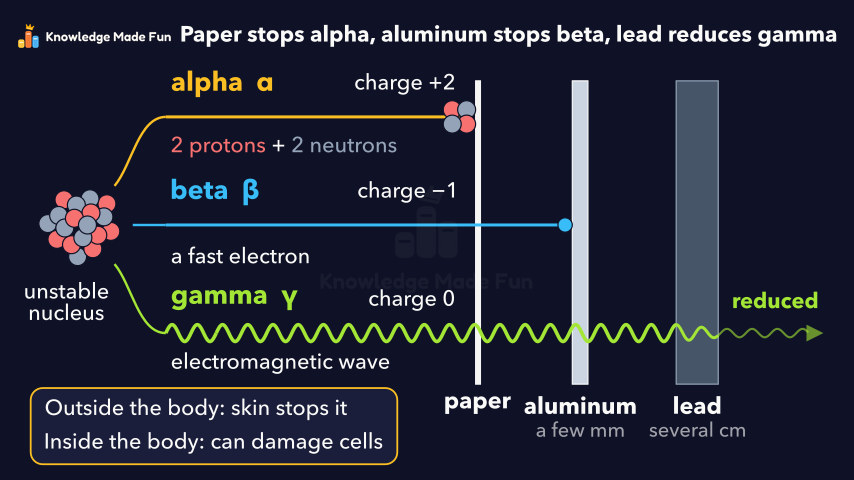 1 min 40 s
Alpha, Beta and Gamma Radiation
Grade 10 · 1 min 40 s 1 min 6 s
Balanced and Unbalanced Forces in Sport and Play
Grade 6 · 1 min 6 s
- All Grade 7 Science lessons
- Create a free account to watch three lessons a day, no payment and no card.