Lesson · Grade 9 · Science
Current or Voltage: What Makes Electricity Dangerous?
- Grade 9
- Science
- 1 min 50 s
- British Columbia
- BC9-SC-23
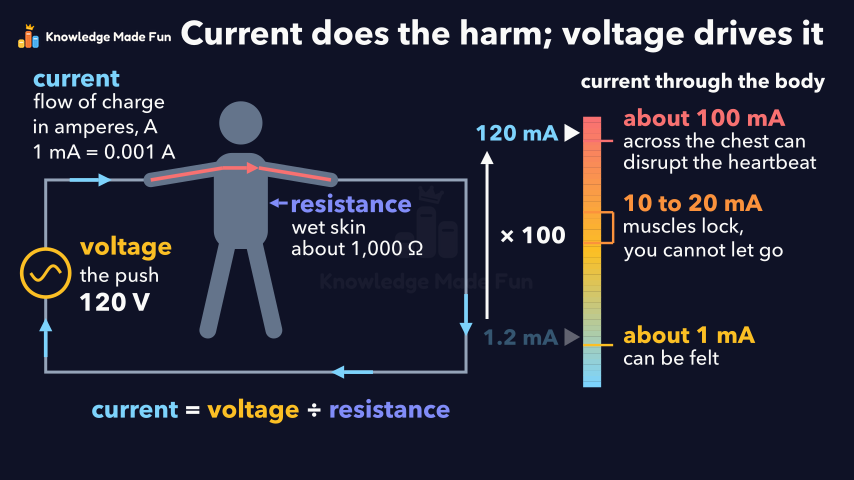
A person grips the two wires of a supply so their body becomes part of the circuit, and the diagram builds up with labels for voltage, current and resistance and a scale of what a current through the body can do (about 1 mA felt, 10 to 20 mA cannot let go, about 100 mA across the chest disrupts the heartbeat). Using current = voltage ÷ resistance, the same 120 V pushes about 1.2 mA through dry skin (100,000 Ω) but about 120 mA through wet skin (1,000 Ω), showing that low voltage is not always safe, why a static shock of thousands of volts does little harm, and that current does the harm while voltage drives it.
Concept: Current or voltage: what makes electricity dangerous
Anyone can watch two lessons on the website without an account. Signing in is free, no payment and no card, and opens three a day; Plus has no limit.
Loading
In one sentence
The question this lesson answers
Is it voltage or current that makes electricity dangerous?
If your body touches two parts of a live circuit, it becomes part of the circuit.
Transcript
What the lesson says
Is it voltage or current that makes electricity dangerous?
If your body touches two parts of a live circuit, it becomes part of the circuit.
Voltage, measured in volts, is the push that drives charge around a circuit.
Current is the flow of charge, measured in amperes. One milliampere is a thousandth of an ampere.
Resistance, measured in ohms, opposes the flow, and your body has resistance too.
The harm comes from the current through your body, here across your chest.
About 1 milliampere can be felt.
10 to 20 milliamperes can lock your muscles, so you cannot let go.
About 100 milliamperes across the chest can disrupt the heartbeat.
Voltage matters because it pushes the current: current equals voltage divided by resistance.
Dry skin is about 100,000 ohms, so 120 volts pushes about 1.2 milliamperes. You would feel it.
Wet skin can drop to about 1,000 ohms. Now 120 volts pushes about 120 milliamperes, enough to disrupt the heartbeat.
The voltage stayed the same, but lower resistance let a hundred times more current flow.
So low voltage is not always safe. With wet skin, even a smaller voltage can push a harmful current.
A static shock can be thousands of volts, but its charge is so tiny that the current stops almost at once.
Current does the harm, and voltage matters because it drives that current through your body's resistance.
Curriculum
Where this fits
The outcomes and strands follow the British Columbia curriculum.
Keep going
 1 min 51 s
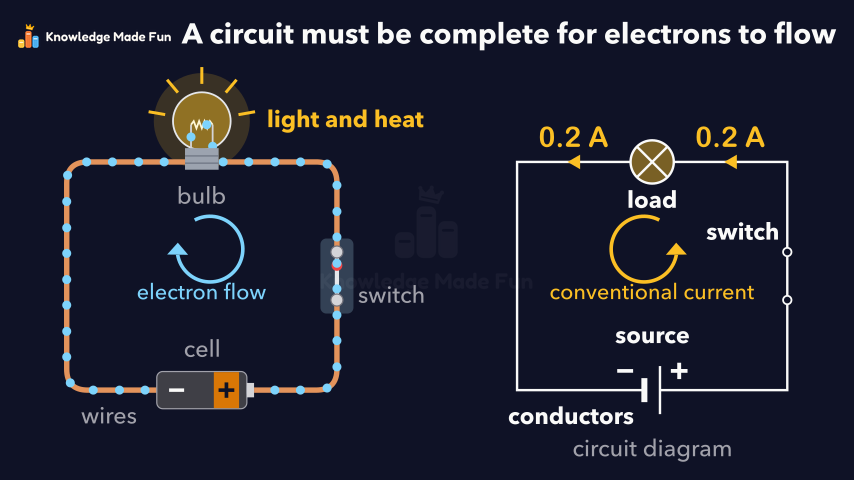
A Complete Circuit: Source, Load, Conductors and Switch
Grade 9 · 1 min 51 s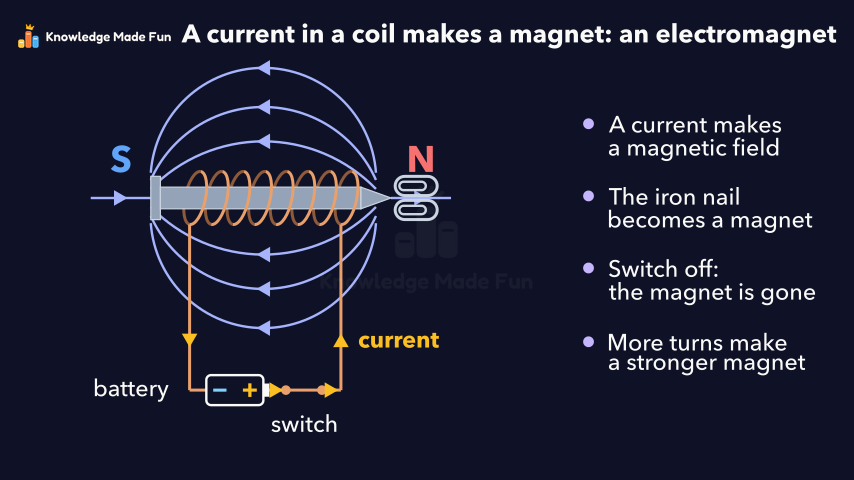 1 min 18 s
A current makes a magnet: the electromagnet
Grade 7 · 1 min 18 s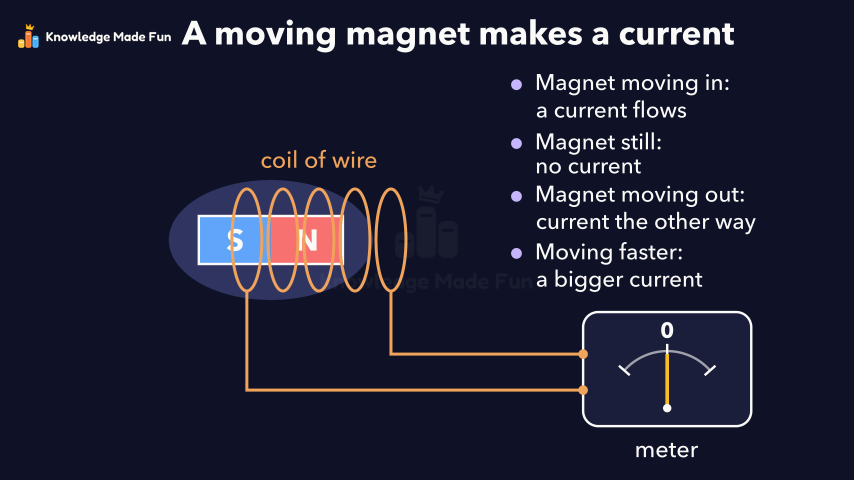 1 min 12 s
A Moving Magnet Makes a Current
Grade 7 · 1 min 12 s 54 s
A Push or a Pull Makes Things Move
Kindergarten · 54 s 1 min 48 s
AC and DC: Two Ways Current Can Flow
Grade 9 · 1 min 48 s 1 min 3 s
Air Resistance: Why a Flat Sheet Falls Slower
Grade 2 · 1 min 3 s 1 min 40 s
Alpha, Beta and Gamma Radiation
Grade 10 · 1 min 40 s 1 min 6 s
Balanced and Unbalanced Forces in Sport and Play
Grade 6 · 1 min 6 s
- All Grade 9 Science lessons
- Create a free account to watch three lessons a day, no payment and no card.