Lesson · Grade 8 · Mathematics
Writing an expression to describe a relationship
- Grade 8
- Mathematics
- 2 min 13 s
- British Columbia
- BC8-MA-20
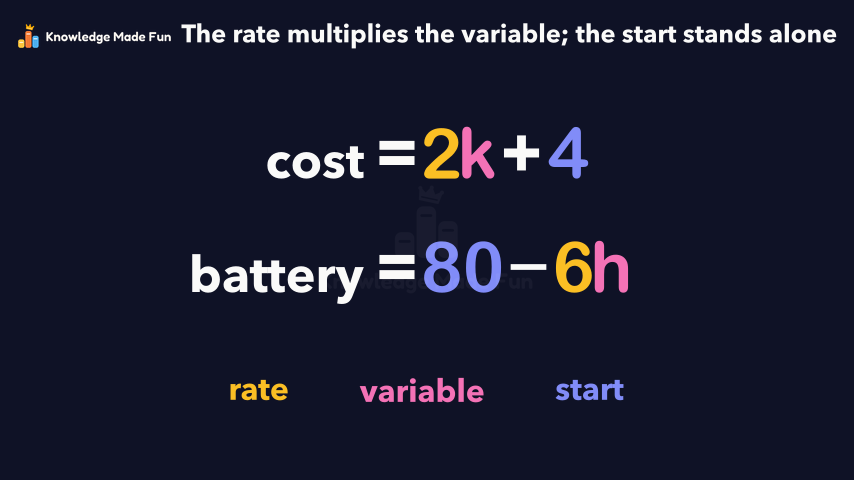
A taxi that charges $4 to start plus $2 for each kilometre is turned into a table (1, 2 and 3 km cost $6, $8 and $10), which becomes the expression 2k + 4, with the coefficient as the rate and the constant as the starting amount. Substitution checks it against the table and prices a 10 km trip at $24, the common mistake 4k + 2 fails the same test, and a phone battery at 80% losing 6% an hour (80 − 6h) shows the same idea for an amount that goes down.
Anyone can watch two lessons on the website without an account. Signing in is free, no payment and no card, and opens three a day; Plus has no limit.
Loading
In one sentence
The question this lesson answers
A taxi charges 4 dollars to start, plus 2 dollars for each kilometre. What does a trip cost?
1 kilometre: 2 times 1, plus the 4 dollar start, is 6 dollars.
Transcript
What the lesson says
A taxi charges 4 dollars to start, plus 2 dollars for each kilometre. What does a trip cost?
1 kilometre: 2 times 1, plus the 4 dollar start, is 6 dollars.
2 kilometres: 2 times 2, plus 4, is 8 dollars.
3 kilometres: 2 times 3, plus 4, is 10 dollars.
Each extra kilometre adds 2 dollars, the rate. The 4 is added every time, the starting amount.
Let k stand for the number of kilometres. A letter that stands for a number that can change is a variable.
So the cost is 2 times k plus 4, written 2k plus 4. That is an expression: numbers and letters joined by operations.
The 2 multiplies k: it is the coefficient, the rate. The 4 stands alone: it is the constant, the starting amount.
To evaluate an expression means to find its value. Substitute a number for k: put the number in place of k.
For k equals 3: 2 times 3 is 6, plus 4 is 10. That matches the table.
For 10 kilometres: 2 times 10 is 20, plus 4 is 24 dollars.
A common mistake is writing 4k plus 2. That swaps the rate and the starting amount.
Test k equals 3: 4 times 3 plus 2 is 14, not 10. So 4k plus 2 is wrong.
Now an amount that goes down: a phone at 80 percent battery loses 6 percent each hour.
Let h be the number of hours. The battery is 80 minus 6h: start at 80, take away 6 each hour.
For h equals 2: 6 times 2 is 12, and 80 minus 12 is 68 percent.
So, the rate multiplies the variable, and the start stands alone.
Curriculum
Where this fits
- British Columbia, Grade 8
Mathematics, Patterns and algebra: expressions: writing and evaluating using substitutionBC8-MA-20
Previous: One Relation, Three Ways: Expression, Table and GraphNext: Substituting into Expressions with Negatives and Decimals
The outcomes and strands follow the British Columbia curriculum.
Keep going
 1 min 8 s
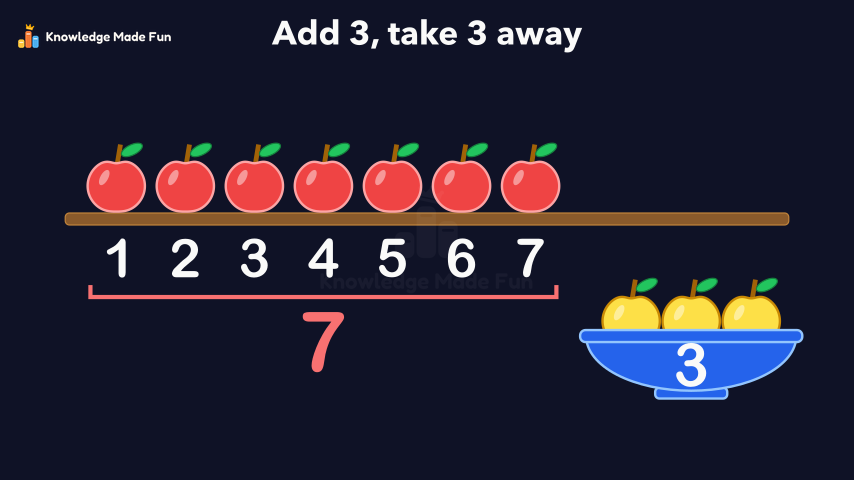
7 and 3 More Makes 10
Grade 1 · 1 min 8 s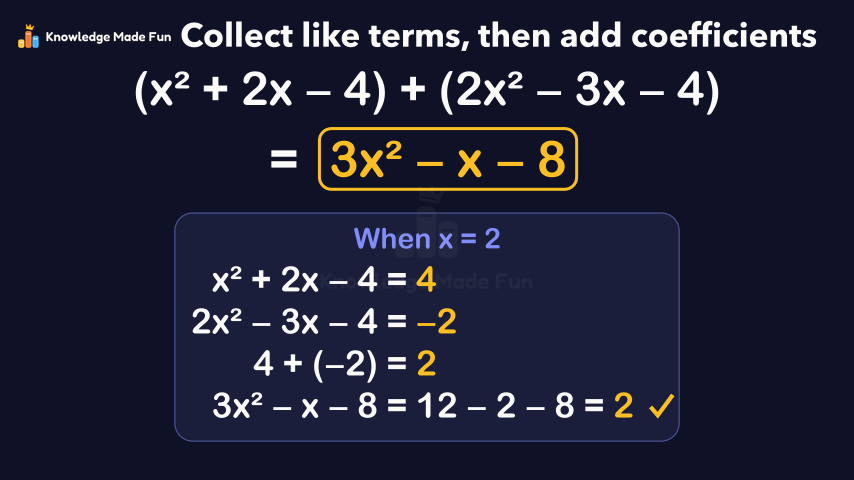 2 min
Adding Polynomials by Collecting Like Terms
Grade 9 · 2 min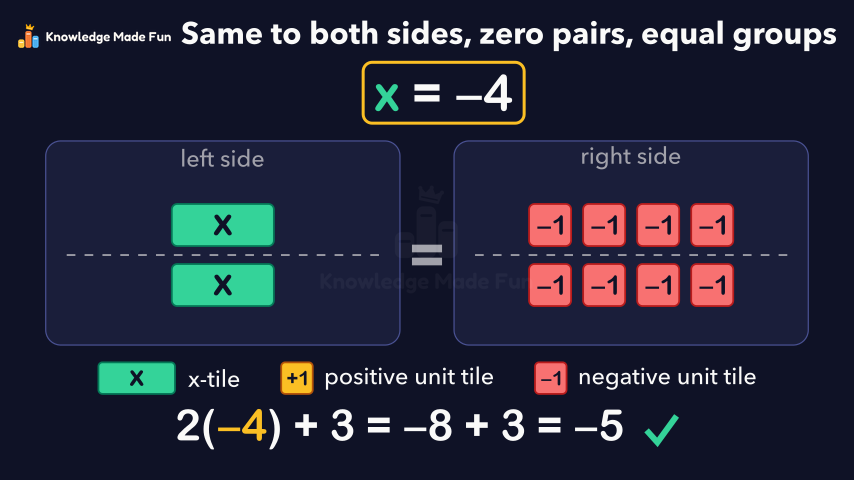 1 min 59 s
Algebra Tiles: Solving 2x + 3 = −5 with Zero Pairs
Grade 8 · 1 min 59 s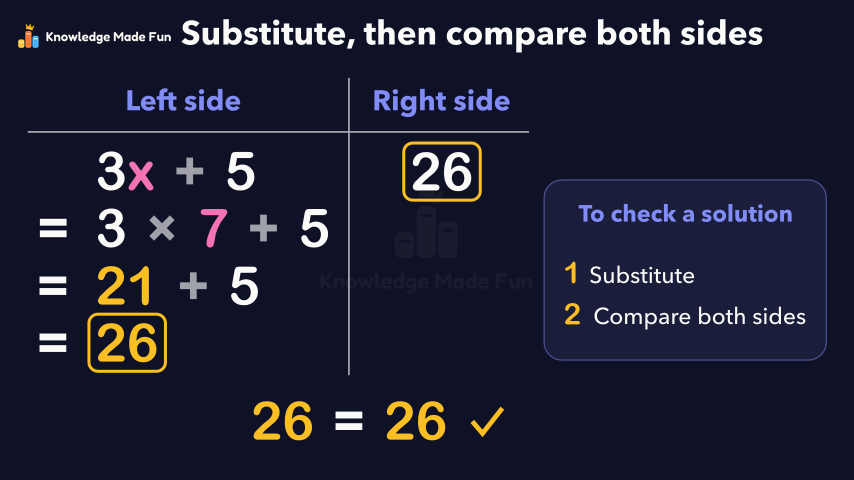 1 min 10 s
Checking a Solution by Substituting
Grade 7 · 1 min 10 s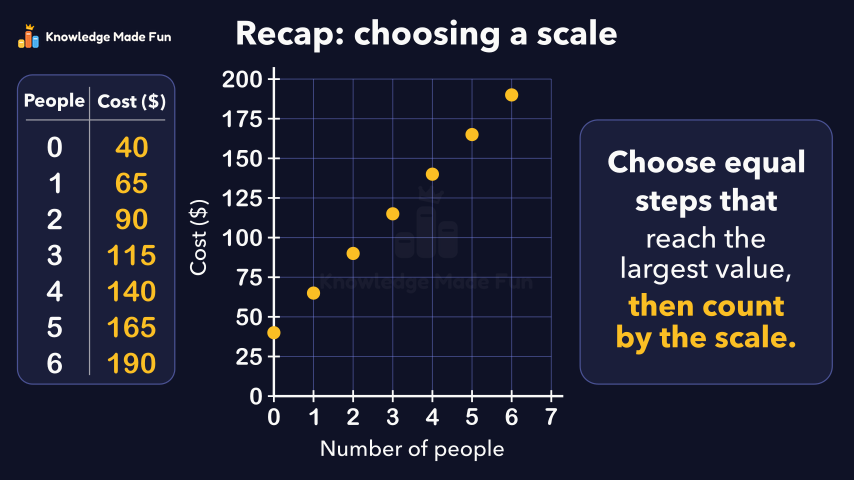 2 min 6 s
Choosing a Scale When the Numbers Are Large
Grade 8 · 2 min 6 s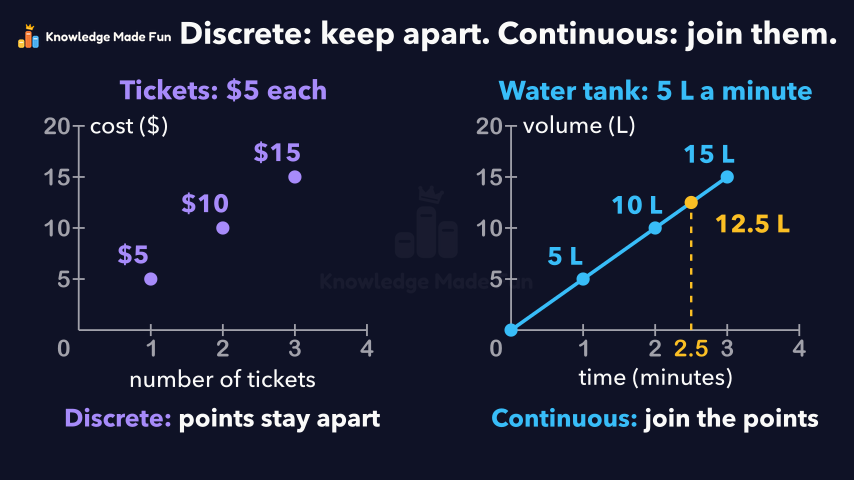 1 min 57 s
Discrete or Continuous: When to Join the Points
Grade 9 · 1 min 57 s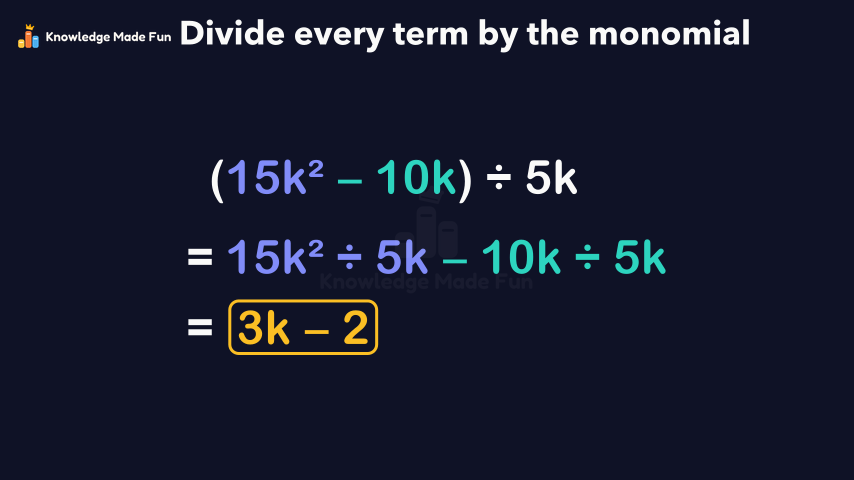 2 min 11 s
Dividing a Polynomial by a Monomial
Grade 9 · 2 min 11 s 1 min 14 s
Equal and Not Equal on a Balance
Grade 1 · 1 min 14 s
- All Grade 8 Mathematics lessons
- Try the graph paper, free for everyone, no account needed.
- Create a free account to watch three lessons a day, no payment and no card.