Lesson · Grade 7 · Mathematics
What Are Integers? Numbers Below Zero
- Grade 7
- Mathematics
- 1 min 25 s
- British Columbia
- BC7-MA-06
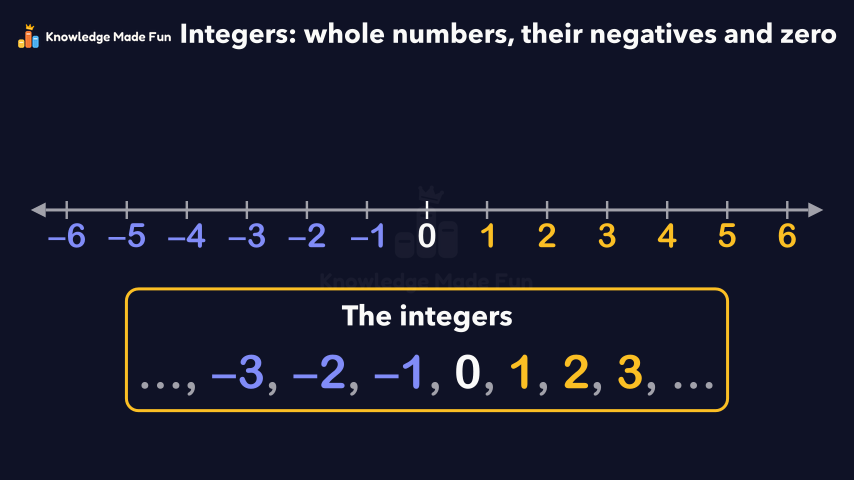
A thermometer drops from 3 °C to 4 degrees below zero, which is written −4 °C, and its scale is turned on its side to become a number line with positive numbers on the right, negative numbers on the left and zero in the middle. The worked example finds −4 by taking 4 steps left from zero, opposite 4 on the right, then lists the integers, shows that 2.5 is not one, and ends on the recap: integers are the whole numbers, their negatives and zero.
Concept: What integers are: numbers below zero
Anyone can watch two lessons on the website without an account. Signing in is free, no payment and no card, and opens three a day; Plus has no limit.
Loading
In one sentence
The question this lesson answers
Can a number be less than zero? Let us find out.
This afternoon, the thermometer shows 3 degrees Celsius.
Transcript
What the lesson says
Can a number be less than zero? Let us find out.
This afternoon, the thermometer shows 3 degrees Celsius.
Tonight it gets colder, and the temperature falls to 4 degrees below zero.
We write 4 degrees below zero as negative 4 degrees Celsius.
So a number can be below zero. The minus sign shows that it is negative.
Now lay the scale on its side. It becomes a number line.
Numbers to the right of zero are positive. They are greater than zero.
Numbers to the left of zero are negative. They are less than zero.
Zero is in the middle. It is neither positive nor negative.
Where is negative 4 on the number line?
Start at zero and take 4 steps to the left, to negative 4.
4 is also 4 steps from zero, but to the right. So 4 and negative 4 are opposites.
All of these numbers are integers, and they go on forever in both directions.
A number like 2.5 sits between two integers, so it is not an integer.
Integers are the whole numbers, their negatives, and zero.
Curriculum
Where this fits
- British Columbia, Grade 7
Mathematics, Number: operations with integersBC7-MA-06
Previous: Division facts from multiplication factsNext: Comparing and ordering integers
The outcomes and strands follow the British Columbia curriculum.
Keep going
 1 min 26 s
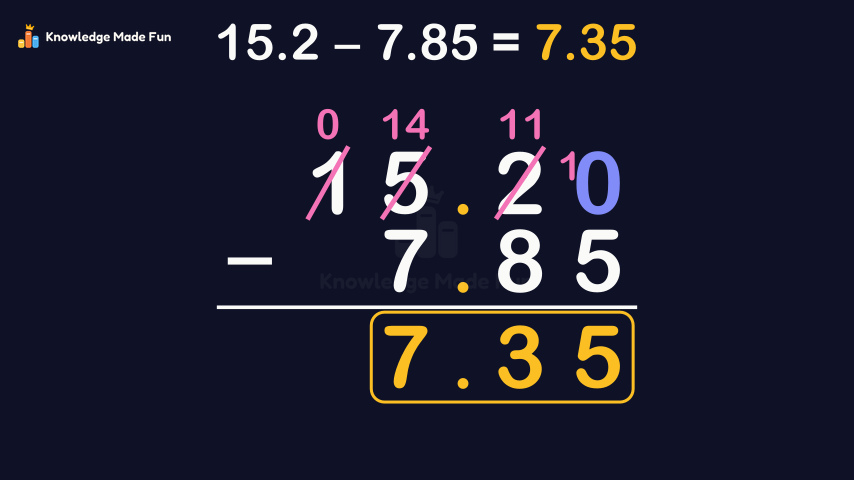
15.2 − 7.85
Grade 4 · 1 min 26 s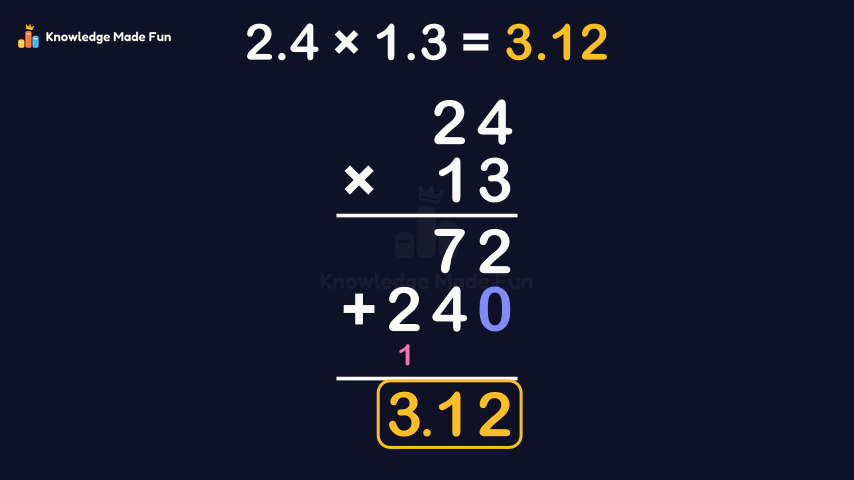 1 min 37 s
2.4 × 1.3
Grade 7 · 1 min 37 s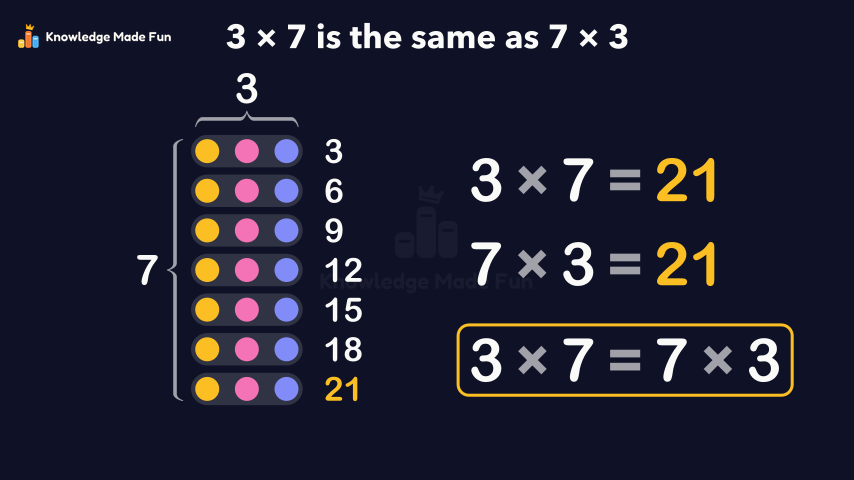 1 min 4 s
3 × 7 = 7 × 3: Equal Groups, Skip Counting and Arrays
Grade 4 · 1 min 4 s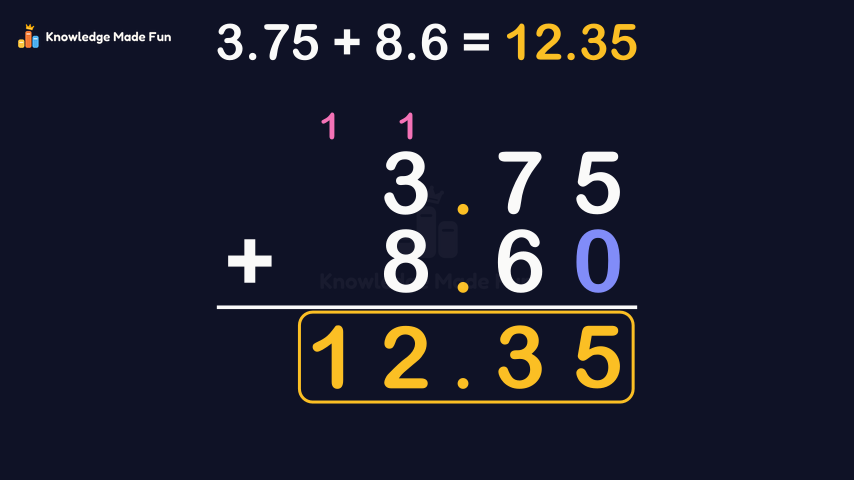 59 s
3.75 + 8.6
Grade 4 · 59 s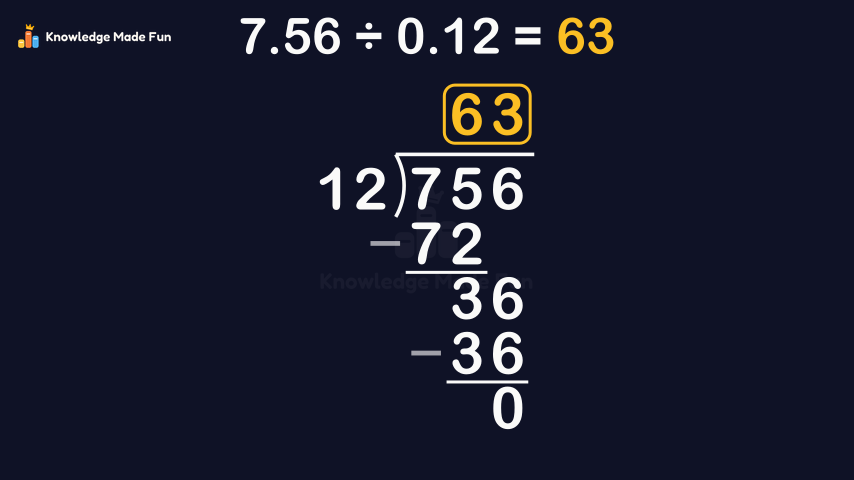 1 min 32 s
7.56 ÷ 0.12
Grade 7 · 1 min 32 s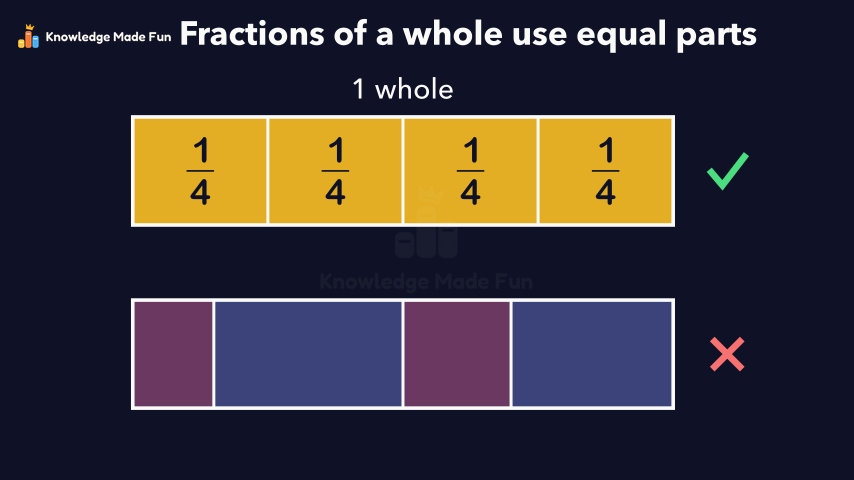 56 s
A Fraction Is Equal Parts of One Whole
Grade 3 · 56 s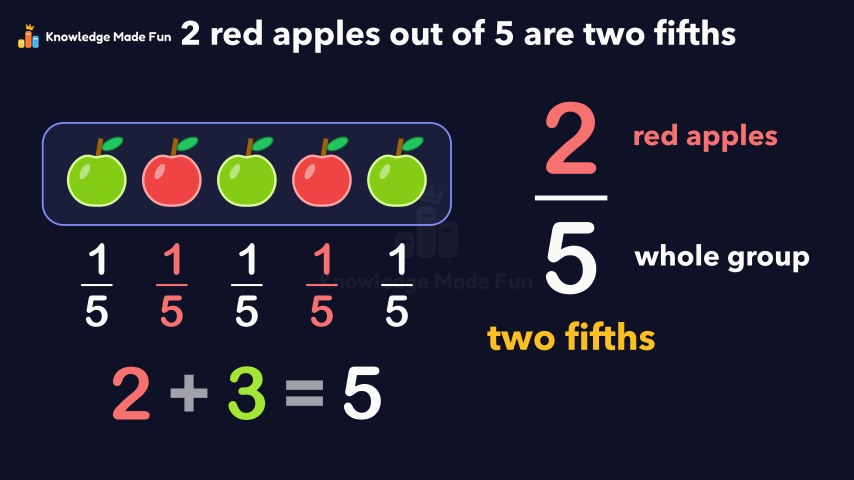 57 s
A Fraction of a Group
Grade 3 · 57 s 1 min 23 s
Adding and subtracting are related
Grade 1 · 1 min 23 s
- All Grade 7 Mathematics lessons
- Teachers: the maths worksheets for Grade 7 are in the dashboard, each with a worked example and a proven answer key.
- Try the graph paper, free for everyone, no account needed.
- Create a free account to watch three lessons a day, no payment and no card.