Lesson · Kindergarten · Mathematics
Splitting 7 into Two Parts
- Kindergarten
- Mathematics
- 1 min 4 s
- British Columbia
- BCK-MA-08
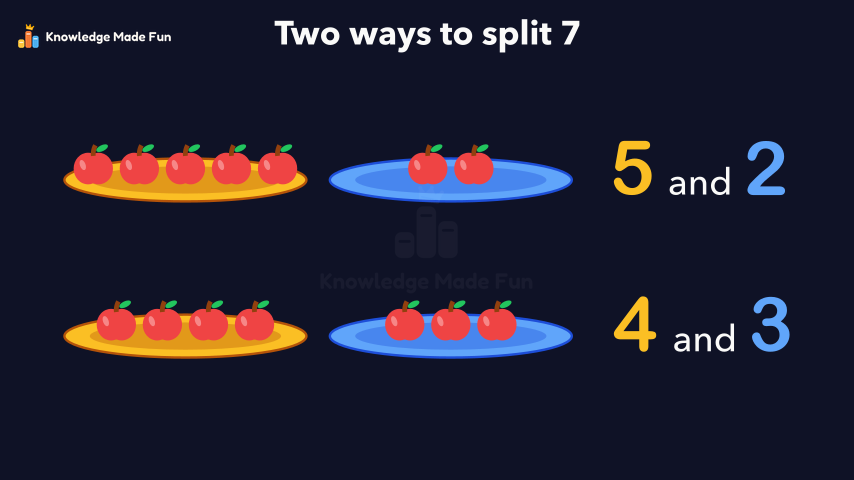
Seven apples are counted one at a time and then put onto two plates, 5 on one and 2 on the other, and counting them all again checks that 5 and 2 make 7. One apple then moves across to make 4 and 3, the count again comes to 7, and the video ends on two ways to split 7: 5 and 2, or 4 and 3.
Concept: Splitting a number into two parts: 7 is 5 and 2, or 4 and 3
Anyone can watch two lessons on the website without an account. Signing in is free, no payment and no card, and opens three a day; Plus has no limit.
Loading
In one sentence
The question this lesson answers
How many apples can you see?
Let's count them: 1, 2, 3, 4, 5, 6, 7.
Transcript
What the lesson says
How many apples can you see?
Let's count them: 1, 2, 3, 4, 5, 6, 7.
There are 7 apples in all.
Let's split the 7 apples onto two plates.
Put 5 apples on this plate.
Put 2 apples on that plate.
Count them all: 1, 2, 3, 4, 5, 6, 7. 5 and 2 make 7!
Now move 1 apple to the other plate.
This plate has 4, and that plate has 3.
Count them all again: 1, 2, 3, 4, 5, 6, 7. 4 and 3 make 7 too!
Two ways to split 7: 5 and 2, or 4 and 3.
Curriculum
Where this fits
- British Columbia, Kindergarten
Mathematics, Number: decomposition of numbers to 10BCK-MA-08
The outcomes and strands follow the British Columbia curriculum.
Keep going
 1 min 26 s
15.2 − 7.85
Grade 4 · 1 min 26 s 1 min 37 s
2.4 × 1.3
Grade 7 · 1 min 37 s 1 min 4 s
3 × 7 = 7 × 3: Equal Groups, Skip Counting and Arrays
Grade 4 · 1 min 4 s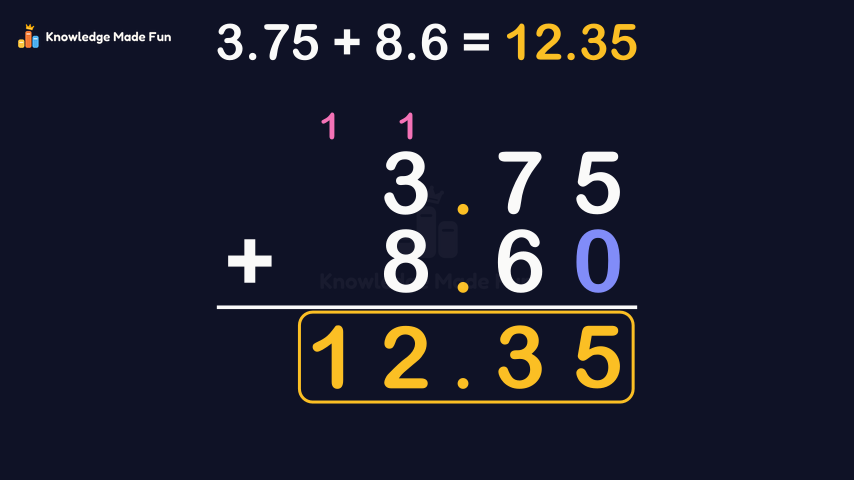 59 s
3.75 + 8.6
Grade 4 · 59 s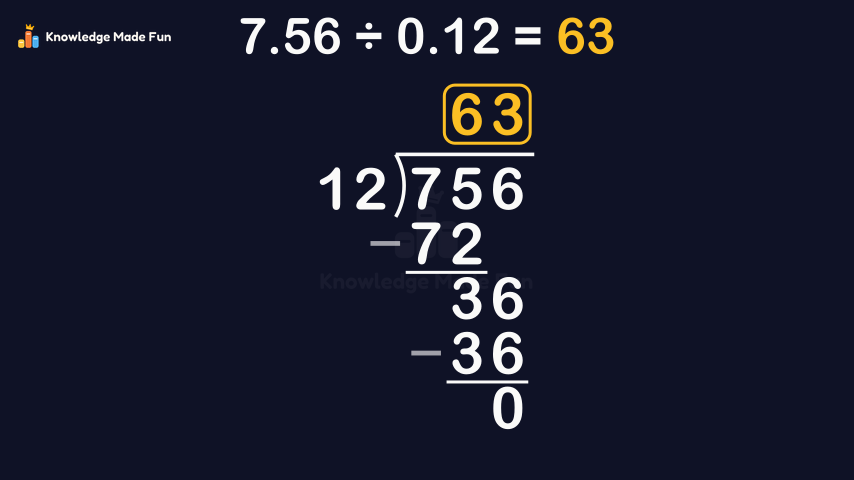 1 min 32 s
7.56 ÷ 0.12
Grade 7 · 1 min 32 s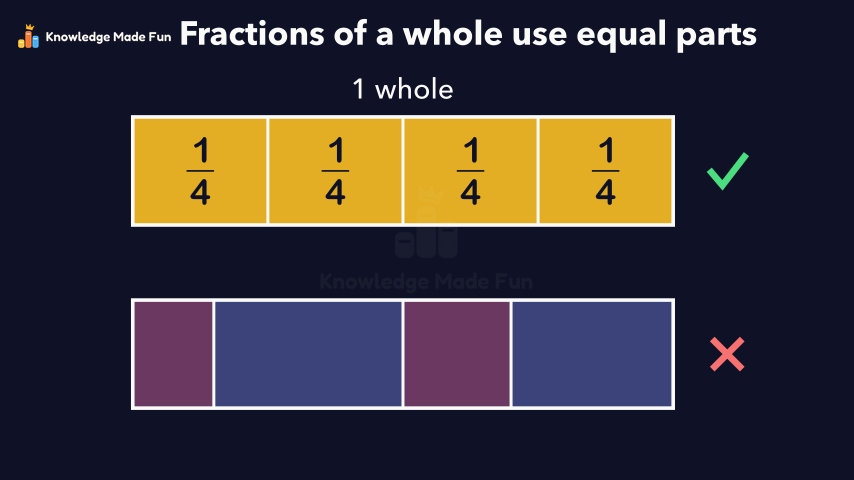 56 s
A Fraction Is Equal Parts of One Whole
Grade 3 · 56 s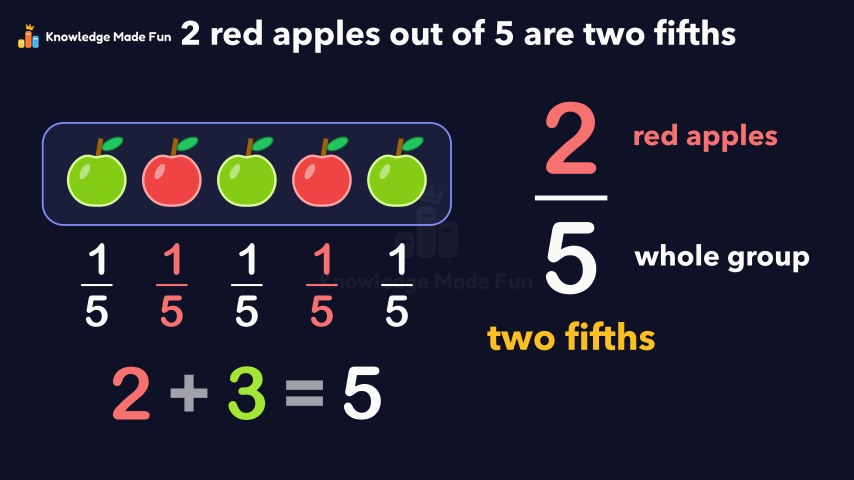 57 s
A Fraction of a Group
Grade 3 · 57 s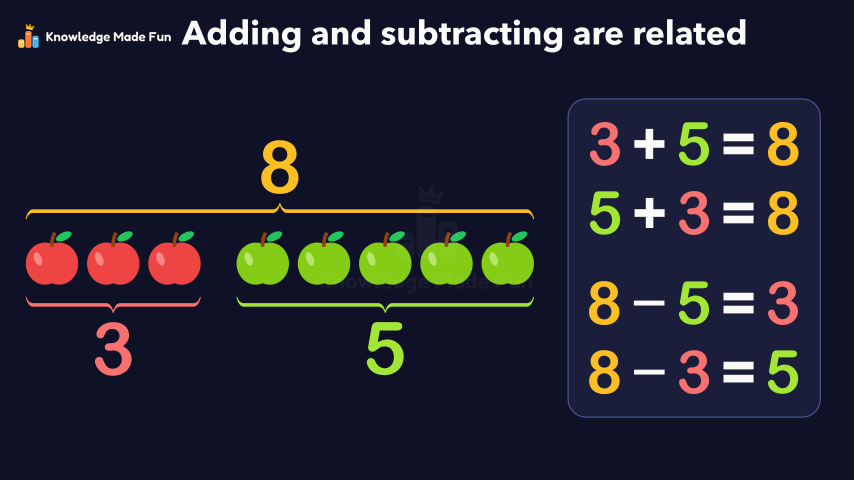 1 min 23 s
Adding and subtracting are related
Grade 1 · 1 min 23 s
- All Kindergarten Mathematics lessons
- Teachers: the maths worksheets for Kindergarten are in the dashboard, each with a worked example and a proven answer key.
- Try the graph paper, free for everyone, no account needed.
- Create a free account to watch three lessons a day, no payment and no card.