Lesson · Grade 5 · Mathematics
Rounding big numbers to estimate
- Grade 5
- Mathematics
- 1 min 26 s
- British Columbia
- BC5-MA-03
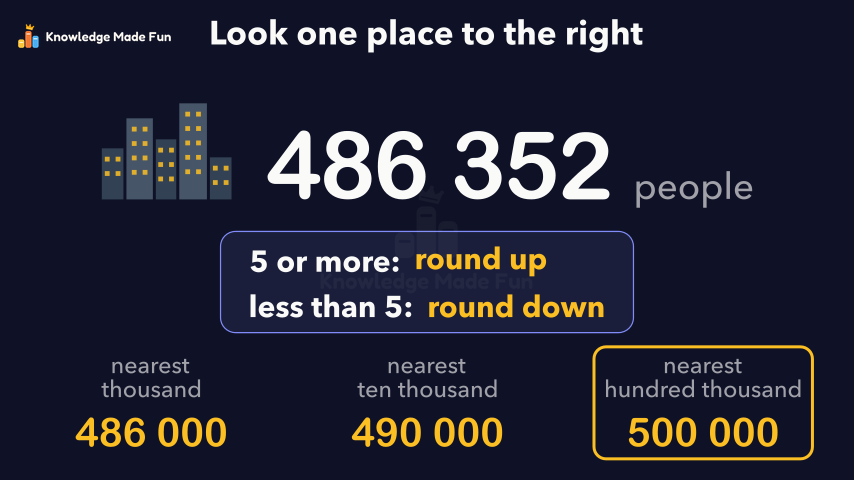
A city of 486 352 people is rounded to the nearest thousand, ten thousand and hundred thousand: a number line shows the two numbers it falls between, and the digit one place to the right of the rounding place (3, then 6, then 8) shows whether to round down or up. The three estimates, 486 000, 490 000 and 500 000, build up along the bottom, and the video ends on the rule: 5 or more rounds up, less than 5 rounds down.
Anyone can watch two lessons on the website without an account. Signing in is free, no payment and no card, and opens three a day; Plus has no limit.
Loading
In one sentence
The question this lesson answers
A city has 486,352 people, but about how many is that?
To estimate, round it to the nearest thousand, ten thousand or hundred thousand.
Transcript
What the lesson says
A city has 486,352 people, but about how many is that?
To estimate, round it to the nearest thousand, ten thousand or hundred thousand.
To the nearest thousand, 486,352 is between 486,000 and 487,000.
Look one place to the right, at the hundreds digit: 3.
3 is less than 5, so round down to 486,000.
To the nearest ten thousand, it is between 480,000 and 490,000.
Look one place to the right, at the thousands digit: 6.
6 is 5 or more, so round up to 490,000.
To the nearest hundred thousand, it is between 400,000 and 500,000.
Look one place to the right, at the ten thousands digit: 8.
8 is 5 or more, so round up to 500,000.
So, to the nearest hundred thousand, about 500,000 people live in the city.
To round, look one place to the right: 5 or more rounds up, less than 5 rounds down.
Curriculum
Where this fits
- British Columbia, Grade 5
Mathematics, Number: number concepts to 1 000 000BC5-MA-03
Previous: Comparing and Ordering Numbers to a MillionNext: Decimal place value: tenths, hundredths and thousandths
The outcomes and strands follow the British Columbia curriculum.
Keep going
 1 min 26 s
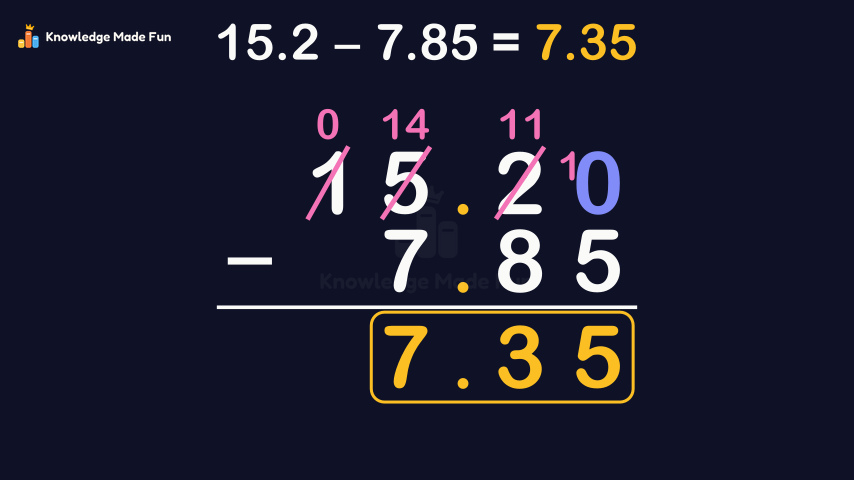
15.2 − 7.85
Grade 4 · 1 min 26 s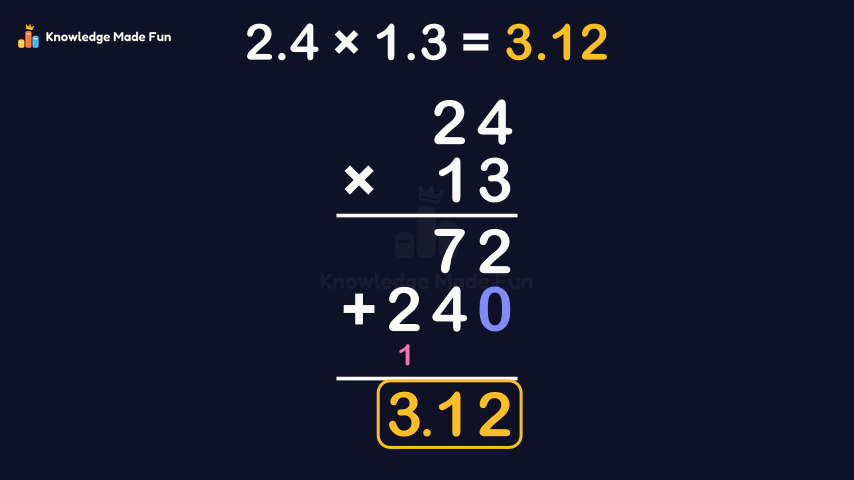 1 min 37 s
2.4 × 1.3
Grade 7 · 1 min 37 s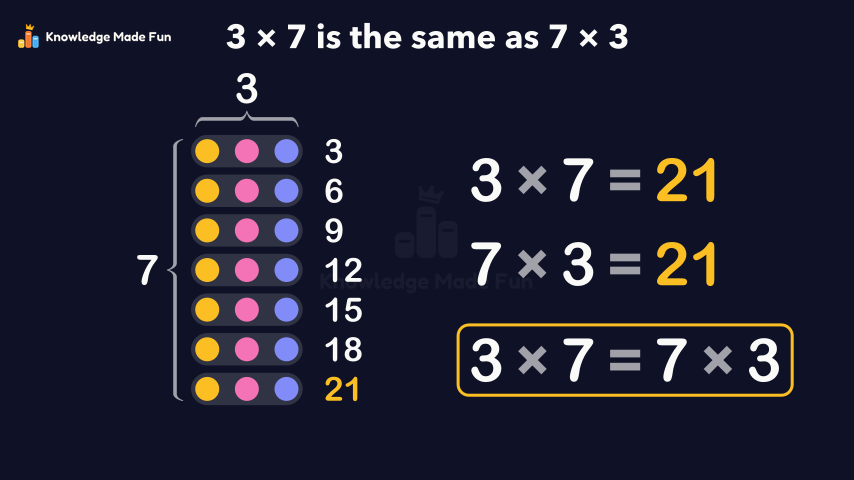 1 min 4 s
3 × 7 = 7 × 3: Equal Groups, Skip Counting and Arrays
Grade 4 · 1 min 4 s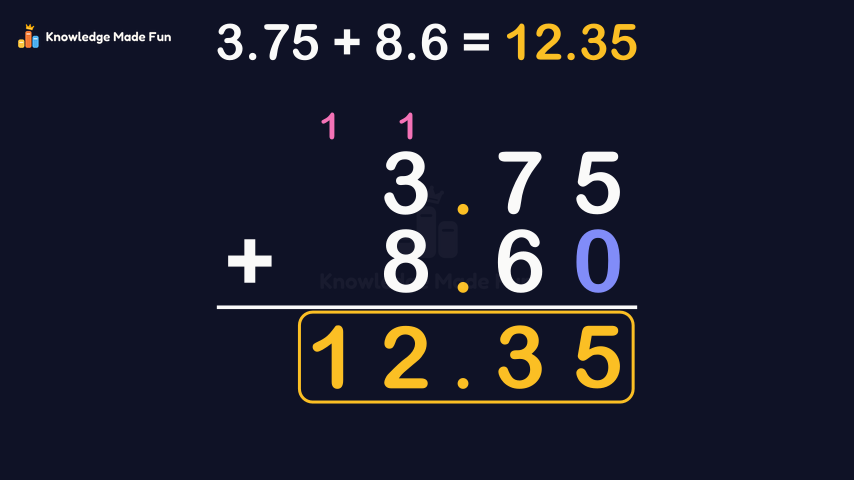 59 s
3.75 + 8.6
Grade 4 · 59 s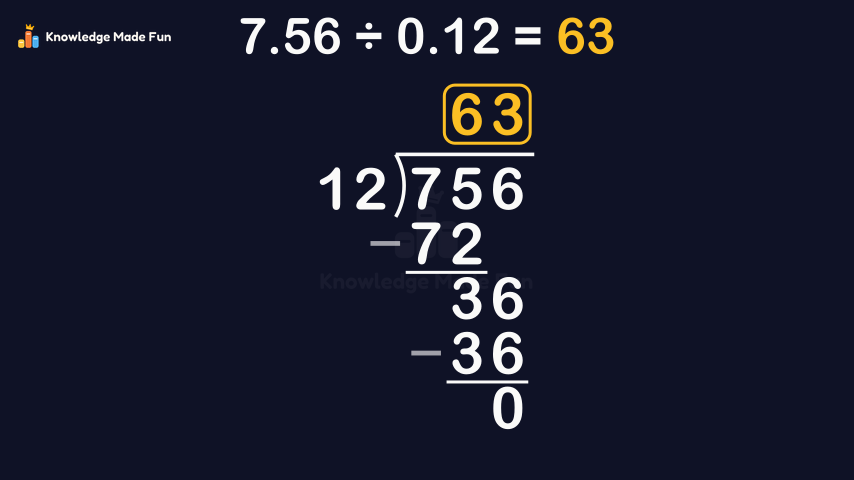 1 min 32 s
7.56 ÷ 0.12
Grade 7 · 1 min 32 s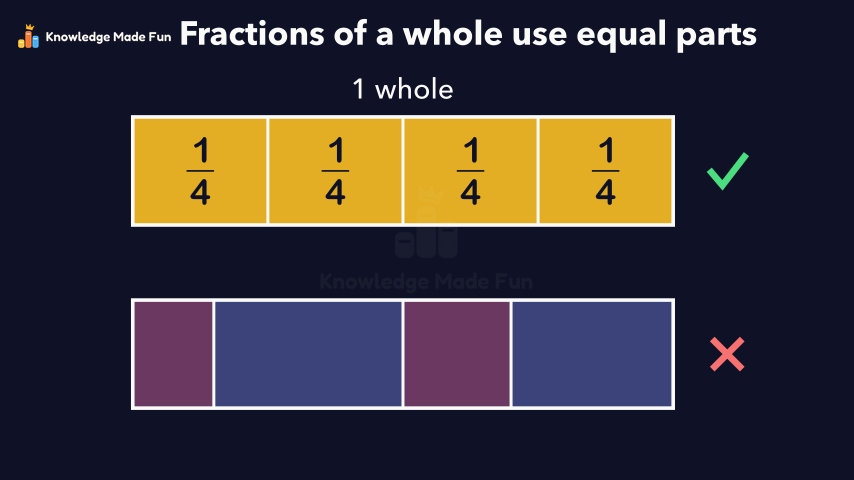 56 s
A Fraction Is Equal Parts of One Whole
Grade 3 · 56 s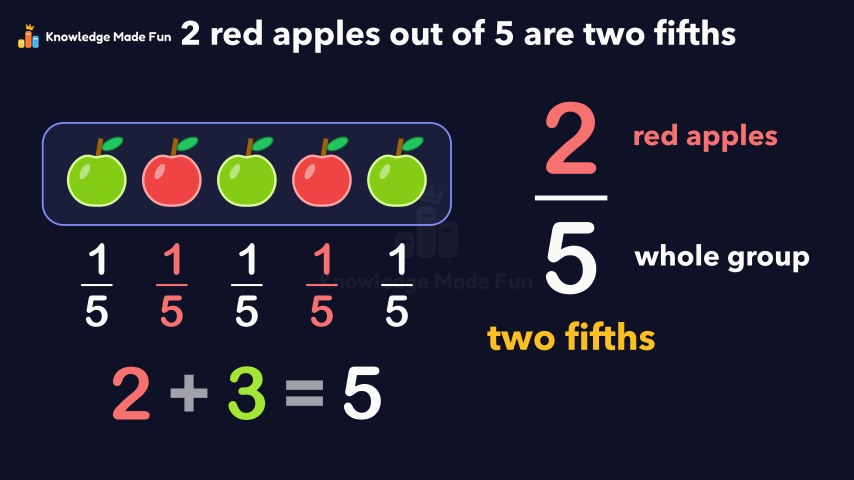 57 s
A Fraction of a Group
Grade 3 · 57 s 1 min 23 s
Adding and subtracting are related
Grade 1 · 1 min 23 s
- All Grade 5 Mathematics lessons
- Teachers: the maths worksheets for Grade 5 are in the dashboard, each with a worked example and a proven answer key.
- Try the graph paper, free for everyone, no account needed.
- Create a free account to watch three lessons a day, no payment and no card.