Lesson · Grade 9 · Mathematics
Powers: Base, Exponent and Repeated Multiplication
- Grade 9
- Mathematics
- 1 min 50 s
- British Columbia
- BC9-MA-05
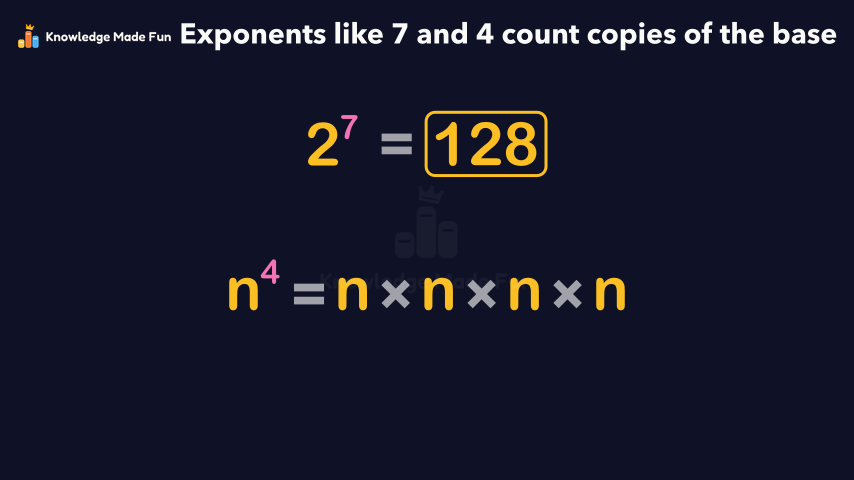
The video labels the base and the exponent in 2⁷, writes it out as seven 2s multiplied together, and multiplies them left to right, doubling each time to get 2⁷ = 128. It then crosses out the common mistake 2 × 7 = 14 and shows that a variable base works the same way, n⁴ = n × n × n × n, before a one-line recap.
Anyone can watch two lessons on the website without an account. Signing in is free, no payment and no card, and opens three a day; Plus has no limit.
Loading
In one sentence
The question this lesson answers
What does 2 to the power of 7 mean, and what number is it?
This is called a power. A power is a short way to write the same number multiplied again and again.
Transcript
What the lesson says
What does 2 to the power of 7 mean, and what number is it?
This is called a power. A power is a short way to write the same number multiplied again and again.
The large 2 is the base. The base is the number being multiplied.
The small raised 7 is the exponent. Here it tells you how many copies of the base to multiply.
So write the base 7 times, with a times sign between each pair. Count them: 1, 2, 3, 4, 5, 6, 7.
That makes seven 2s, just as the exponent says.
Now multiply from left to right. The product so far doubles each time: 2, 4, 8, 16, 32, 64, 128.
So 2 to the power of 7 equals 128.
A common mistake is to multiply the base by the exponent. That gives 2 times 7, which is 14.
But 2 to the power of 7 means seven 2s multiplied, so it is 128, not 14.
A variable is a letter that stands for a number, and it can be the base too. Here the base is n, and the exponent is 4.
So n to the power of 4 means four n's multiplied: n times n times n times n.
Remember: an exponent like 7 or 4 counts how many copies of the base to multiply. So 2 to the power of 7 is 128.
Curriculum
Where this fits
- British Columbia, Grade 9
Mathematics, Number: exponents and exponent laws with whole-number exponentsBC9-MA-05
Previous: Order of operations with rational numbers and powersNext: Why (−3)² Is Not the Same as −3²
The outcomes and strands follow the British Columbia curriculum.
Keep going
 1 min 26 s
15.2 − 7.85
Grade 4 · 1 min 26 s 1 min 37 s
2.4 × 1.3
Grade 7 · 1 min 37 s 1 min 4 s
3 × 7 = 7 × 3: Equal Groups, Skip Counting and Arrays
Grade 4 · 1 min 4 s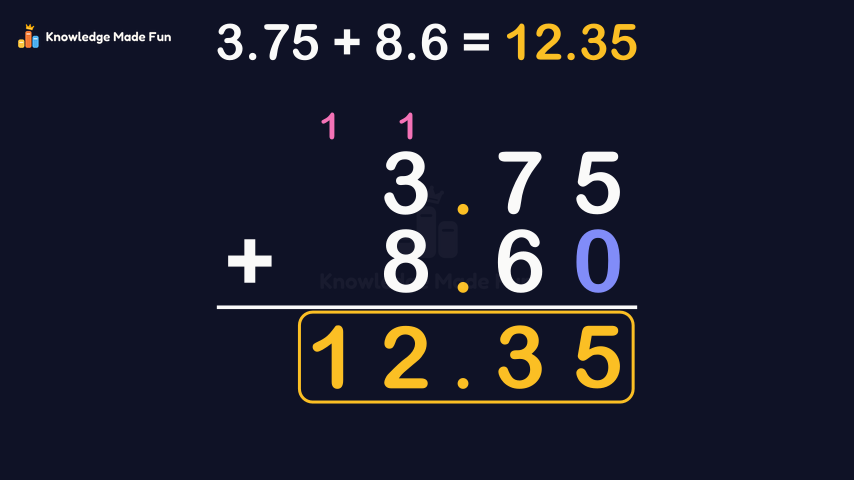 59 s
3.75 + 8.6
Grade 4 · 59 s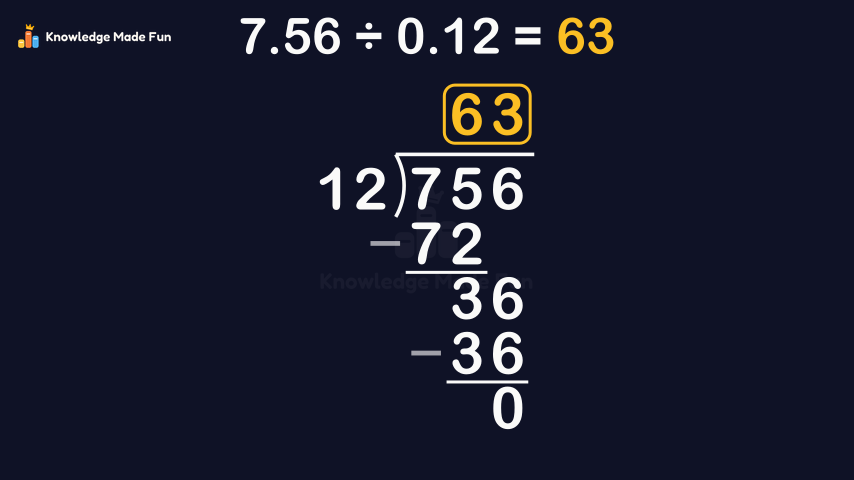 1 min 32 s
7.56 ÷ 0.12
Grade 7 · 1 min 32 s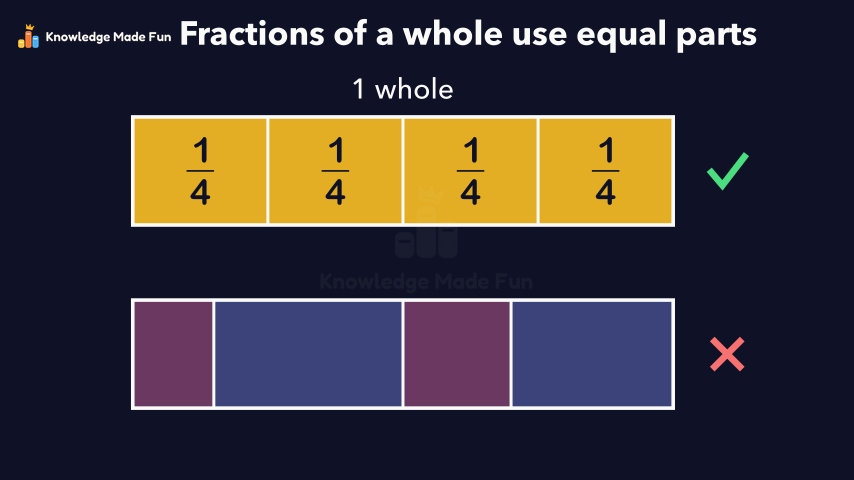 56 s
A Fraction Is Equal Parts of One Whole
Grade 3 · 56 s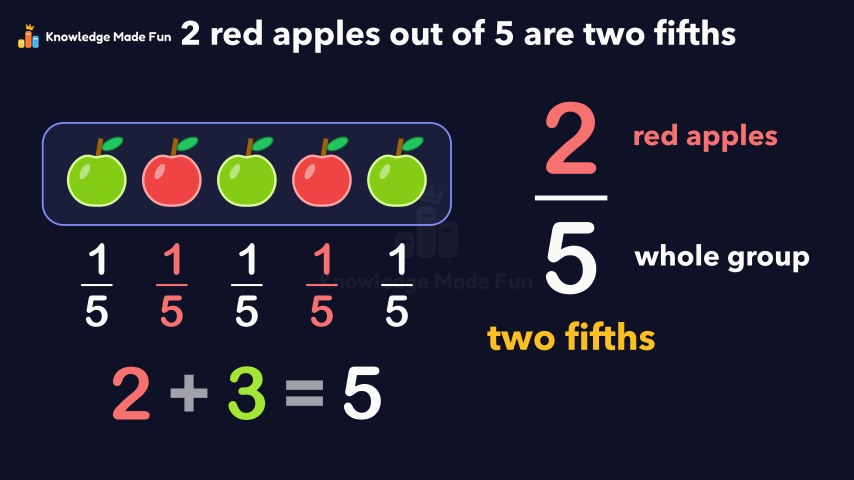 57 s
A Fraction of a Group
Grade 3 · 57 s 1 min 23 s
Adding and subtracting are related
Grade 1 · 1 min 23 s
- All Grade 9 Mathematics lessons
- Try the graph paper, free for everyone, no account needed.
- Create a free account to watch three lessons a day, no payment and no card.