Lesson · Grade 9 · Mathematics
Power of a power, and power of a product or quotient
- Grade 9
- Mathematics
- 2 min 20 s
- British Columbia
- BC9-MA-08
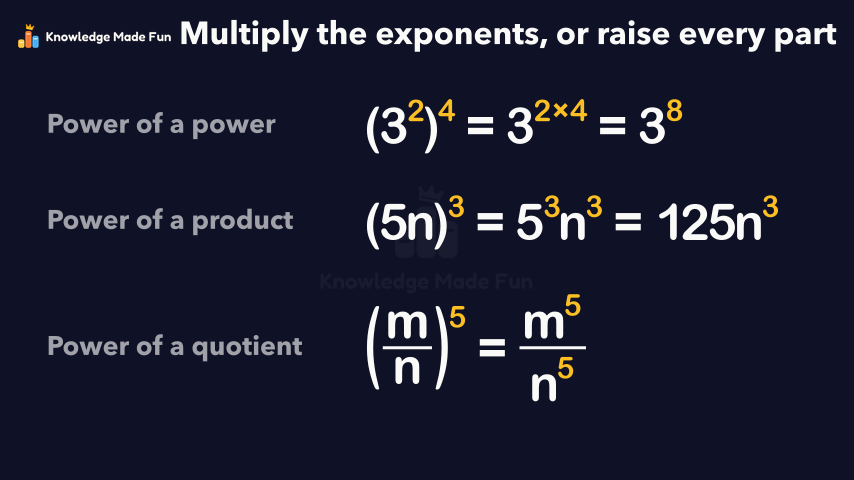
Starting from base and exponent, the video writes (3²)⁴ out as four copies of 3² to show the answer is 3⁸, so for a power of a power you multiply the exponents, and checks it with 9⁴ = 3⁸ = 6561. It then shows that (5n)³ = 5³ × n³ = 125n³ and (m/n)⁵ = m⁵/n⁵ because the exponent goes to every part inside the brackets, checks the common mistake of writing 5n³ with n = 2 (1000, not 40), and ends on a three-line recap.
Anyone can watch two lessons on the website without an account. Signing in is free, no payment and no card, and opens three a day; Plus has no limit.
Loading
In one sentence
The question this lesson answers
3 squared, or 3 to the power 2, is a power. 3 is the base and 2 is the exponent.
The exponent counts the copies of the base: 3 squared is 3 times 3, which is 9.
Transcript
What the lesson says
3 squared, or 3 to the power 2, is a power. 3 is the base and 2 is the exponent.
The exponent counts the copies of the base: 3 squared is 3 times 3, which is 9.
Put 3 squared in brackets and raise it to the power 4: a power of a power.
That means 4 copies of 3 squared, multiplied together: 1, 2, 3, 4.
Each copy has two threes, and 2 times 4 is 8, so we get 3 to the power 8. Multiply the exponents.
Check: 9 to the power 4 is 6561, and so is 3 to the power 8.
A product is the result of multiplying. 5n means 5 times n, so its factors are 5 and n.
Cubed means to the power 3: 5n in brackets, cubed, is 3 copies of 5n multiplied.
Multiply in any order: put the fives together and the n's together.
That is 5 cubed times n cubed. The exponent goes to every factor inside the brackets.
5 cubed is 5 times 5 times 5, which is 125, so we get 125n cubed.
A common mistake is writing 5n cubed with no brackets. That cubes the n but not the 5.
Check with n equal to 2: 10 cubed is 1000, and 125 times 8 is 1000. But 5 times 8 is 40.
A quotient is the result of dividing. m over n is m divided by n, and n is not zero.
Raised to the power 5, that is 5 copies of m over n, multiplied together.
Multiply the numerators on top and the denominators below: m to the power 5 over n to the power 5.
For a power of a power, multiply the exponents. For a product or quotient, raise every part to the power.
Curriculum
Where this fits
- British Columbia, Grade 9
Mathematics, Number: exponents and exponent laws with whole-number exponentsBC9-MA-08
Previous: Multiplying and Dividing Powers with the Same BaseNext: Why any number to the power 0 is 1
The outcomes and strands follow the British Columbia curriculum.
Keep going
 1 min 26 s
15.2 − 7.85
Grade 4 · 1 min 26 s 1 min 37 s
2.4 × 1.3
Grade 7 · 1 min 37 s 1 min 4 s
3 × 7 = 7 × 3: Equal Groups, Skip Counting and Arrays
Grade 4 · 1 min 4 s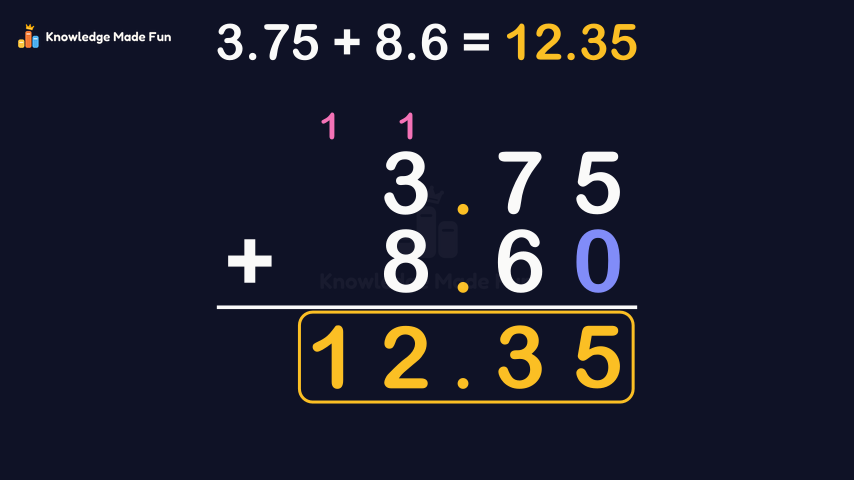 59 s
3.75 + 8.6
Grade 4 · 59 s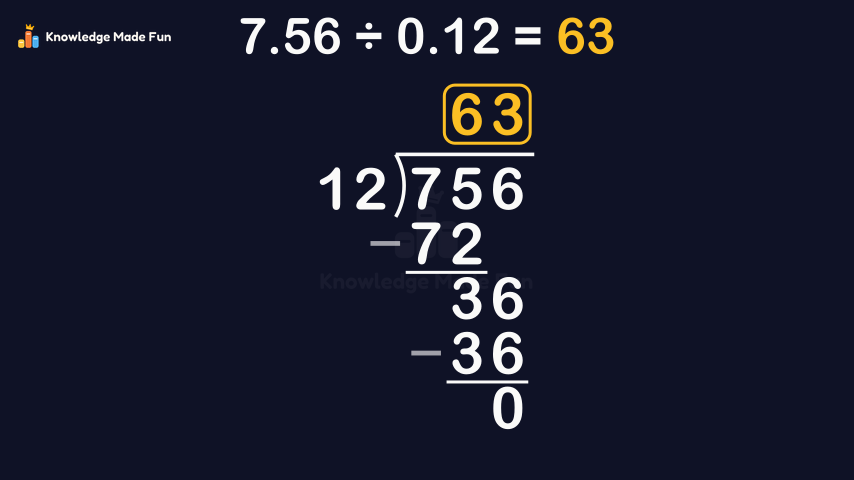 1 min 32 s
7.56 ÷ 0.12
Grade 7 · 1 min 32 s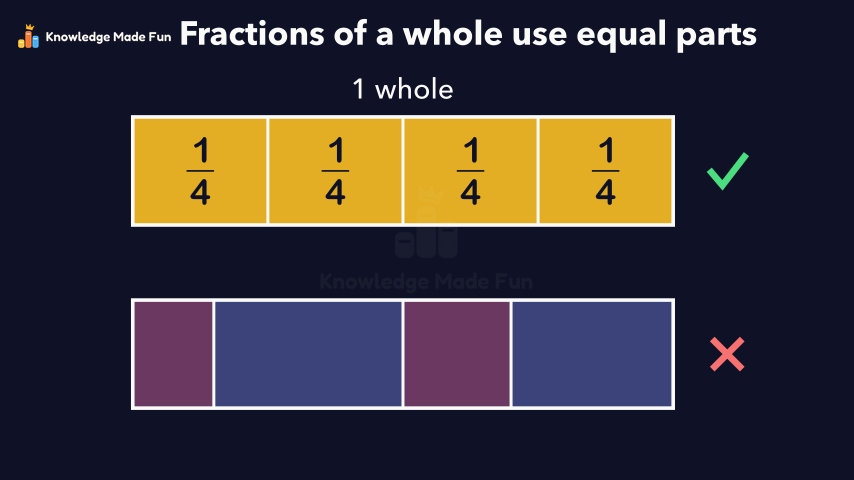 56 s
A Fraction Is Equal Parts of One Whole
Grade 3 · 56 s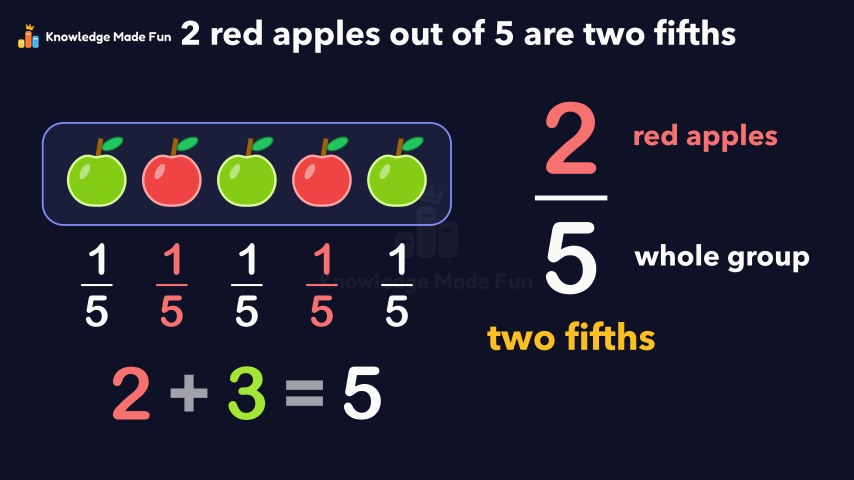 57 s
A Fraction of a Group
Grade 3 · 57 s 1 min 23 s
Adding and subtracting are related
Grade 1 · 1 min 23 s
- All Grade 9 Mathematics lessons
- Try the graph paper, free for everyone, no account needed.
- Create a free account to watch three lessons a day, no payment and no card.