Lesson · Grade 6 · Mathematics
Divisibility Rules for 2, 3, 4, 5, 6, 9 and 10
- Grade 6
- Mathematics
- 1 min 37 s
- British Columbia
- BC6-MA-08
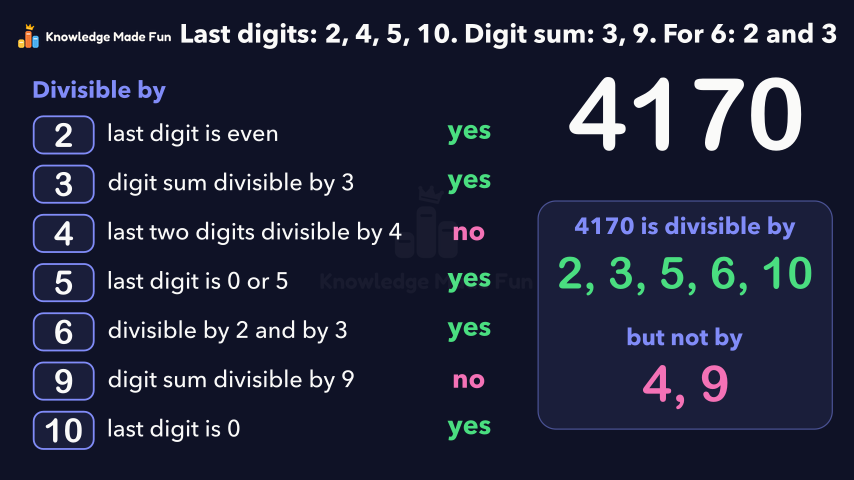
One number, 4170, is tested against all seven divisibility rules. The last digit settles 2, 5 and 10, the last two digits (70 ÷ 4 = 17 remainder 2) settle 4, and the digit sum (4 + 1 + 7 + 0 = 12) settles 3 and 9. Passing both 2 and 3 settles 6, which 4170 ÷ 6 = 695 confirms, and the video ends on the answer (divisible by 2, 3, 5, 6 and 10, but not 4 or 9) and a one-line recap of which digits each rule checks.
Anyone can watch two lessons on the website without an account. Signing in is free, no payment and no card, and opens three a day; Plus has no limit.
Loading
In one sentence
The question this lesson answers
Is 4170 divisible by 2, 3, 4, 5, 6, 9 or 10?
Divisible means it divides with no remainder.
Transcript
What the lesson says
Is 4170 divisible by 2, 3, 4, 5, 6, 9 or 10?
Divisible means it divides with no remainder.
For 2, the last digit must be even, and 0 is even, so yes.
For 5, the last digit must be 0 or 5, and it is 0, so yes.
For 10, the last digit must be 0, so yes again.
For 4, look at the last two digits, which make 70.
70 divided by 4 is 17, remainder 2, so no.
For 3 and 9, add the digits: 4 plus 1 plus 7 plus 0 is 12.
12 divided by 3 is 4, with no remainder, so yes.
12 divided by 9 is 1, remainder 3, so no.
For 6, it must be divisible by both 2 and 3, and it is.
Check: 4170 divided by 6 is 695, with no remainder.
So 4170 is divisible by 2, 3, 5, 6 and 10, but not by 4 or 9.
Use the last digits for 2, 4, 5 and 10, the digit sum for 3 and 9, and both 2 and 3 for 6.
Curriculum
Where this fits
- British Columbia, Grade 6
Mathematics, Number: factors and multiples: greatest common factor and least common multipleBC6-MA-08
Previous: Prime and Composite Numbers: Count the FactorsNext: Prime factorization with a factor tree
The outcomes and strands follow the British Columbia curriculum.
Keep going
 1 min 26 s
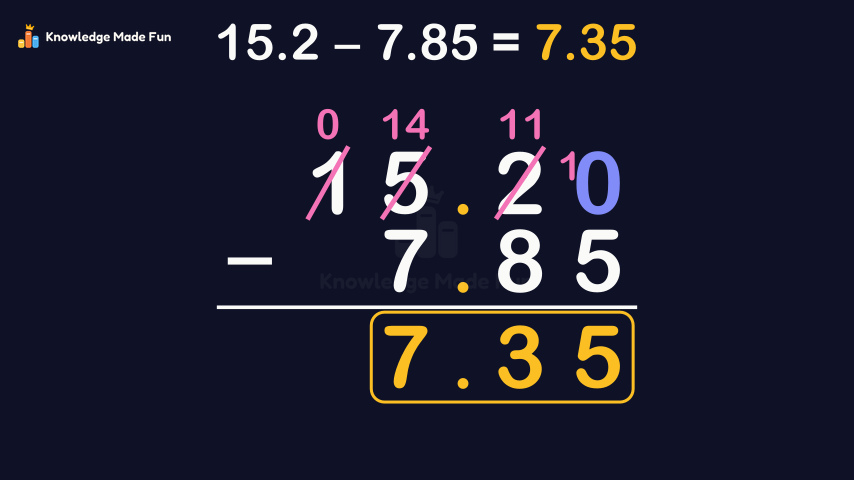
15.2 − 7.85
Grade 4 · 1 min 26 s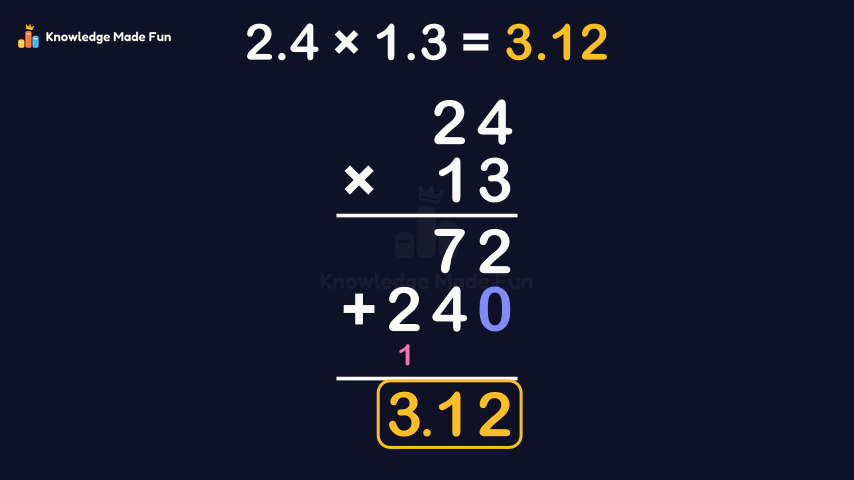 1 min 37 s
2.4 × 1.3
Grade 7 · 1 min 37 s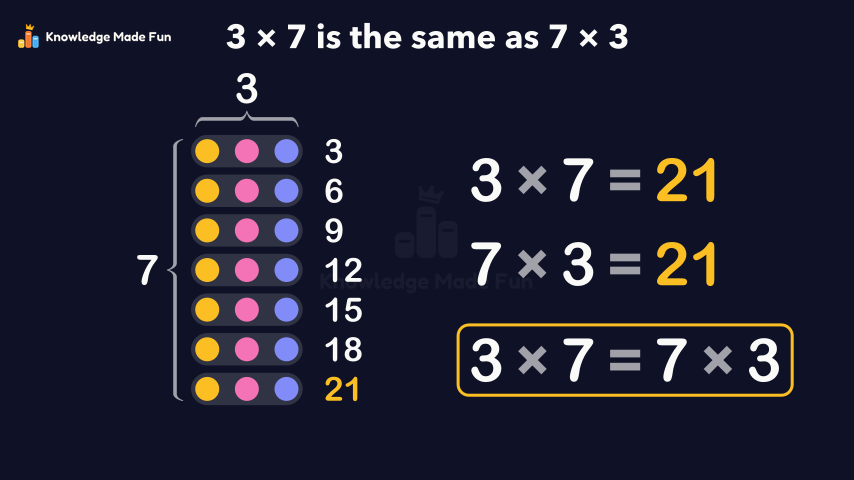 1 min 4 s
3 × 7 = 7 × 3: Equal Groups, Skip Counting and Arrays
Grade 4 · 1 min 4 s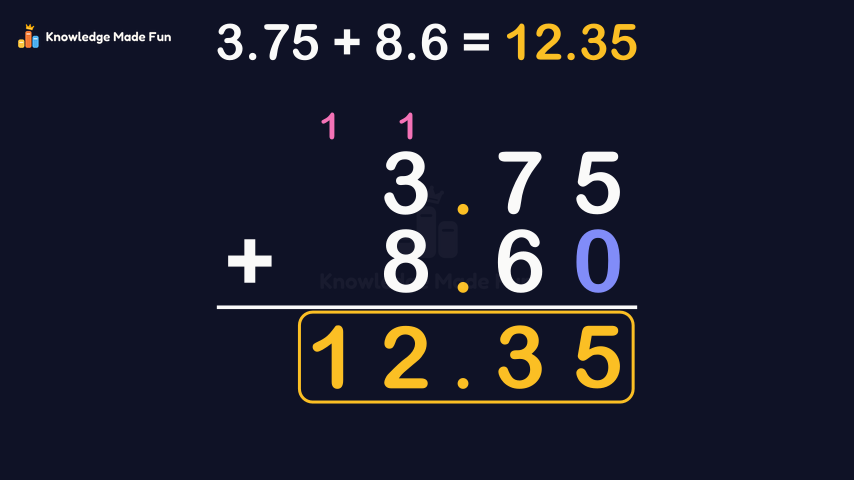 59 s
3.75 + 8.6
Grade 4 · 59 s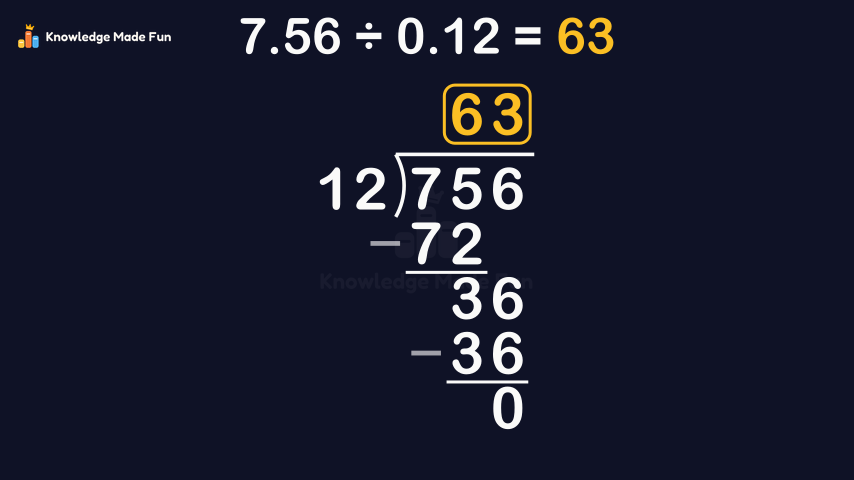 1 min 32 s
7.56 ÷ 0.12
Grade 7 · 1 min 32 s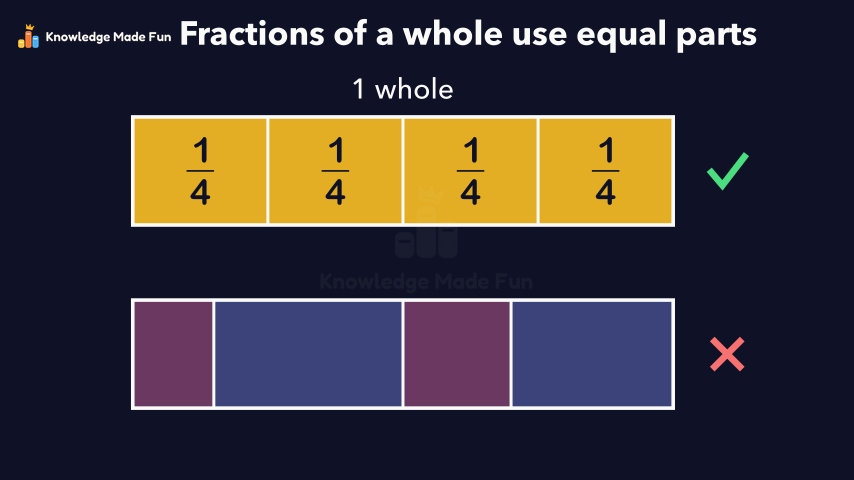 56 s
A Fraction Is Equal Parts of One Whole
Grade 3 · 56 s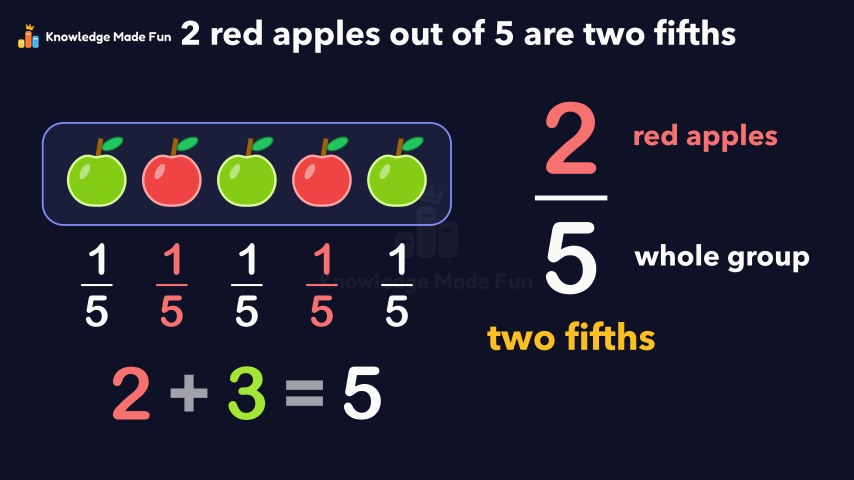 57 s
A Fraction of a Group
Grade 3 · 57 s 1 min 23 s
Adding and subtracting are related
Grade 1 · 1 min 23 s
- All Grade 6 Mathematics lessons
- Teachers: the maths worksheets for Grade 6 are in the dashboard, each with a worked example and a proven answer key.
- Try the graph paper, free for everyone, no account needed.
- Create a free account to watch three lessons a day, no payment and no card.