Lesson · Grade 6 · Applied Design, Skills and Technologies
Sorting and Searching: Selection Sort and Binary Search
- Grade 6
- Applied Design, Skills and Technologies
- 1 min 24 s
- British Columbia
- BC6-AD-03
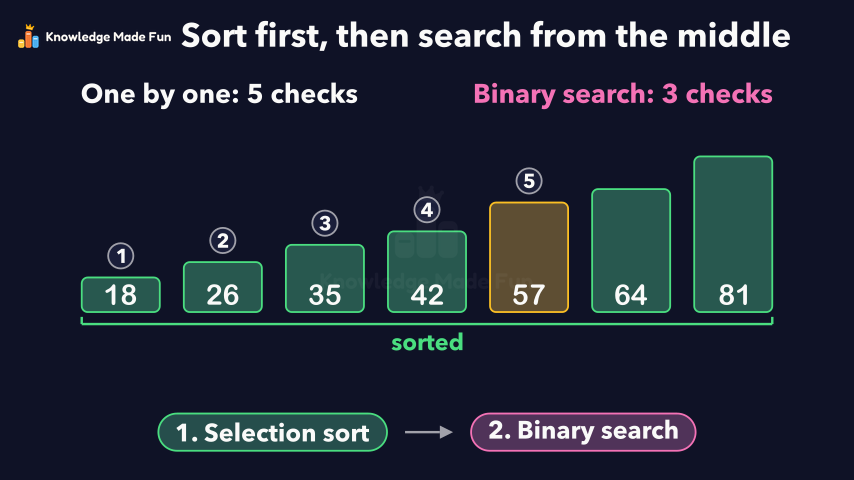
Seven mixed-up cards, each as tall as its number, are sorted with selection sort: each round, the smallest card left moves to the next place in a sorted row. Binary search then finds the card 57 in only 3 checks by always checking the middle and dropping the side that can't hold it, compared with 5 checks going one by one, and the video shows that this only works because the list is sorted.
Concept: Sorting and searching: two classic algorithms
Anyone can watch two lessons on the website without an account. Signing in is free, no payment and no card, and opens three a day; Plus has no limit.
Loading
In one sentence
The question this lesson answers
How can we sort these cards, and then find one card fast?
Two classic algorithms help: first selection sort, then binary search.
Transcript
What the lesson says
How can we sort these cards, and then find one card fast?
Two classic algorithms help: first selection sort, then binary search.
Selection sort looks at every card to find the smallest one.
It moves that card to the first place in a new sorted row.
Then it repeats with the cards that are left, one card at a time.
Now every card is sorted, from smallest to largest.
Now let's find the card with 57 on it.
Binary search checks the middle card first.
42 is less than 57, so we drop 42 and the cards on its left.
The middle of the cards that are left is 64.
64 is more than 57, so we drop 64 and the card on its right.
We check the last card left, and it is 57: found in just 3 checks.
Checking one by one from the left would take 5 checks.
Binary search only works on a sorted list.
Sort first, then search by checking the middle each time.
Curriculum
Where this fits
- British Columbia, Grade 6
Applied Design, Skills and Technologies, Computational thinking: simple algorithms that reflect computational thinkingBC6-AD-03
Previous: Secret codes: the Caesar shift cipherNext: Flow Charts: Drawing the Steps of a Plan
The outcomes and strands follow the British Columbia curriculum.
Keep going
 1 min 19 s
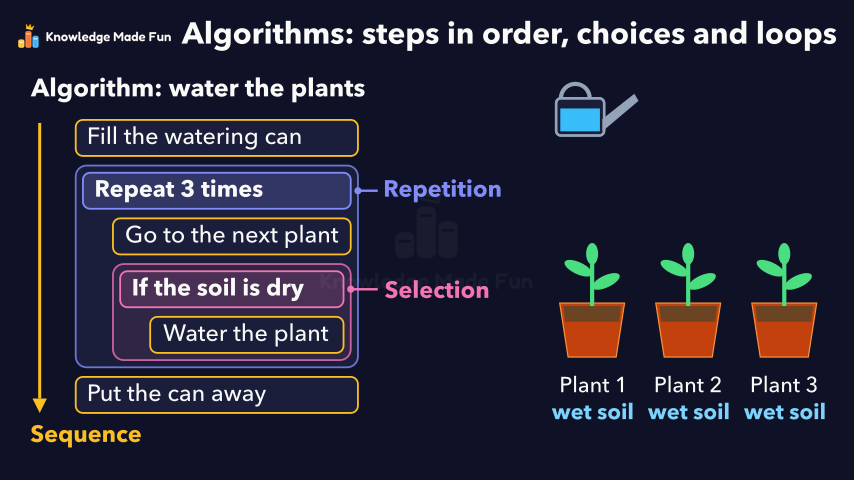
Algorithms: Steps in Order, Choices and Loops
Grade 6 · 1 min 19 s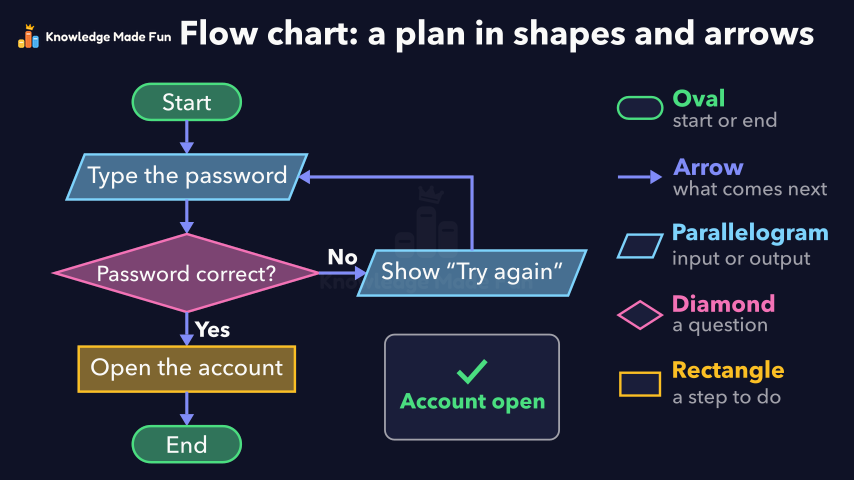 1 min 9 s
Flow Charts: Drawing the Steps of a Plan
Grade 6 · 1 min 9 s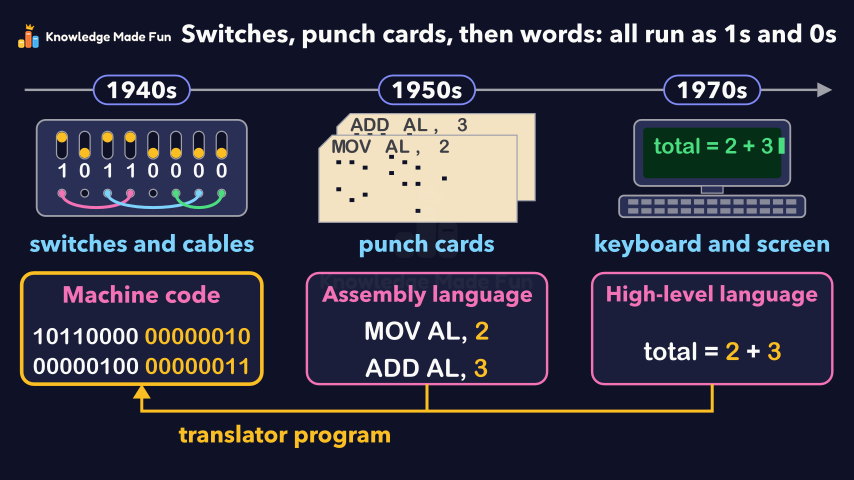 1 min 15 s
From Punch Cards to Code
Grade 6 · 1 min 15 s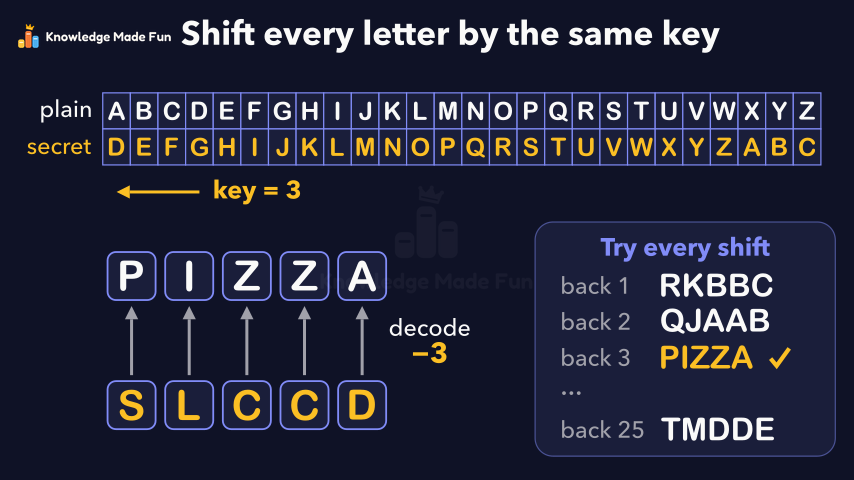 1 min 29 s
Secret codes: the Caesar shift cipher
Grade 6 · 1 min 29 s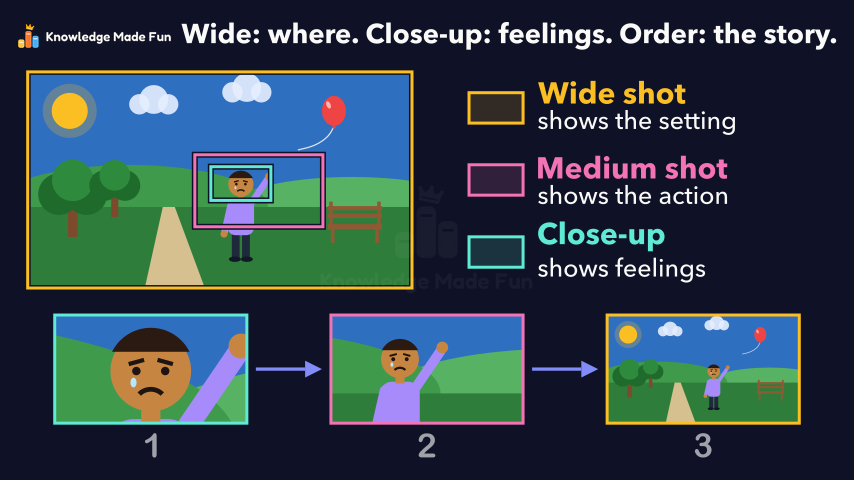 1 min 7 s
Camera Shots: How Close-Ups and Wide Shots Tell a Story
Grade 6 · 1 min 7 s 1 min 11 s
Can You Trust This Website? Five Checks
Grade 6 · 1 min 11 s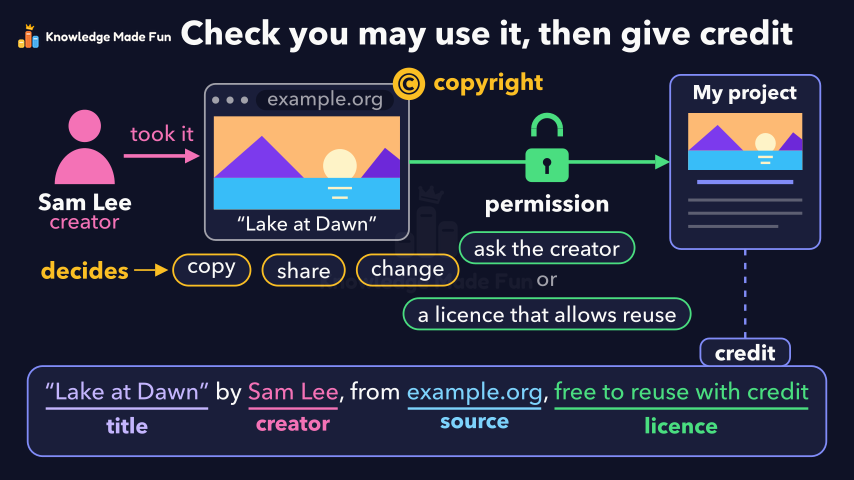 1 min 3 s
Copyright and Giving Credit
Grade 6 · 1 min 3 s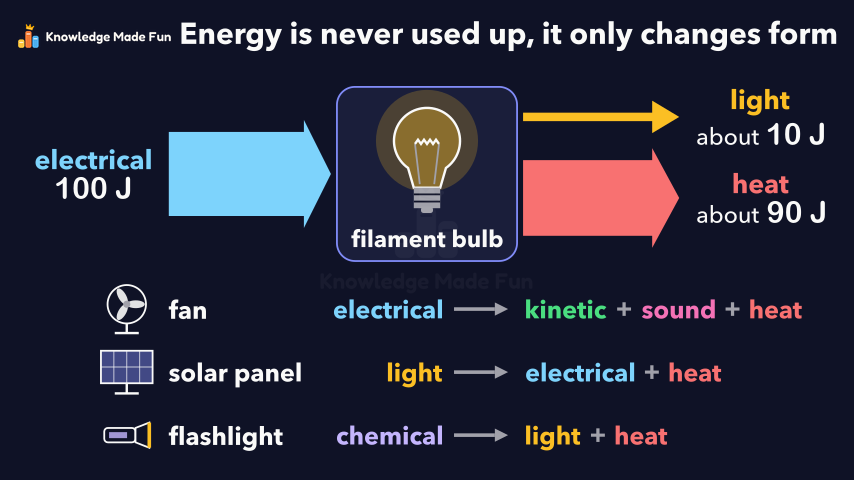 1 min 10 s
Energy Is Never Used Up
Grade 6 · 1 min 10 s
- All Grade 6 Applied Design, Skills and Technologies lessons
- Create a free account to watch three lessons a day, no payment and no card.