Lesson · Grade 6 · Applied Design, Skills and Technologies
Algorithms: Steps in Order, Choices and Loops
- Grade 6
- Applied Design, Skills and Technologies
- 1 min 19 s
- British Columbia
- BC6-AD-01
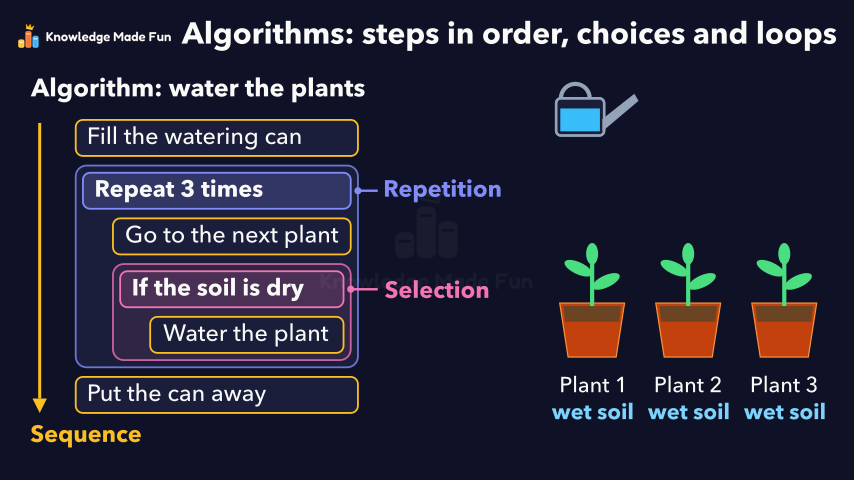
An algorithm for watering three plants is built as a stack of blocks: a step, a loop that repeats three times with an "if the soil is dry" choice inside it, then a final step, labelled sequence, selection and repetition. A pointer then follows the algorithm block by block while a watering can waters the two dry plants and skips the wet one, ending on the recap that algorithms are built from steps in order, choices and loops.
Anyone can watch two lessons on the website without an account. Signing in is free, no payment and no card, and opens three a day; Plus has no limit.
Loading
In one sentence
The question this lesson answers
How could we write steps for watering three plants?
A list of clear steps for doing a task is called an algorithm.
Transcript
What the lesson says
How could we write steps for watering three plants?
A list of clear steps for doing a task is called an algorithm.
Algorithms are built from three building blocks: sequence, selection and repetition.
Sequence means doing the steps in order, one after another.
Order matters: you must fill the can before you can water a plant.
Selection makes a choice: if the soil is dry, water the plant.
If the soil is not dry, we skip that step.
Repetition, or a loop, repeats the same steps.
This loop runs three times, once for each plant.
Let's follow it: first, we fill the can.
Plant 1 has dry soil, so we water it.
Plant 2 has wet soil, so we skip watering it.
Plant 3 has dry soil, so we water it too.
After three times the loop ends, and we put the can away.
Algorithms are built from steps in order, choices and loops.
Curriculum
Where this fits
- British Columbia, Grade 6
Applied Design, Skills and Technologies, Computational thinking: simple algorithms that reflect computational thinkingBC6-AD-01
- British Columbia, Grade 7
Applied Design, Skills and Technologies, Computational thinking: simple algorithms that reflect computational thinkingBC7-AD-01
This lesson is also listed in Grade 7.
The outcomes and strands follow the British Columbia curriculum.
Keep going
 1 min 9 s
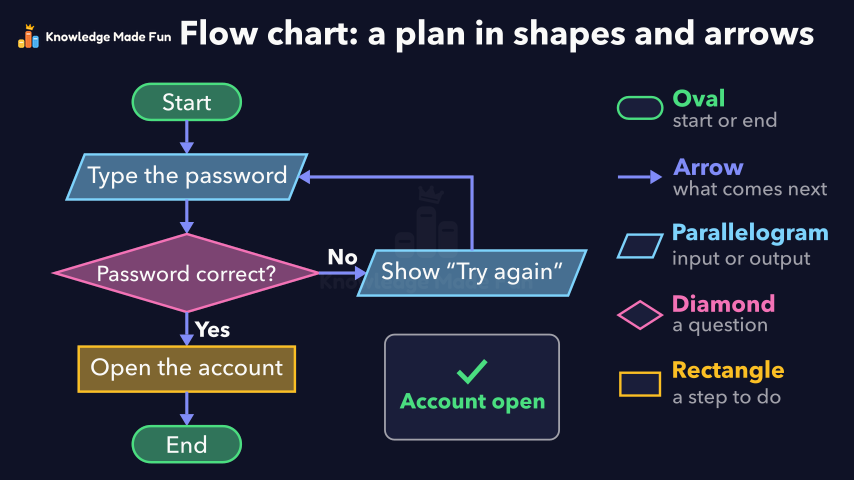
Flow Charts: Drawing the Steps of a Plan
Grade 6 · 1 min 9 s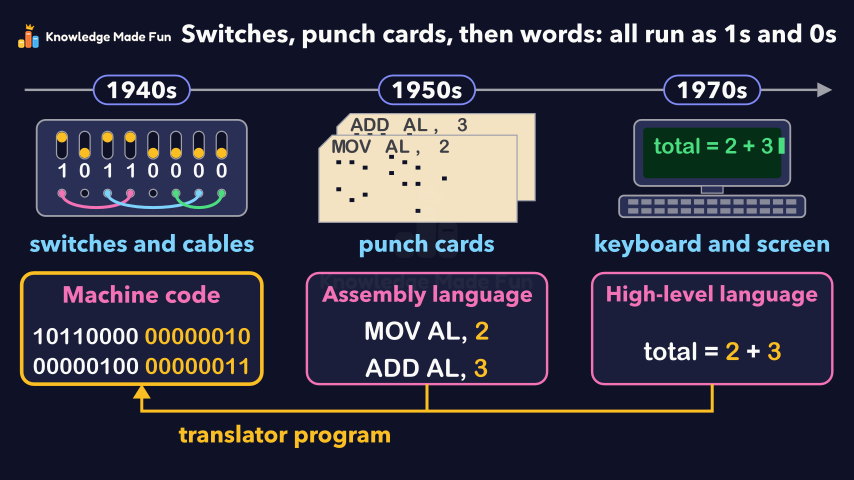 1 min 15 s
From Punch Cards to Code
Grade 6 · 1 min 15 s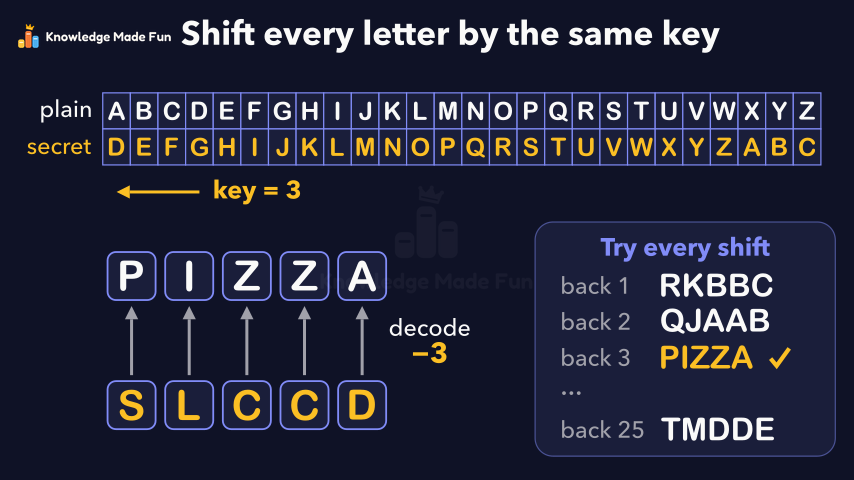 1 min 29 s
Secret codes: the Caesar shift cipher
Grade 6 · 1 min 29 s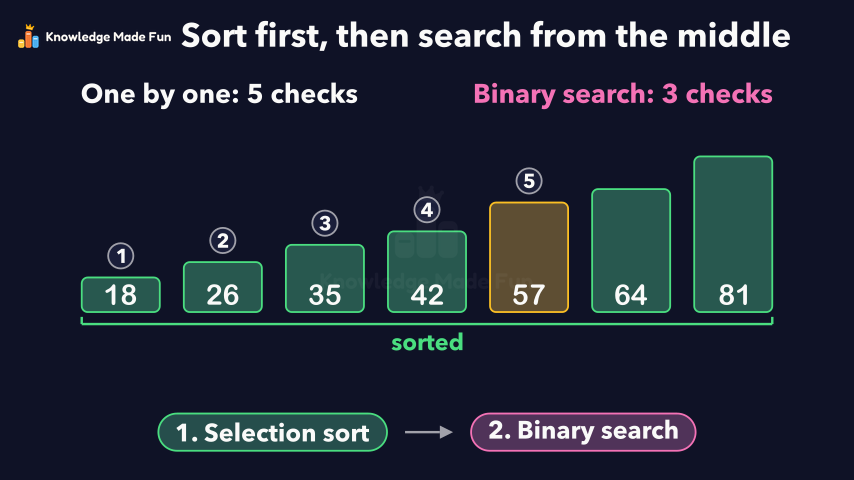 1 min 24 s
Sorting and Searching: Selection Sort and Binary Search
Grade 6 · 1 min 24 s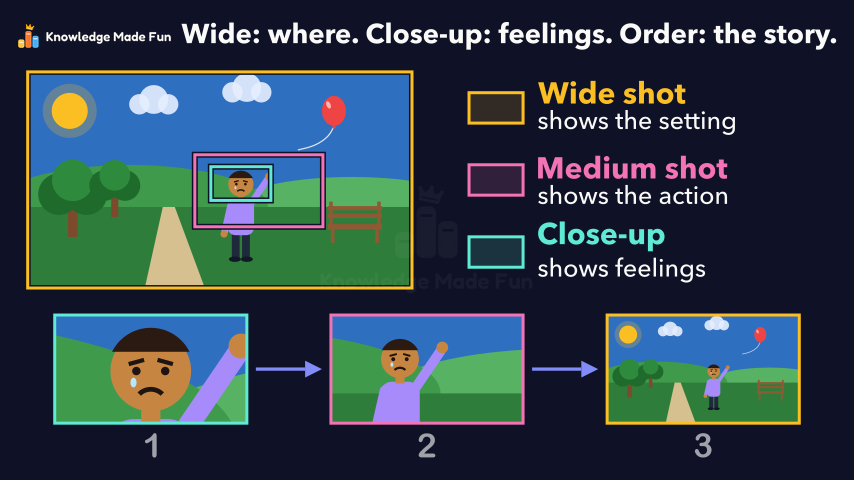 1 min 7 s
Camera Shots: How Close-Ups and Wide Shots Tell a Story
Grade 6 · 1 min 7 s 1 min 11 s
Can You Trust This Website? Five Checks
Grade 6 · 1 min 11 s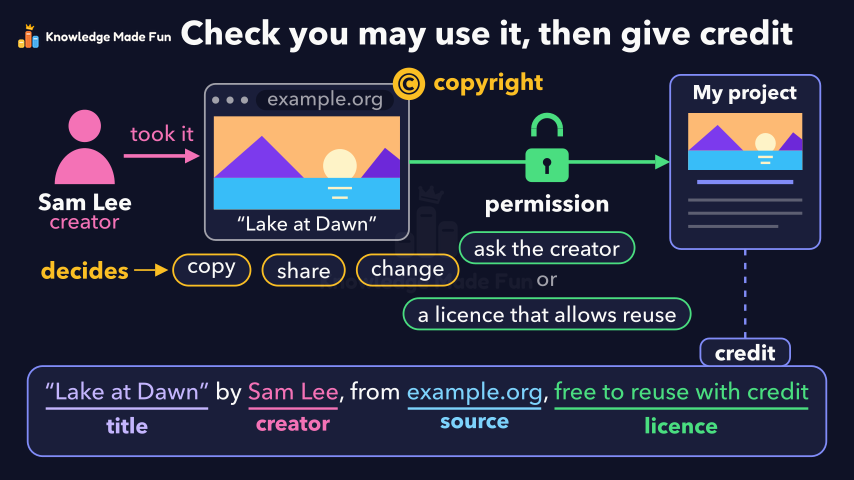 1 min 3 s
Copyright and Giving Credit
Grade 6 · 1 min 3 s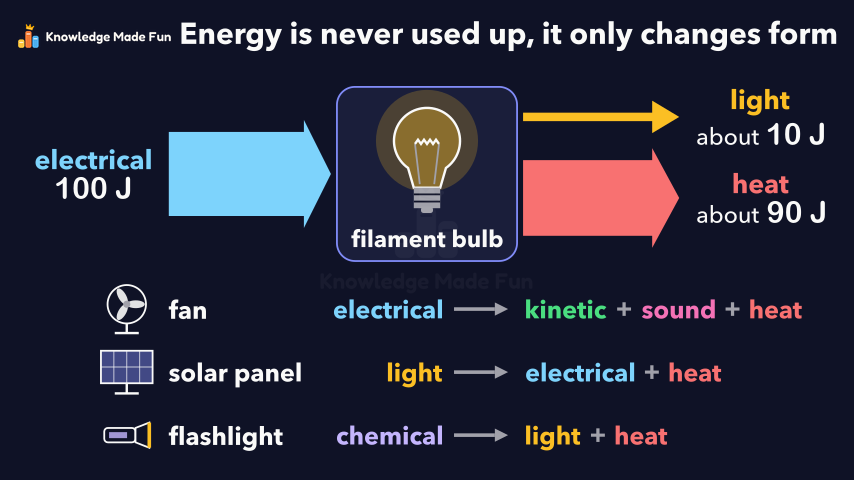 1 min 10 s
Energy Is Never Used Up
Grade 6 · 1 min 10 s
- All Grade 6 Applied Design, Skills and Technologies lessons
- Create a free account to watch three lessons a day, no payment and no card.