Lesson · Grade 6 · Applied Design, Skills and Technologies
Energy Is Never Used Up
- Grade 6
- Applied Design, Skills and Technologies
- 1 min 10 s
- British Columbia
- BC6-AD-31
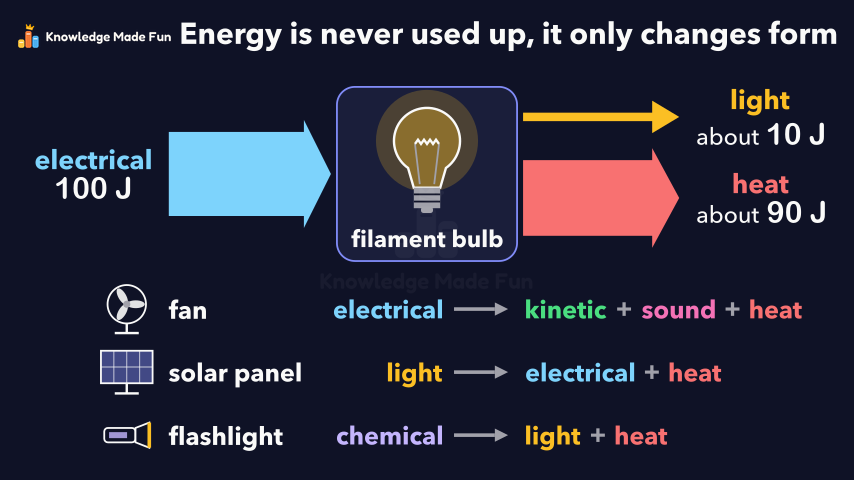
A filament bulb takes in 100 J of electrical energy and gives out about 10 J of light and about 90 J of heat. Adding these back to 100 J shows that energy is conserved, and even the wasted heat is not gone. A fan, a solar panel and a flashlight then show other everyday devices changing energy from one form to another.
Concept: Energy is never used up, it only changes form
Anyone can watch two lessons on the website without an account. Signing in is free, no payment and no card, and opens three a day; Plus has no limit.
Loading
In one sentence
The question this lesson answers
When a device uses energy, is that energy used up?
Say 100 joules of electrical energy flows into an old-style filament bulb.
Transcript
What the lesson says
When a device uses energy, is that energy used up?
Say 100 joules of electrical energy flows into an old-style filament bulb.
About 10 joules comes out as light.
About 90 joules comes out as heat.
Add them up: 10 joules plus 90 joules makes 100 joules.
So the energy that comes out equals the energy that went in.
Energy is never created or destroyed, so we say energy is conserved.
The wasted heat is not gone; it spreads out into the room.
Other everyday devices change energy from one form to another too.
A fan changes electrical energy into kinetic energy, plus some sound and heat.
A solar panel changes light into electrical energy and heat.
A flashlight changes the chemical energy in its battery into light and heat.
Energy is never used up; it only changes from one form to another.
Curriculum
Where this fits
- British Columbia, Grade 6
Applied Design, Skills and Technologies, Power technology: energy is conservedBC6-AD-31
- British Columbia, Grade 7
Applied Design, Skills and Technologies, Power technology: energy is conservedBC7-AD-28
This lesson is also listed in Grade 7.
The outcomes and strands follow the British Columbia curriculum.
Keep going
 1 min 20 s
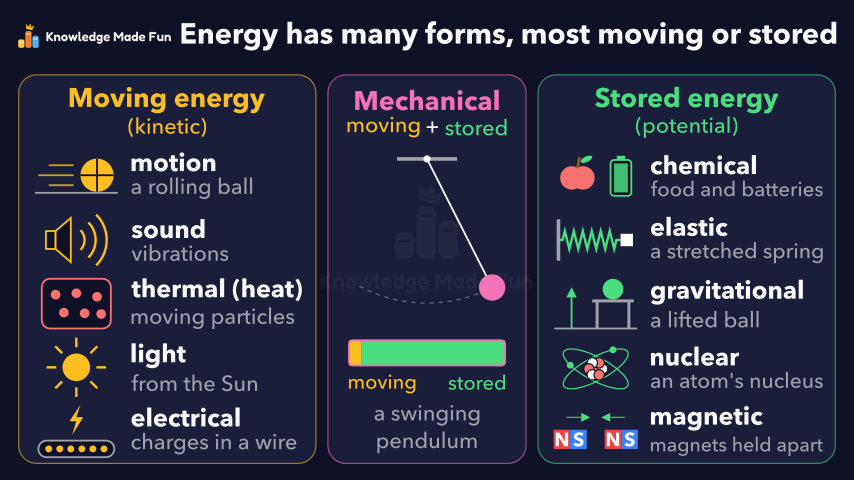
Forms of Energy: Moving and Stored
Grade 6 · 1 min 20 s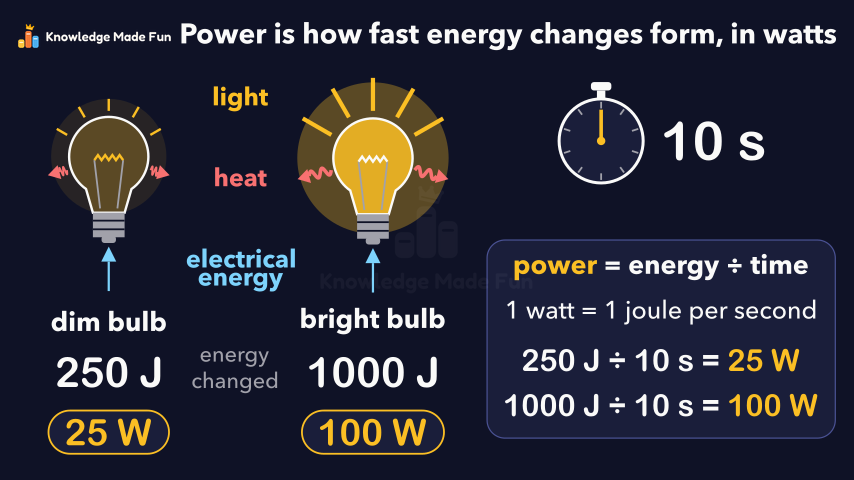 1 min 16 s
Power: How Fast Energy Changes Form
Grade 6 · 1 min 16 s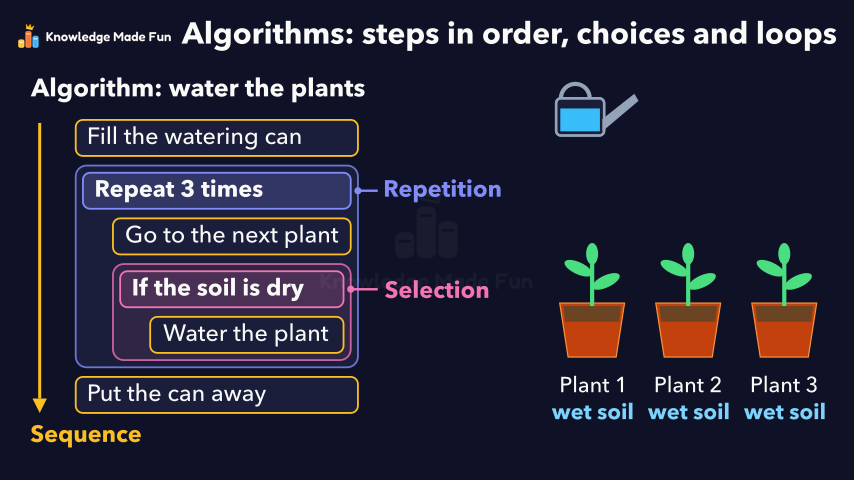 1 min 19 s
Algorithms: Steps in Order, Choices and Loops
Grade 6 · 1 min 19 s 1 min 7 s
Camera Shots: How Close-Ups and Wide Shots Tell a Story
Grade 6 · 1 min 7 s 1 min 11 s
Can You Trust This Website? Five Checks
Grade 6 · 1 min 11 s 1 min 3 s
Copyright and Giving Credit
Grade 6 · 1 min 3 s 1 min 5 s
Finding a Market Niche
Grade 6 · 1 min 5 s 1 min 9 s
Flow Charts: Drawing the Steps of a Plan
Grade 6 · 1 min 9 s
- All Grade 6 Applied Design, Skills and Technologies lessons
- Create a free account to watch three lessons a day, no payment and no card.