Lesson · Grade 6 · Applied Design, Skills and Technologies
How a Search Engine Finds and Ranks Results
- Grade 6
- Applied Design, Skills and Technologies
- 1 min 14 s
- British Columbia
- BC6-AD-15
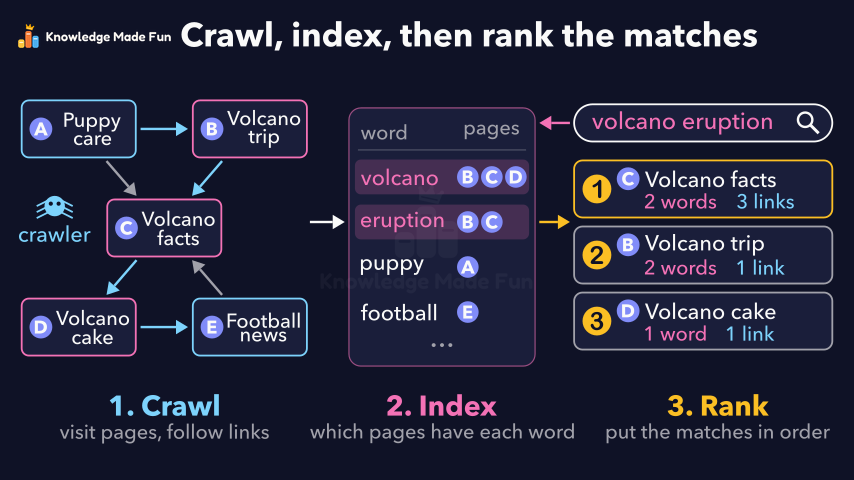
A made-up search engine is shown as one labelled diagram in three steps: a crawler follows links to visit five web pages, the engine builds an index of which pages have each word, and a search for "volcano eruption" is looked up in that index to find the three matching pages. The matches are put in order using two of the many ranking clues, how many of the searched words each page has and how many other pages link to it, before a reminder that the top result is not always reliable and a closing recap: crawl, index, then rank.
Anyone can watch two lessons on the website without an account. Signing in is free, no payment and no card, and opens three a day; Plus has no limit.
Loading
In one sentence
The question this lesson answers
How are search results found, and how are they ranked?
Our made-up search engine starts with web pages joined by links.
Transcript
What the lesson says
How are search results found, and how are they ranked?
Our made-up search engine starts with web pages joined by links.
First, a program called a crawler visits pages and follows their links to find more.
Next, it makes a huge list of which pages have each word, called an index.
Now someone types volcano eruption into the search box.
The search engine looks up each word in its index, not in the whole web.
Three pages have at least one of the words: B, C and D.
Then it ranks the matches, putting them in order using many clues.
One clue is how many of your words each page has.
Another clue is how many other pages link to it.
The pages with the best scores go at the top of the results.
But the top result is not always reliable, so check it before you trust it.
A search engine crawls pages, indexes their words, then ranks the matches.
Curriculum
Where this fits
- British Columbia, Grade 6
Applied Design, Skills and Technologies, Digital literacy: search techniques, how search results are selected and ranked, and criteria for evaluating search resultsBC6-AD-15
Previous: Copyright and Giving CreditNext: Can You Trust This Website? Five Checks
- British Columbia, Grade 7
Applied Design, Skills and Technologies, Digital literacy: search techniques, how search results are selected and ranked, and criteria for evaluating search resultsBC7-AD-14
Previous: Copyright and Giving CreditNext: Can You Trust This Website? Five Checks
This lesson is also listed in Grade 7.
The outcomes and strands follow the British Columbia curriculum.
Keep going
 1 min 11 s
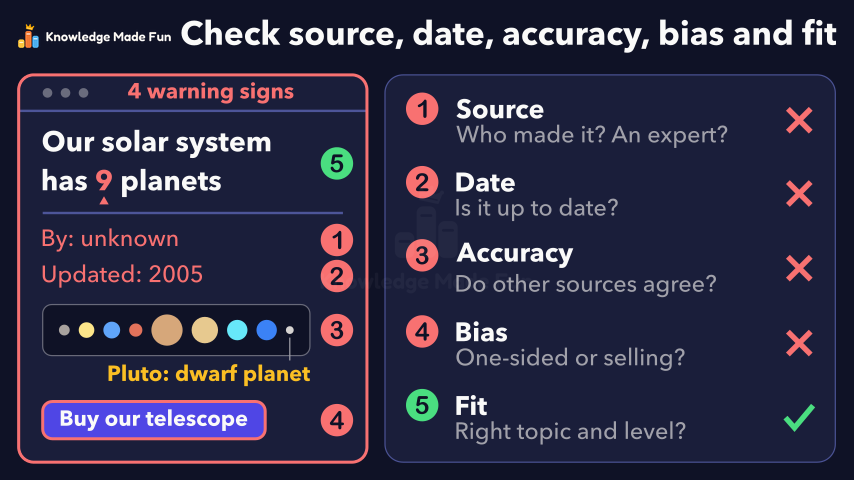
Can You Trust This Website? Five Checks
Grade 6 · 1 min 11 s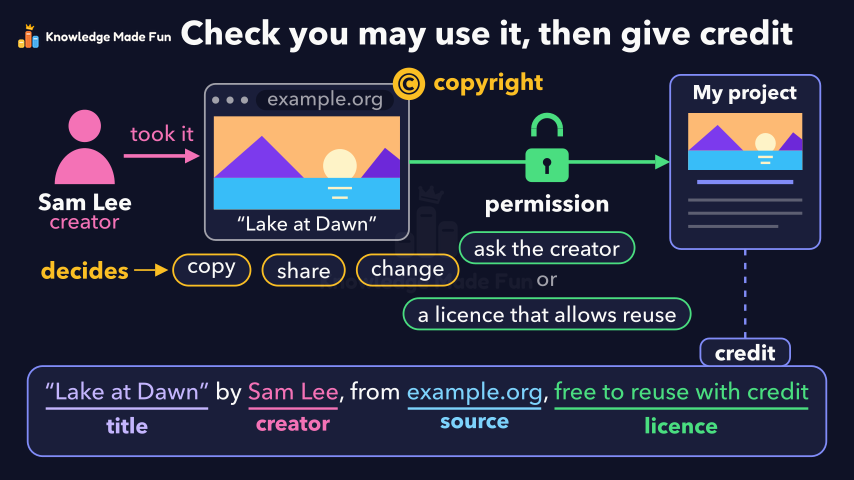 1 min 3 s
Copyright and Giving Credit
Grade 6 · 1 min 3 s 1 min 13 s
Spotting Online Scams and Phishing
Grade 6 · 1 min 13 s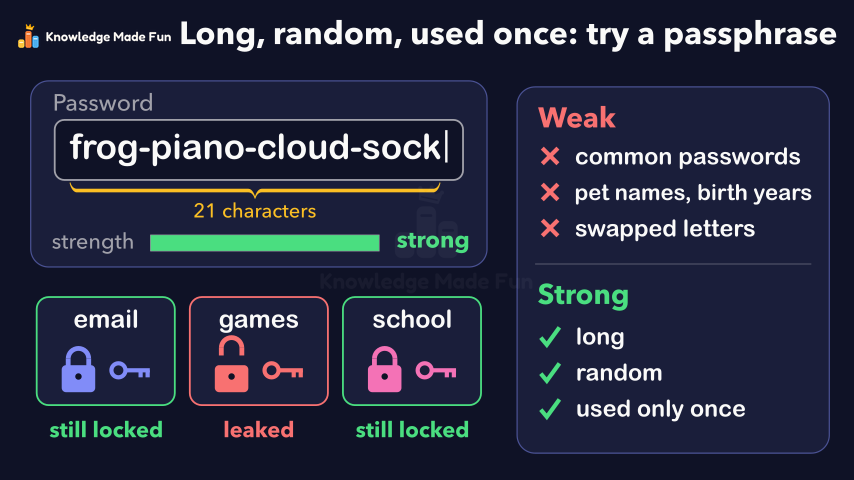 1 min 14 s
Strong Passwords and Passphrases
Grade 6 · 1 min 14 s 1 min 2 s
Your Digital Footprint: What You Post Can Last
Grade 6 · 1 min 2 s 1 min 19 s
Algorithms: Steps in Order, Choices and Loops
Grade 6 · 1 min 19 s 1 min 7 s
Camera Shots: How Close-Ups and Wide Shots Tell a Story
Grade 6 · 1 min 7 s 1 min 10 s
Energy Is Never Used Up
Grade 6 · 1 min 10 s
- All Grade 6 Applied Design, Skills and Technologies lessons
- Create a free account to watch three lessons a day, no payment and no card.