Lesson · Grade 7 · Science
What an Electric Current Is
- Grade 7
- Science
- 1 min 5 s
- British Columbia
- BC7-SC-21
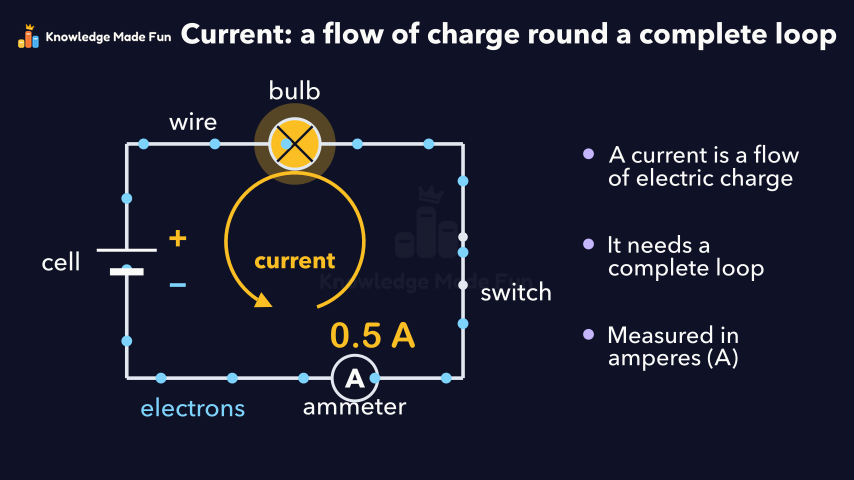
A single circuit diagram builds up step by step: a cell with its positive and negative ends, wires and a bulb forming a loop, the electrons in the metal, and the cell pushing them round so the bulb lights. Opening a switch stops the flow and darkens the bulb, closing it restores the current, an ammeter shows the current measured in amperes, and the video ends on the recap that a current is a flow of electric charge round a complete loop.
Anyone can watch two lessons on the website without an account. Signing in is free, no payment and no card, and opens three a day; Plus has no limit.
Loading
In one sentence
The question this lesson answers
What is an electric current? Let us build a circuit to find out.
A cell has a positive end and a negative end.
Transcript
What the lesson says
What is an electric current? Let us build a circuit to find out.
A cell has a positive end and a negative end.
Metal wires join the cell to a bulb, making a loop.
The metal is full of tiny charged particles called electrons.
The cell pushes the electrons out of its negative end, so they all move the same way round the loop.
This steady flow of electric charge is an electric current.
When the current passes through the bulb, it lights up.
Open a switch and the loop is broken. The electrons stop, and the bulb goes out.
Close the switch and the current flows again. A current needs a complete loop.
In a single loop like this, the current is the same all the way round.
We measure current with an ammeter, in units called amperes, or amps for short.
So an electric current is a flow of electric charge around a complete loop.
Curriculum
Where this fits
The outcomes and strands follow the British Columbia curriculum.
Keep going
 1 min 51 s
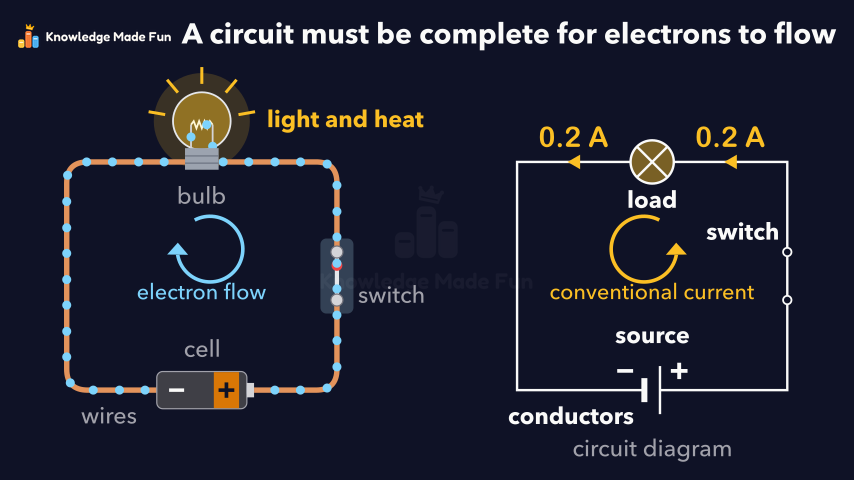
A Complete Circuit: Source, Load, Conductors and Switch
Grade 9 · 1 min 51 s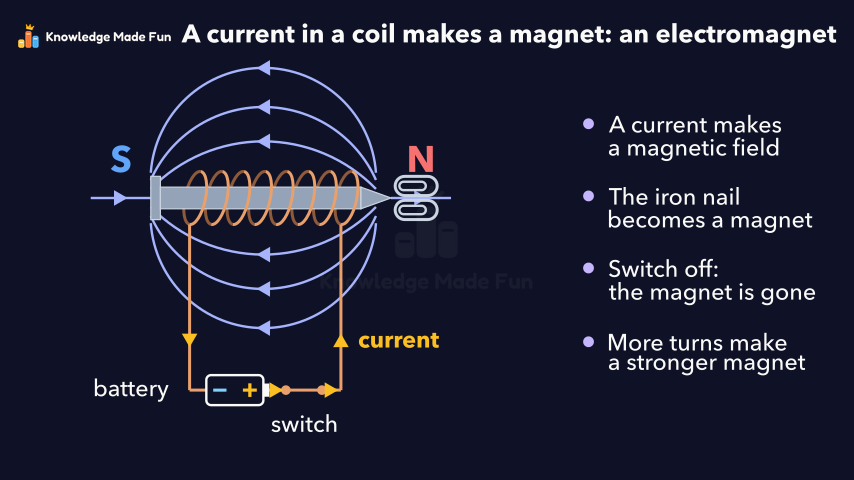 1 min 18 s
A current makes a magnet: the electromagnet
Grade 7 · 1 min 18 s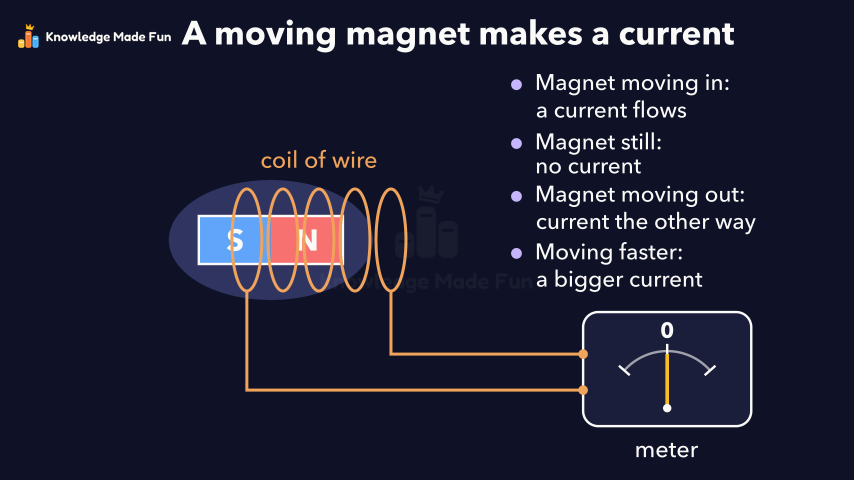 1 min 12 s
A Moving Magnet Makes a Current
Grade 7 · 1 min 12 s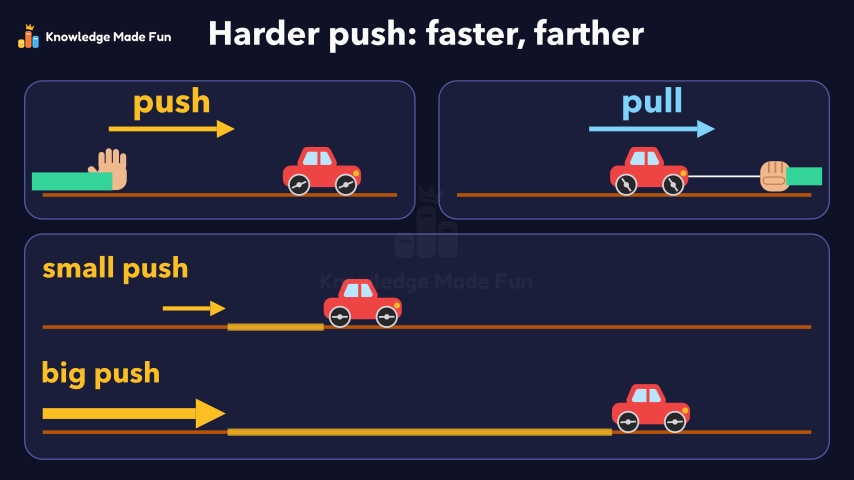 54 s
A Push or a Pull Makes Things Move
Kindergarten · 54 s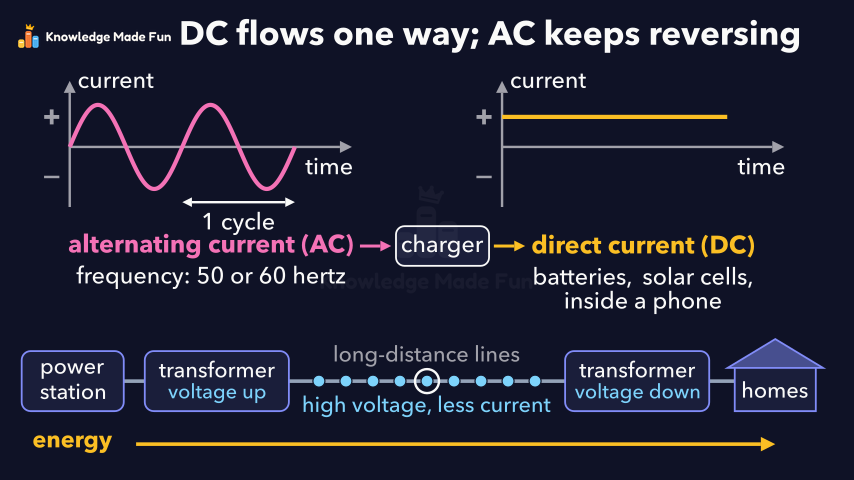 1 min 48 s
AC and DC: Two Ways Current Can Flow
Grade 9 · 1 min 48 s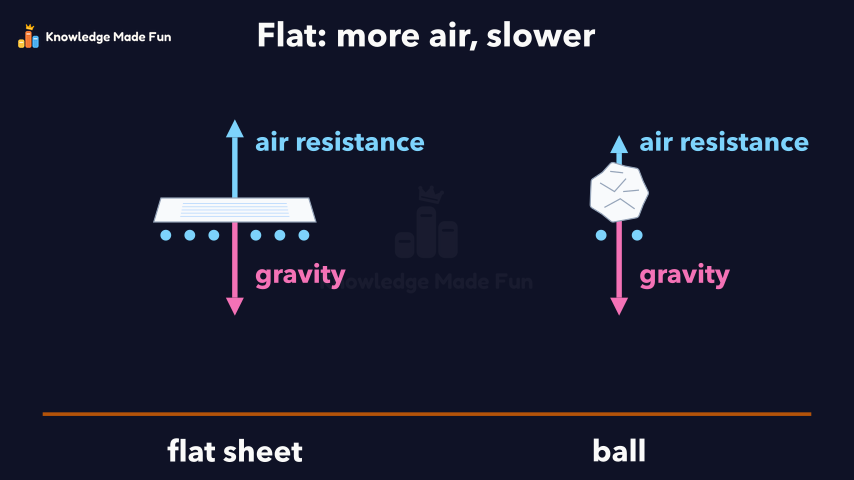 1 min 3 s
Air Resistance: Why a Flat Sheet Falls Slower
Grade 2 · 1 min 3 s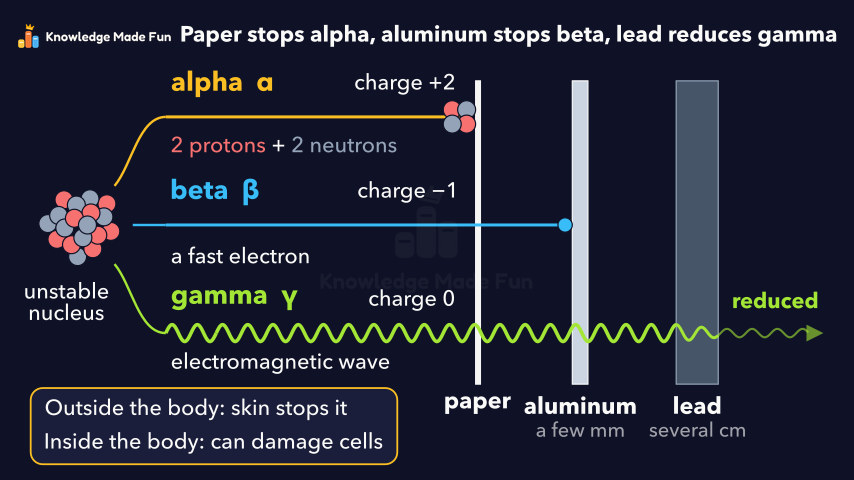 1 min 40 s
Alpha, Beta and Gamma Radiation
Grade 10 · 1 min 40 s 1 min 6 s
Balanced and Unbalanced Forces in Sport and Play
Grade 6 · 1 min 6 s
- All Grade 7 Science lessons
- Create a free account to watch three lessons a day, no payment and no card.