Lesson · Grade 3 · Science
Thermal energy: where heat comes from
- Grade 3
- Science
- 1 min 2 s
- British Columbia
- BC3-SC-09
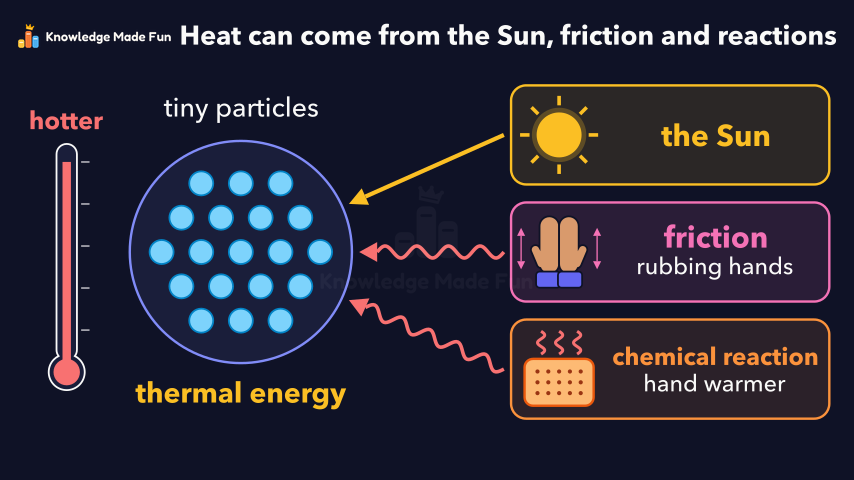
A close-up of tiny, always-jiggling particles and a thermometer shows that the hotter something gets, the faster its particles move, and that the energy of moving particles is called thermal energy. Three cards then add the Sun, friction from rubbing hands and the chemical reaction in a hand warmer as common sources of thermal energy, each sending energy into the particles so they move faster and the thermometer rises.
Anyone can watch two lessons on the website without an account. Signing in is free, no payment and no card, and opens three a day; Plus has no limit.
Loading
In one sentence
The question this lesson answers
Where does heat come from?
Everything around us is made of tiny particles, far too small to see.
Transcript
What the lesson says
Where does heat come from?
Everything around us is made of tiny particles, far too small to see.
These particles are always moving, jiggling back and forth.
When something gets hotter, its particles move faster.
Moving particles have a kind of energy called thermal energy.
Here are three common sources of thermal energy.
The Sun shines on things and warms them up.
Sunlight makes the particles in things move faster.
Try rubbing your hands together fast.
When things rub together, friction makes heat.
Some hand warmers have a chemical reaction inside them.
The reaction gives off heat.
Heat can come from the Sun, from friction and from chemical reactions.
Curriculum
Where this fits
- British Columbia, Grade 3
Science, Physics: sources of thermal energyBC3-SC-09
Next: Three Ways Heat Moves: Conduction, Convection and Radiation
The outcomes and strands follow the British Columbia curriculum.
Keep going
 1 min 51 s
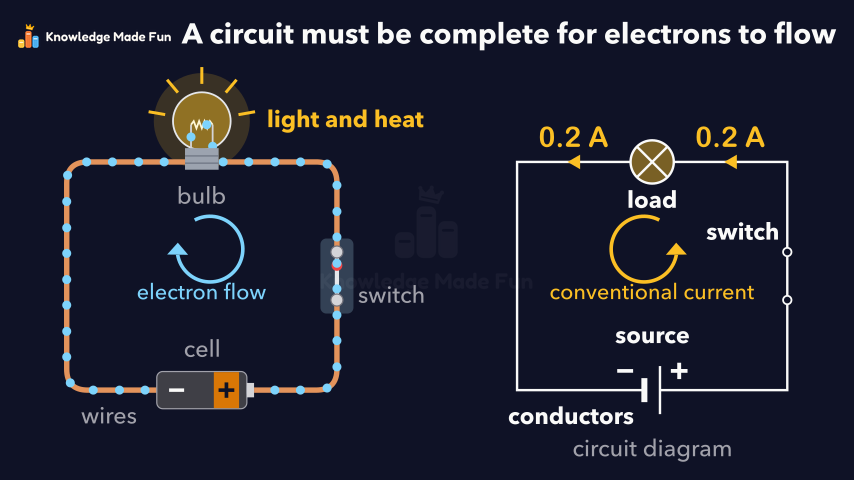
A Complete Circuit: Source, Load, Conductors and Switch
Grade 9 · 1 min 51 s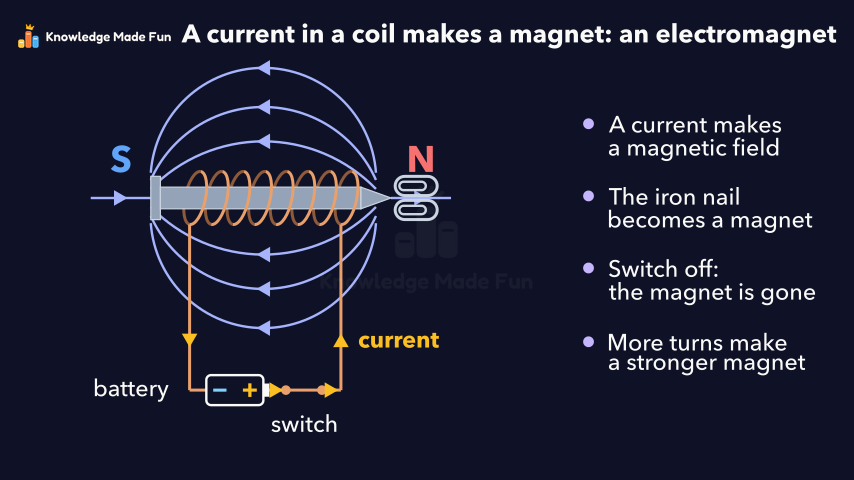 1 min 18 s
A current makes a magnet: the electromagnet
Grade 7 · 1 min 18 s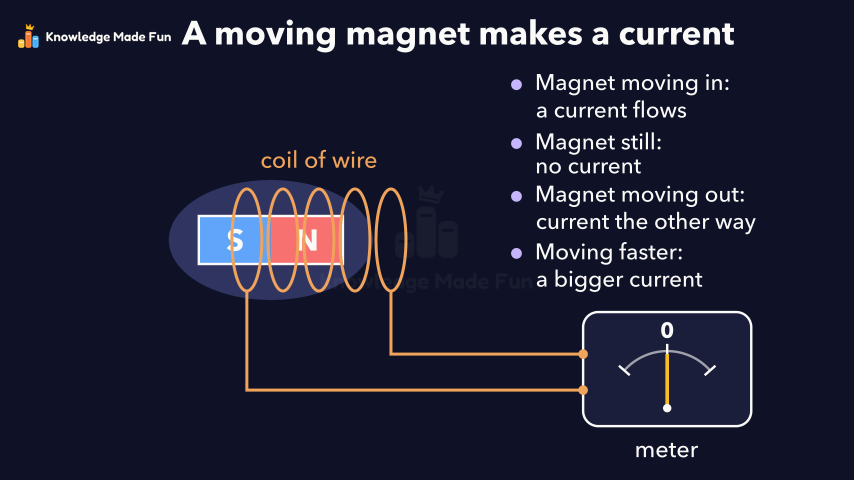 1 min 12 s
A Moving Magnet Makes a Current
Grade 7 · 1 min 12 s 54 s
A Push or a Pull Makes Things Move
Kindergarten · 54 s 1 min 48 s
AC and DC: Two Ways Current Can Flow
Grade 9 · 1 min 48 s 1 min 3 s
Air Resistance: Why a Flat Sheet Falls Slower
Grade 2 · 1 min 3 s 1 min 40 s
Alpha, Beta and Gamma Radiation
Grade 10 · 1 min 40 s 1 min 6 s
Balanced and Unbalanced Forces in Sport and Play
Grade 6 · 1 min 6 s
- All Grade 3 Science lessons
- Create a free account to watch three lessons a day, no payment and no card.