Lesson · Grade 4 · Science
Devices that change energy from one form to another
- Grade 4
- Science
- 1 min 1 s
- British Columbia
- BC4-SC-09
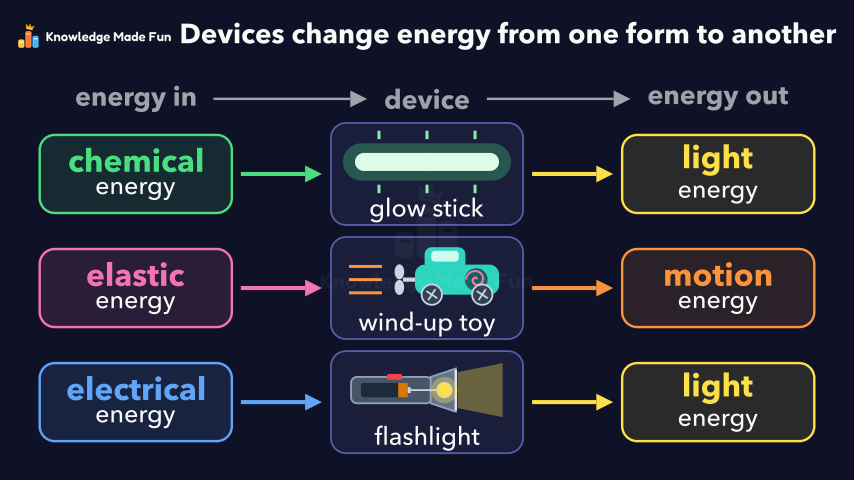
One diagram builds up row by row under three headings, "energy in", "device" and "energy out". In each row the device works first and then its energy labels appear: a glow stick bends and its two chemicals mix and light up (chemical to light), a wind-up toy car's spring winds tight and then drives the car (elastic to motion), and a flashlight's battery sends electrical energy to its bulb, which shines (electrical to light).
Anyone can watch two lessons on the website without an account. Signing in is free, no payment and no card, and opens three a day; Plus has no limit.
Loading
In one sentence
The question this lesson answers
Can energy change from one form into another?
Yes! A device can take energy in and give out a different form of energy.
Transcript
What the lesson says
Can energy change from one form into another?
Yes! A device can take energy in and give out a different form of energy.
Bend a glow stick, and two chemicals inside it mix.
The chemicals store chemical energy.
As they react, the chemical energy changes into light energy.
Turn the key on a wind-up toy, and a spring inside winds up tight.
The tight spring stores elastic energy.
As the spring unwinds, its elastic energy changes into motion energy.
A flashlight has a battery and a bulb.
Switch it on, and the battery sends electrical energy to the bulb.
The bulb changes the electrical energy into light energy.
Each device takes in one form of energy and gives out a different form.
Devices change energy from one form to another.
Curriculum
Where this fits
The outcomes and strands follow the British Columbia curriculum.
Keep going
 1 min 51 s
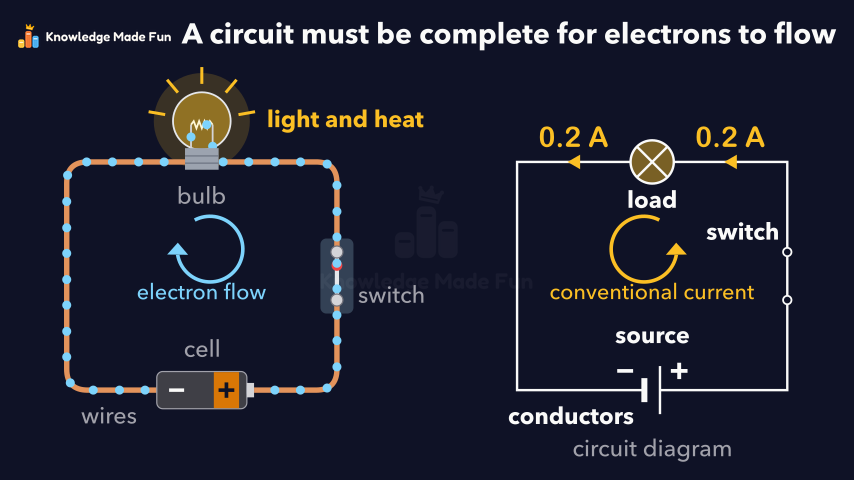
A Complete Circuit: Source, Load, Conductors and Switch
Grade 9 · 1 min 51 s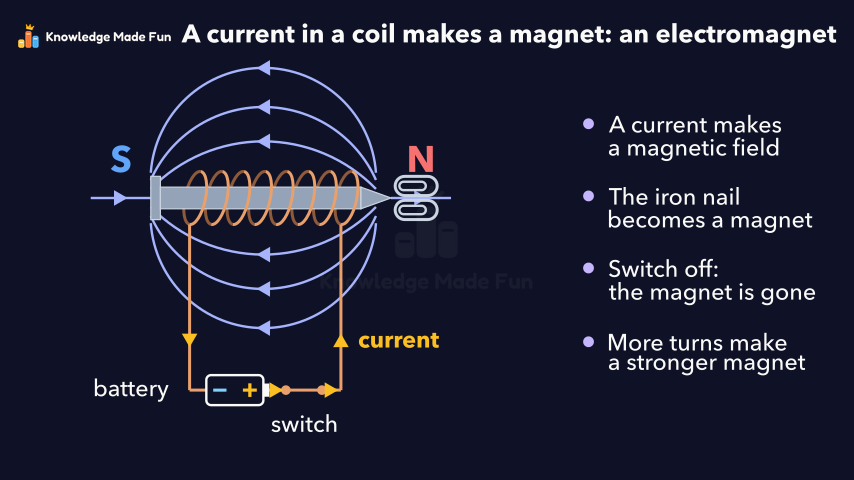 1 min 18 s
A current makes a magnet: the electromagnet
Grade 7 · 1 min 18 s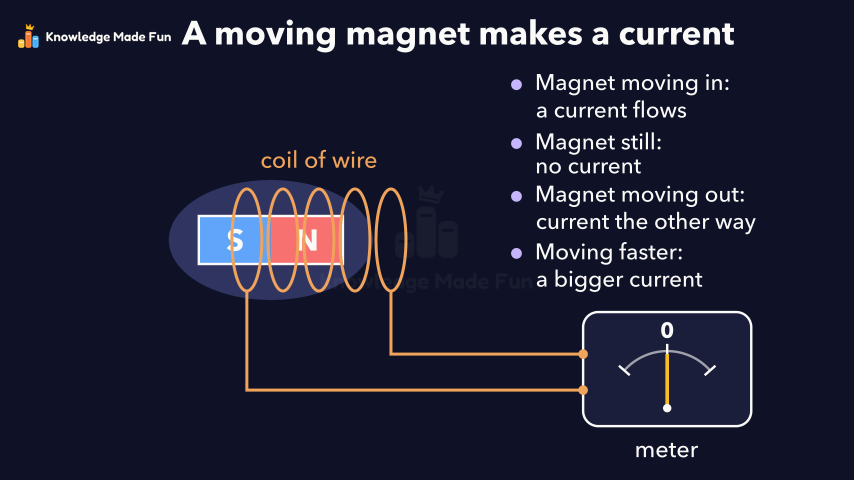 1 min 12 s
A Moving Magnet Makes a Current
Grade 7 · 1 min 12 s 54 s
A Push or a Pull Makes Things Move
Kindergarten · 54 s 1 min 48 s
AC and DC: Two Ways Current Can Flow
Grade 9 · 1 min 48 s 1 min 3 s
Air Resistance: Why a Flat Sheet Falls Slower
Grade 2 · 1 min 3 s 1 min 40 s
Alpha, Beta and Gamma Radiation
Grade 10 · 1 min 40 s 1 min 6 s
Balanced and Unbalanced Forces in Sport and Play
Grade 6 · 1 min 6 s
- All Grade 4 Science lessons
- Create a free account to watch three lessons a day, no payment and no card.