Lesson · Grade 11 · Pre Calculus
The quadratic formula and the discriminant
- Grade 11
- Pre Calculus
- 2 min 17 s
- British Columbia
- BC11-MA-76
The video solves 2x² + 3x − 2 = 0 with the quadratic formula: the discriminant is b² − 4ac = 9 + 16 = 25, so x = (−3 ± 5)/4 gives 1/2 or −2. It checks both roots, shows the common mistake of dividing only the square root by 2a, finds the roots as the x-intercepts of the parabola, then uses three graphs to show that a positive, zero or negative discriminant means two, one or no real roots, before ending on a one-line recap.
Anyone can watch two lessons on the website without an account. Signing in is free, no payment and no card, and opens three a day; Plus has no limit.
Loading
In one sentence
The question this lesson answers
Let's solve 2 x squared plus 3 x minus 2 equals 0.
Compare with a x squared plus b x plus c equals 0: a is 2, b is 3 and c is negative 2.
Transcript
What the lesson says
Let's solve 2 x squared plus 3 x minus 2 equals 0.
Compare with a x squared plus b x plus c equals 0: a is 2, b is 3 and c is negative 2.
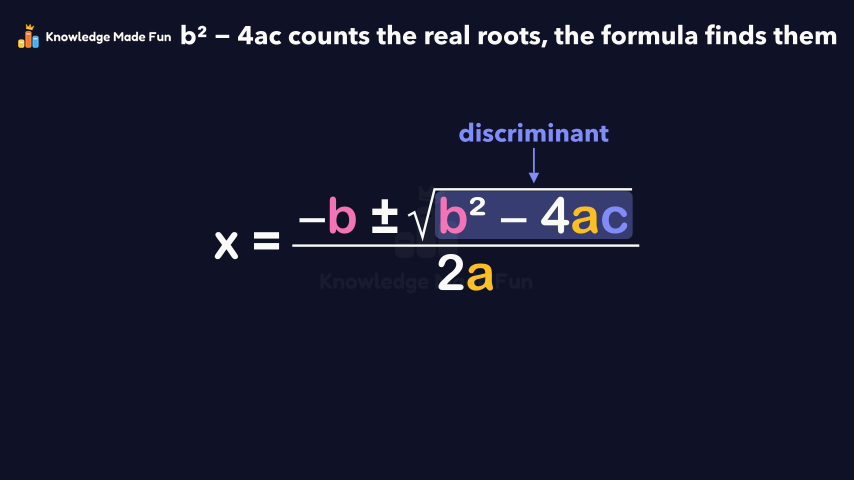
The quadratic formula: x equals negative b, plus or minus the square root of b squared minus 4 a c, over 2 a. The part under the root is the discriminant.
Here that is 3 squared minus 4 times 2 times negative 2, which is 9 plus 16, or 25.
Put the numbers in: negative 3, plus or minus the square root of 25, over 2 times 2.
That is negative 3 plus or minus 5, over 4.
Plus: negative 3 plus 5 is 2, and 2 over 4 is one half.
Minus: negative 3 minus 5 is negative 8, and negative 8 over 4 is negative 2.
Check both roots, or solutions: one half plus three halves minus 2 is 0, and so is 8 minus 6 minus 2.
A common mistake is dividing only the square root by 2 a. The whole top goes over 2 a.
On the graph, a curve called a parabola, the roots are the x-intercepts: where it crosses the x-axis.
The discriminant tells you how many real roots there are. Positive, like 25, means two.
Zero means one real root: x squared minus 6 x plus 9 gives 36 minus 36, so it touches the x-axis once.
Negative means no real roots: x squared plus 2 x plus 5 gives 4 minus 20, negative 16, so it never meets the x-axis.
Factoring, square roots and graphing solve some quadratics. The formula works for every one.
b squared minus 4 a c counts the real roots, and the formula finds them.
Curriculum
Where this fits
- British Columbia, Grade 11
Pre Calculus 11, Quadratics: quadratic functions and equationsBC11-MA-76
Previous: Completing the Square: From Standard Form to Vertex Form
The outcomes and strands follow the British Columbia curriculum.
Keep going
 2 min 24 s
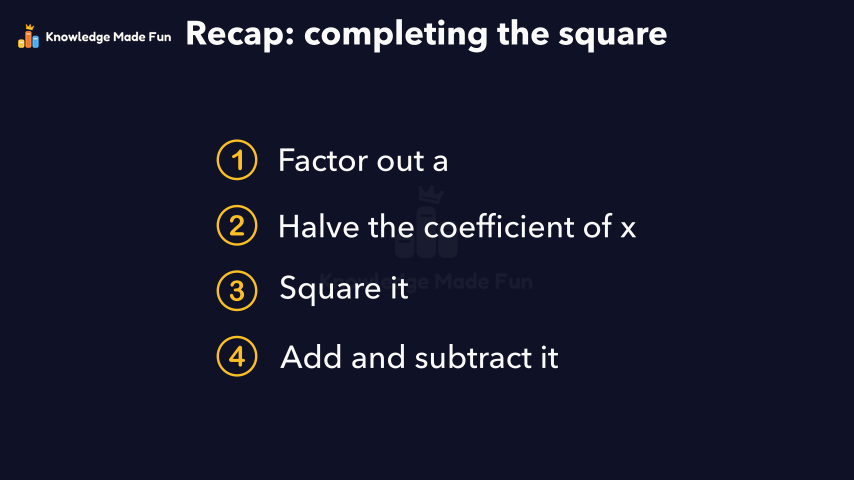
Completing the Square: From Standard Form to Vertex Form
Grade 11 · 2 min 24 s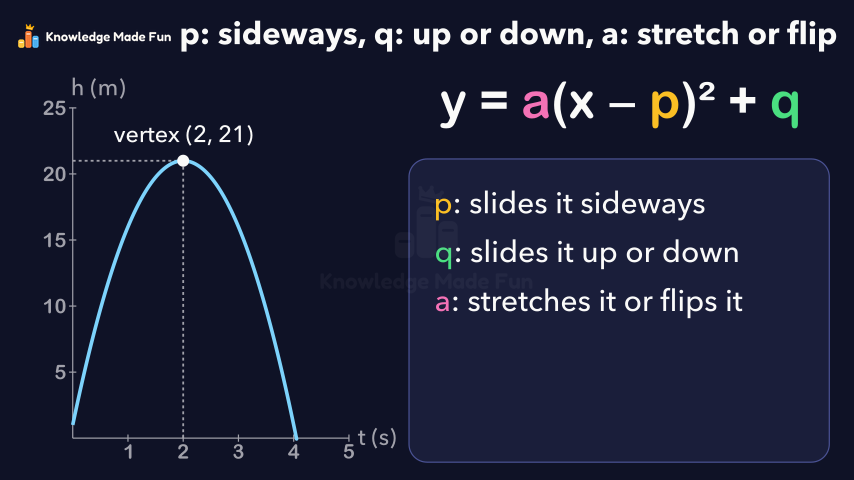 2 min 26 s
Vertex form: how a, p and q shape a parabola
Grade 11 · 2 min 26 s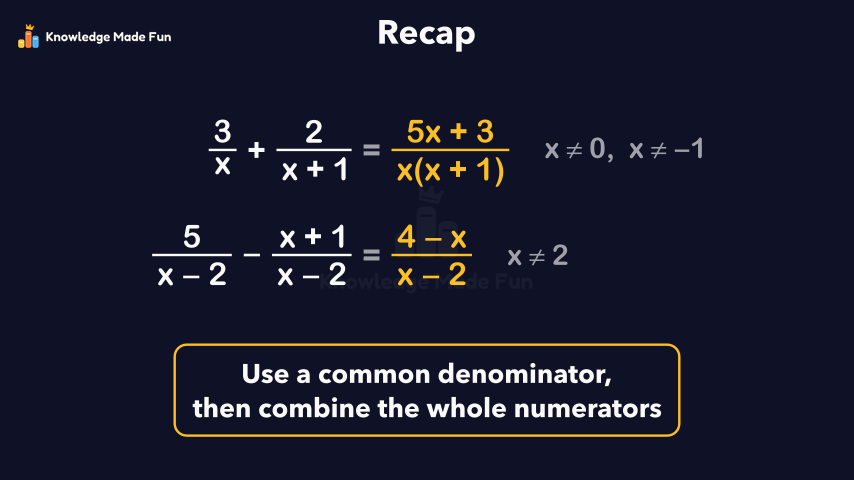 2 min 11 s
Adding and Subtracting Rational Expressions
Grade 11 · 2 min 11 s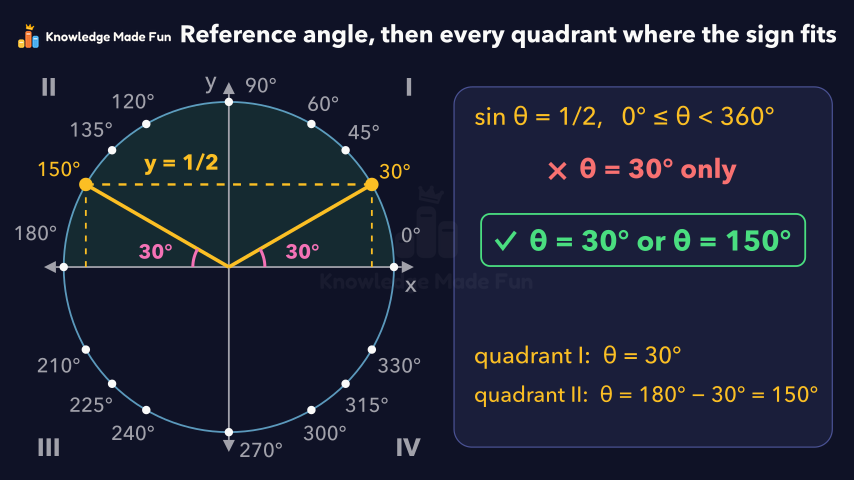 2 min 3 s
Angles in Standard Position and Reference Angles
Grade 11 · 2 min 3 s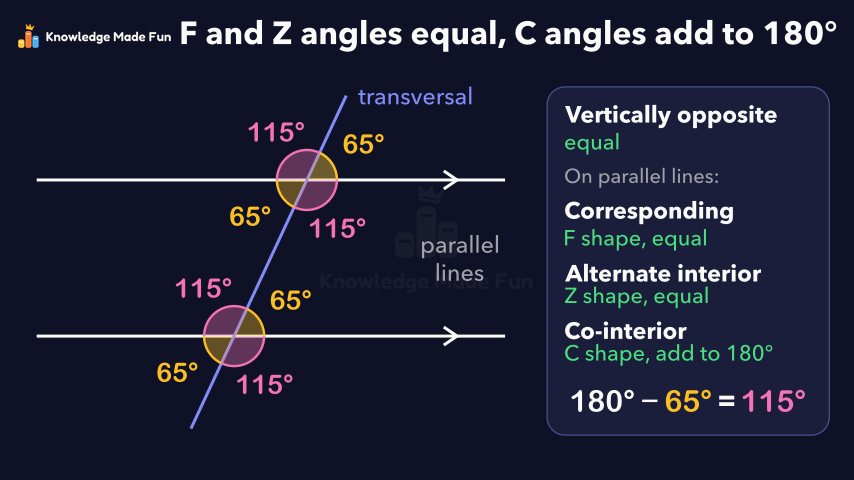 1 min 58 s
Angles made by parallel lines and a transversal
Grade 11 · 1 min 58 s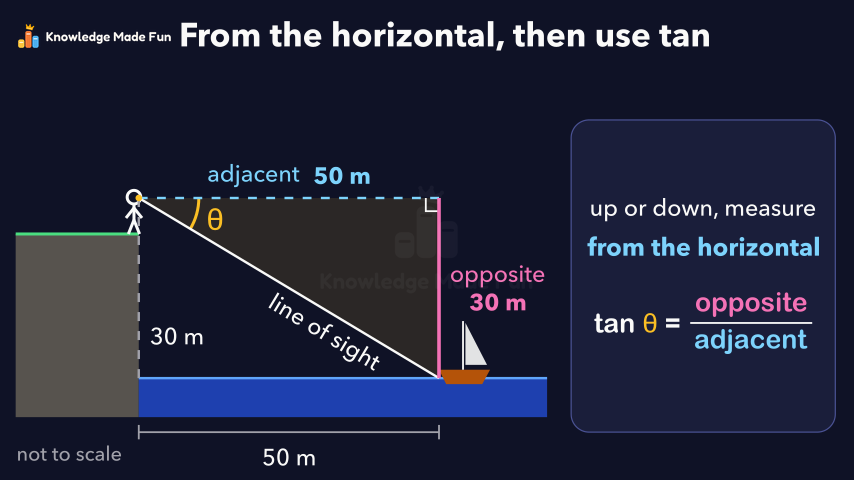 2 min 12 s
Angles of Elevation and Depression: Measuring What You Cannot Reach
Grade 10 · 2 min 12 s 1 min 58 s
Choosing the best average: mean, median or mode
Grade 8 · 1 min 58 s 2 min 7 s
Compound interest: earning interest on interest
Grade 11 · 2 min 7 s
- All Grade 11 Pre Calculus lessons
- Create a free account to watch three lessons a day, no payment and no card.