Lesson · Grade 9 · Mathematics
Save First or Borrow? The True Cost of a $600 Bike
- Grade 9
- Mathematics
- 2 min
- British Columbia
- BC9-MA-34
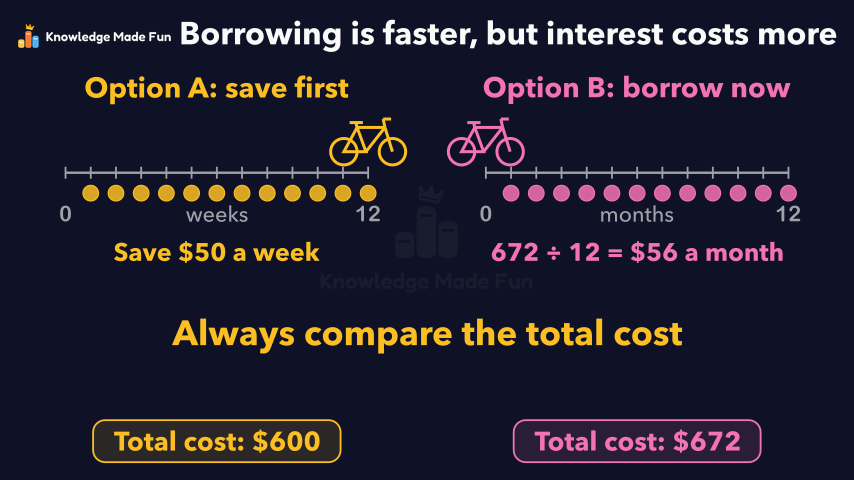
A $600 bike is paid for two ways, side by side: saving $50 a week gets it in 12 weeks for $600, while borrowing at 12% simple interest for a year gets it today for 600 × 0.12 × 1 = $72 in interest, or $672 in total. The video warns against comparing only the payments ($56 a month against $50 a week) and ends on the rule to always compare the total cost.
Concept: Planning a purchase: save first or borrow?
Anyone can watch two lessons on the website without an account. Signing in is free, no payment and no card, and opens three a day; Plus has no limit.
Loading
In one sentence
The question this lesson answers
A bike costs 600 dollars. Save up first, or borrow and buy it now?
Option A: save 50 dollars every week.
Transcript
What the lesson says
A bike costs 600 dollars. Save up first, or borrow and buy it now?
Option A: save 50 dollars every week.
600 divided by 50 is 12, so it takes 12 weeks. Check: 12 times 50 is 600.
At week 12 you buy it. No loan means no interest, so the total cost is 600 dollars.
Option B: borrow 600 dollars for 1 year and buy the bike today.
The amount you borrow is the principal. Interest is the extra money you pay the lender for the loan.
Simple interest is charged on the principal only: interest equals principal times rate times time.
The rate is 12 percent a year, which is 0.12, and the time is 1 year.
600 times 0.12 times 1 is 72, so the interest is 72 dollars.
You pay back 600 plus 72, which is 672 dollars in total.
In 12 equal monthly payments, that is 672 divided by 12, or 56 dollars a month.
A common mistake is comparing only the payments: 56 dollars a month looks easier than 50 dollars a week.
Compare the totals instead: 672 minus 600 is 72, so borrowing costs 72 dollars more, exactly the interest.
So you choose: wait 12 weeks and pay 600 dollars, or ride today and pay 72 dollars more.
Borrowing is faster, but interest makes it cost more. Always compare the total cost.
Curriculum
Where this fits
- British Columbia, Grade 9
Mathematics, Financial literacy: financial literacy: simple budgets and transactionsBC9-MA-34
Previous: A Monthly Budget: Income, Fixed Costs and Variable Costs
The outcomes and strands follow the British Columbia curriculum.
Keep going
 2 min
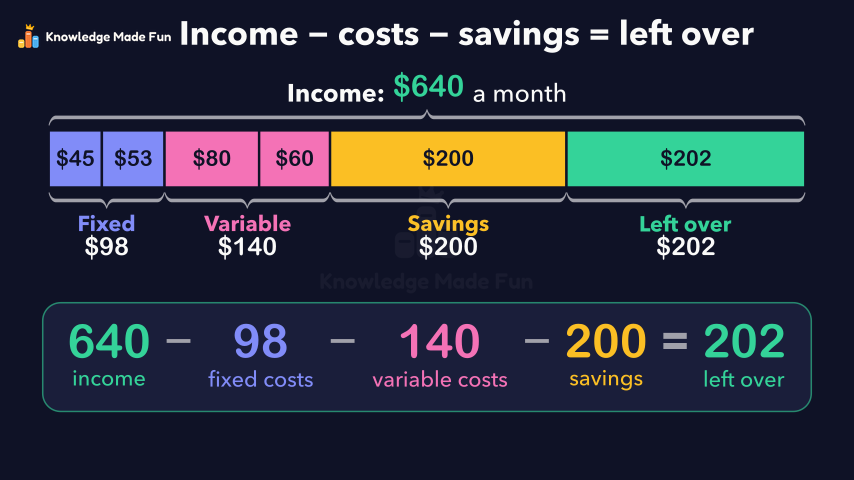
A Monthly Budget: Income, Fixed Costs and Variable Costs
Grade 9 · 2 min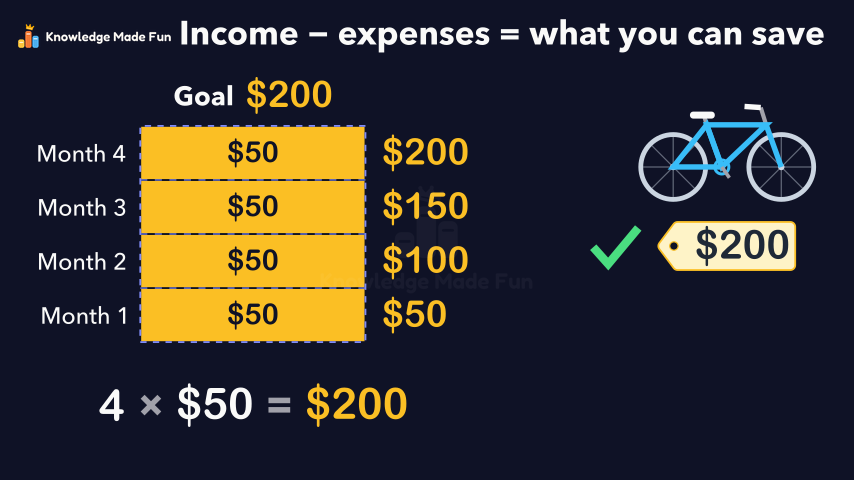 1 min 13 s
A Simple Budget: Income, Expenses and a Savings Goal
Grade 5 · 1 min 13 s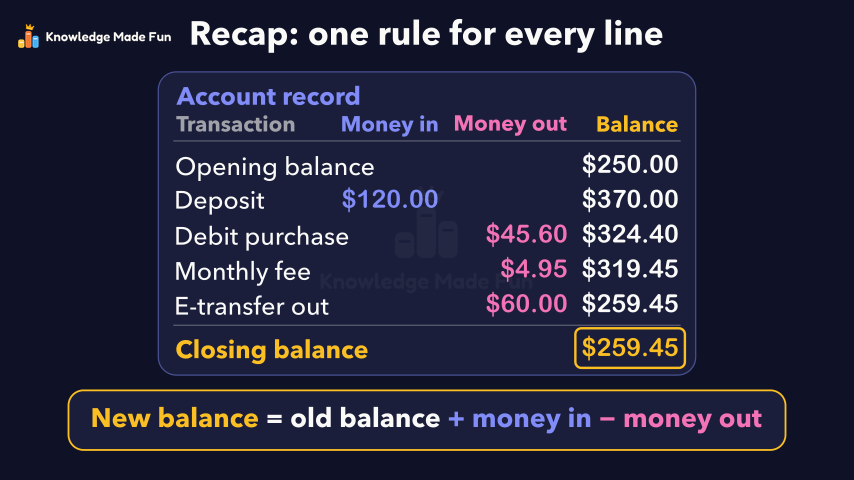 1 min 55 s
Bank Accounts: Deposits, Withdrawals, Fees and the Balance
Grade 9 · 1 min 55 s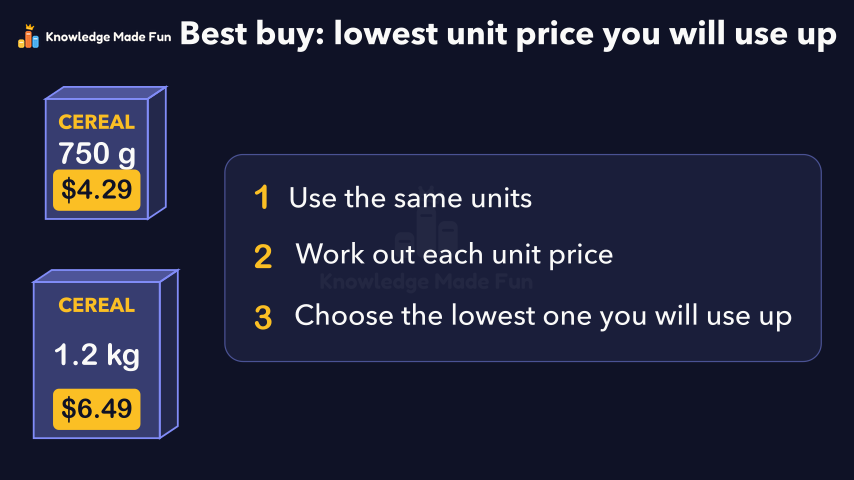 2 min 22 s
Best buy: comparing unit prices
Grade 8 · 2 min 22 s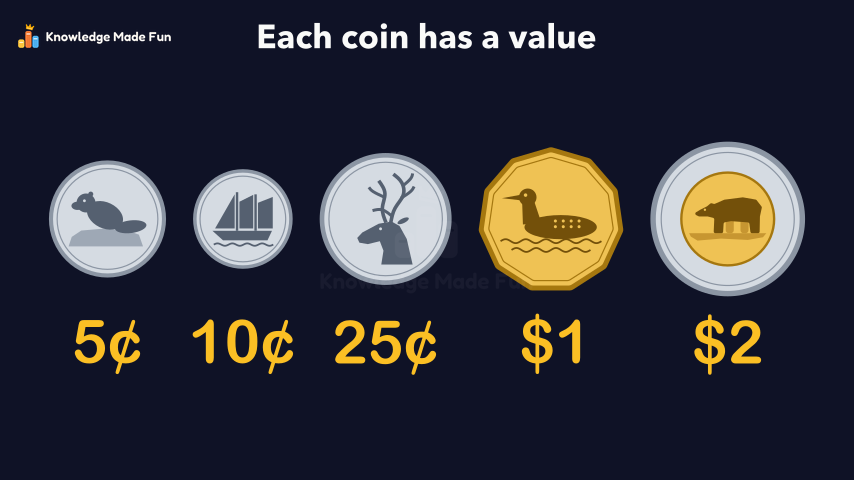 1 min 3 s
Coins and What Each One Is Worth
Grade 1 · 1 min 3 s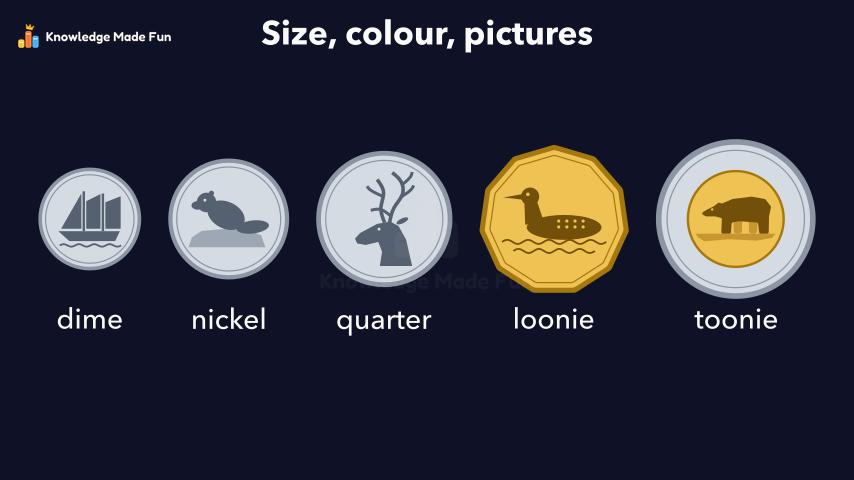 1 min 9 s
Coins: Size, Colour and Pictures
Kindergarten · 1 min 9 s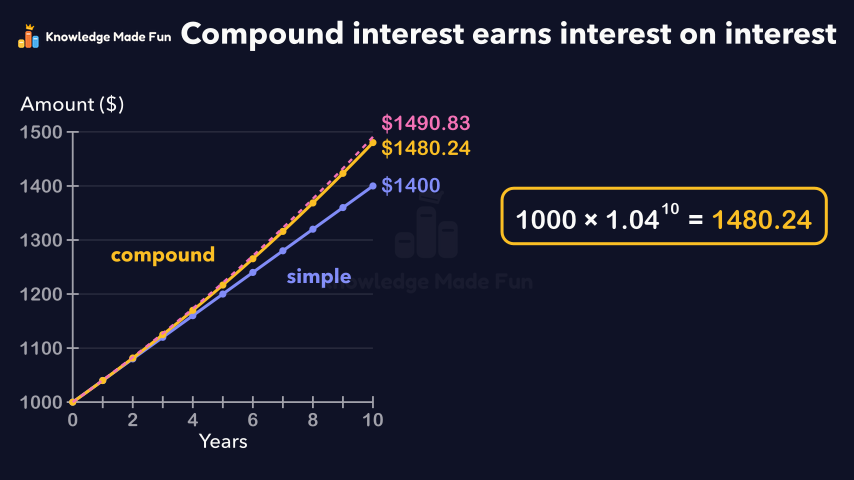 2 min 7 s
Compound interest: earning interest on interest
Grade 11 · 2 min 7 s 1 min 12 s
Counting Bills and Coins to 100 Dollars
Grade 3 · 1 min 12 s
- All Grade 9 Mathematics lessons
- Try the graph paper, free for everyone, no account needed.
- Create a free account to watch three lessons a day, no payment and no card.