Lesson · Grade 3 · Mathematics
Counting Bills and Coins to 100 Dollars
- Grade 3
- Mathematics
- 1 min 12 s
- British Columbia
- BC3-MA-31
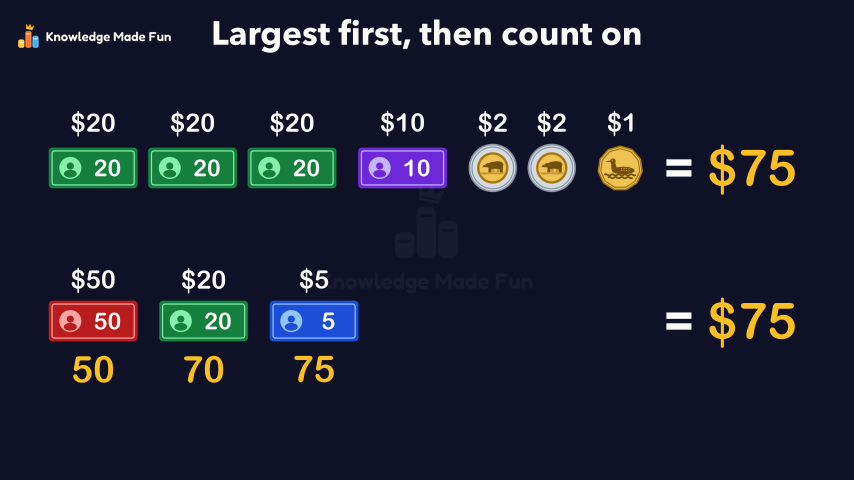
A mixed pile of bills and coins is lined up from the largest to the smallest and counted on, 20, 40, 60, 70, 72, 74, 75, then checked: $60 + $10 + $4 + $1 = $75. The same $75 is then made a second way with a $50, a $20 and a $5, showing that one amount can be made in different ways.
Concept: Counting coins and bills to 100 dollars
Anyone can watch two lessons on the website without an account. Signing in is free, no payment and no card, and opens three a day; Plus has no limit.
Loading
In one sentence
The question this lesson answers
How much money is in this pile?
Line them up, starting with the largest.
Transcript
What the lesson says
How much money is in this pile?
Line them up, starting with the largest.
Count the twenty-dollar bills by twenties: 20, 40, 60.
Count on 10 for the ten-dollar bill: 70.
Count on by twos for the two-dollar coins: 72, 74.
Count on 1 for the one-dollar coin: 75.
So there are 75 dollars in the pile.
Let's check what each kind makes: 60, 10, 4 and 1.
60 plus 10 plus 4 plus 1 is 75.
Now make 75 dollars a different way.
Start with the largest, a fifty-dollar bill: 50.
Count on 20 for a twenty-dollar bill: 70.
Count on 5 for a five-dollar bill: 75.
Both ways make 75 dollars.
Start with the largest, then count on.
Curriculum
Where this fits
- British Columbia, Grade 3
Mathematics, Financial literacy: financial literacy: fluency with coins and bills to 100 dollars, and earning and paymentBC3-MA-31
The outcomes and strands follow the British Columbia curriculum.
Keep going
 2 min
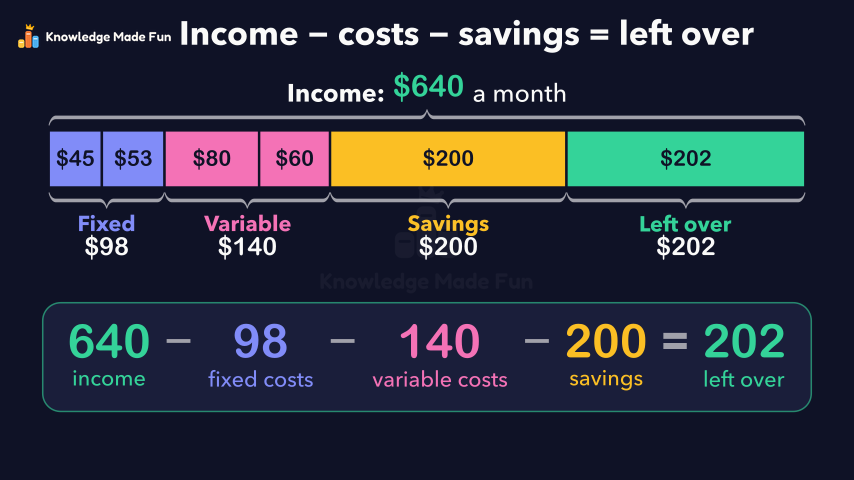
A Monthly Budget: Income, Fixed Costs and Variable Costs
Grade 9 · 2 min 1 min 13 s
A Simple Budget: Income, Expenses and a Savings Goal
Grade 5 · 1 min 13 s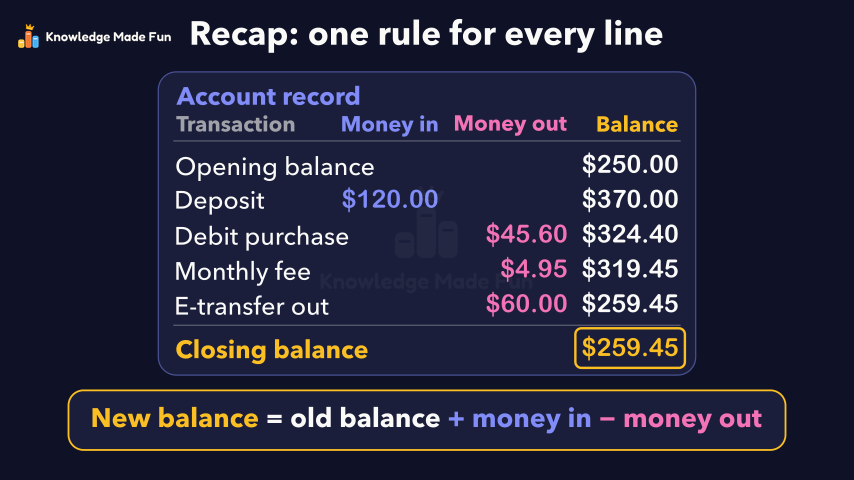 1 min 55 s
Bank Accounts: Deposits, Withdrawals, Fees and the Balance
Grade 9 · 1 min 55 s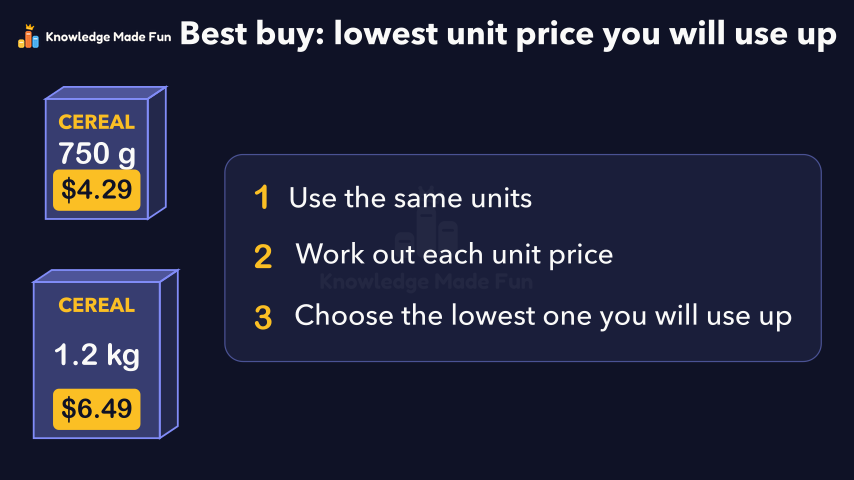 2 min 22 s
Best buy: comparing unit prices
Grade 8 · 2 min 22 s 1 min 3 s
Coins and What Each One Is Worth
Grade 1 · 1 min 3 s 1 min 9 s
Coins: Size, Colour and Pictures
Kindergarten · 1 min 9 s 2 min 7 s
Compound interest: earning interest on interest
Grade 11 · 2 min 7 s 1 min 9 s
Counting Coins to 100 Cents
Grade 2 · 1 min 9 s
- All Grade 3 Mathematics lessons
- Teachers: the maths worksheets for Grade 3 are in the dashboard, each with a worked example and a proven answer key.
- Try the graph paper, free for everyone, no account needed.
- Create a free account to watch three lessons a day, no payment and no card.