Lesson · Grade 6 · Mathematics
Graphing a Pattern as Points
- Grade 6
- Mathematics
- 1 min 18 s
- British Columbia
- BC6-MA-26
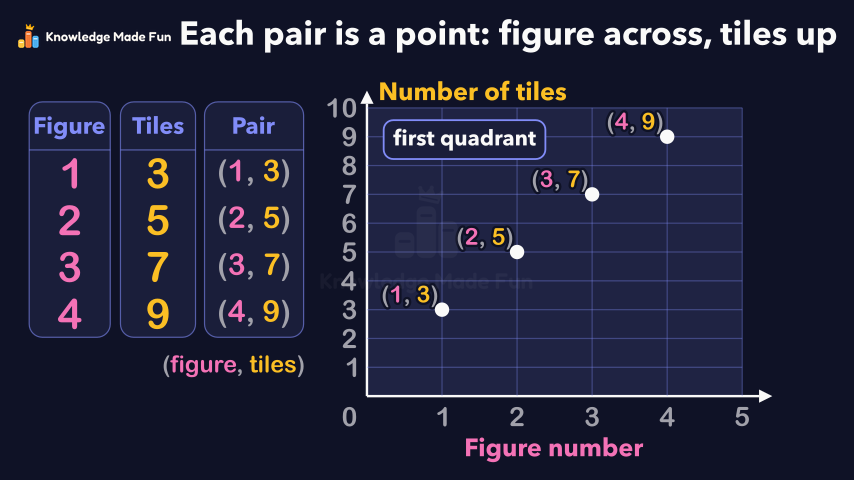
An L-shaped tile pattern with 3, 5, 7 and 9 tiles goes into a table, and each row becomes an ordered pair (figure number, tiles). Each pair is plotted in the first quadrant by going across and then up, which shows each point 1 across and 2 up from the one before. The points are not joined because there is no figure 1½.
Concept: Graphing a pattern as points in the first quadrant
Anyone can watch two lessons on the website without an account. Signing in is free, no payment and no card, and opens three a day; Plus has no limit.
Loading
In one sentence
The question this lesson answers
How can we show this tile pattern on a graph?
Figure 1 has 3 tiles, figure 2 has 5, figure 3 has 7 and figure 4 has 9.
Transcript
What the lesson says
How can we show this tile pattern on a graph?
Figure 1 has 3 tiles, figure 2 has 5, figure 3 has 7 and figure 4 has 9.
Each new figure has 2 more tiles than the one before.
Put the figure numbers and the numbers of tiles in a table.
Each row gives an ordered pair: the figure number first, then the tiles.
Draw a grid with the figure number across and the number of tiles up.
Both numbers are positive, so we only need the first quadrant.
To plot the pair 1, 3, start at zero, go 1 across, then 3 up.
Mark a point there.
Plot the other pairs the same way, across and then up.
Each point is 1 across and 2 up from the one before, because each figure has 2 more tiles.
There is no figure 1 and a half, so we do not join the points.
To graph a pattern, plot each pair as a point, with the figure number across and the tiles up.
Curriculum
Where this fits
- British Columbia, Grade 6
Mathematics, Patterns and algebra: increasing and decreasing patterns, using expressions, tables, and graphs as functional relationshipsBC6-MA-26
Previous: Finding the rule from a tableNext: Equations as a balance
The outcomes and strands follow the British Columbia curriculum.
Keep going
 1 min 8 s
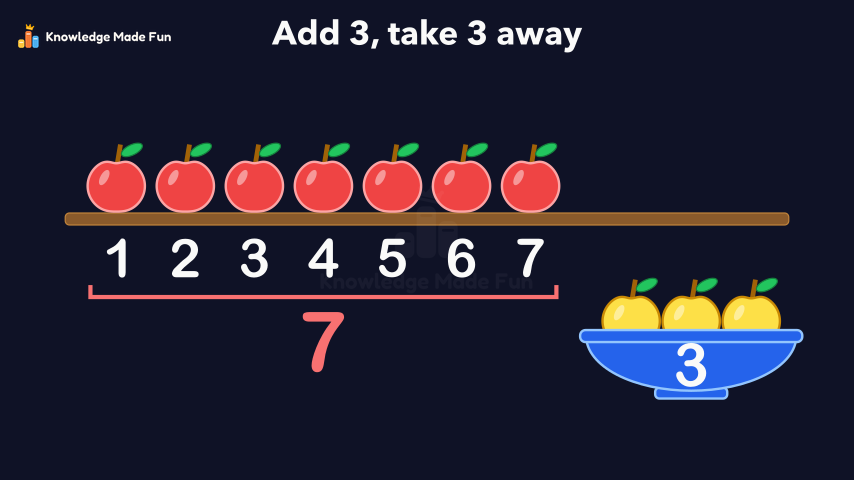
7 and 3 More Makes 10
Grade 1 · 1 min 8 s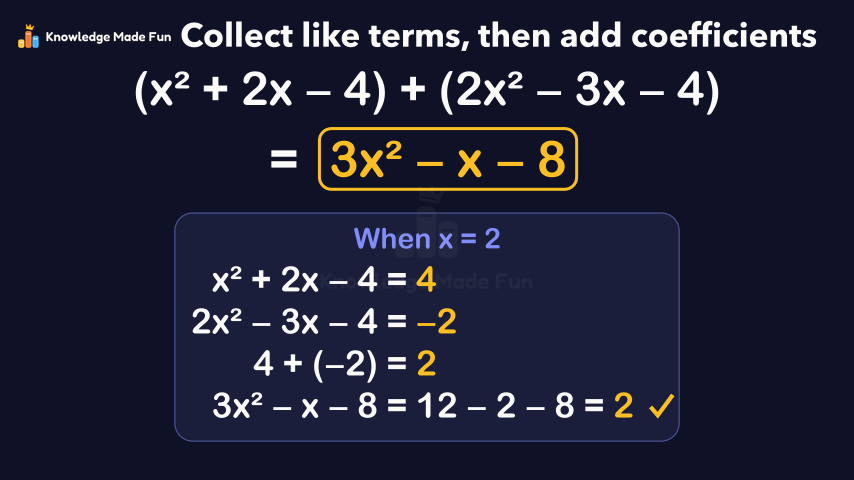 2 min
Adding Polynomials by Collecting Like Terms
Grade 9 · 2 min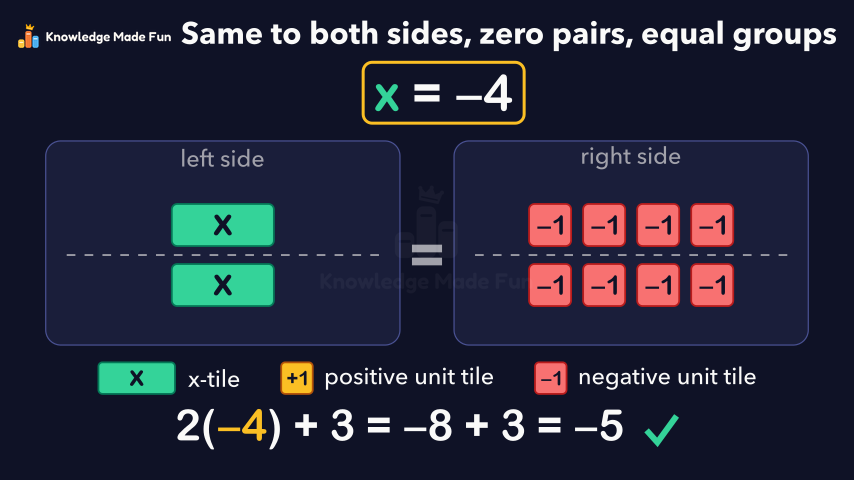 1 min 59 s
Algebra Tiles: Solving 2x + 3 = −5 with Zero Pairs
Grade 8 · 1 min 59 s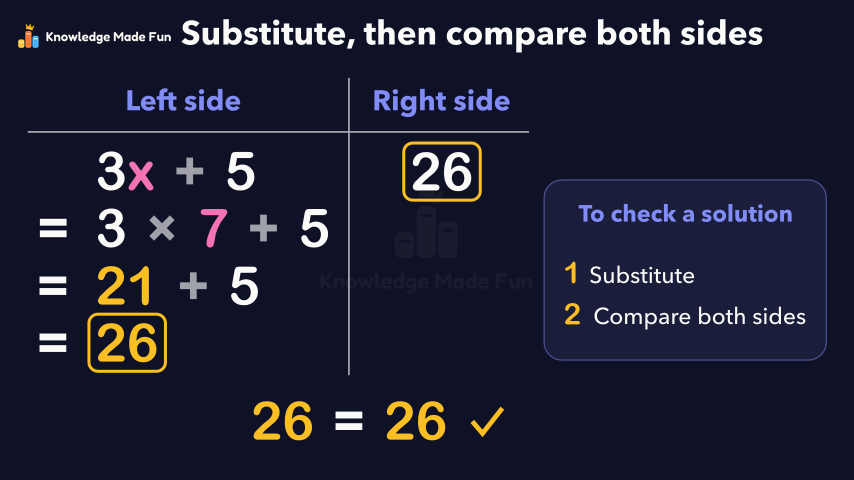 1 min 10 s
Checking a Solution by Substituting
Grade 7 · 1 min 10 s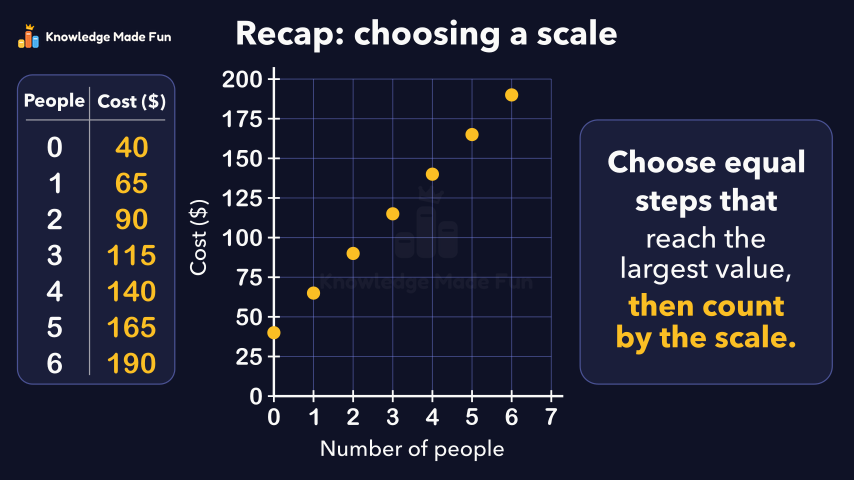 2 min 6 s
Choosing a Scale When the Numbers Are Large
Grade 8 · 2 min 6 s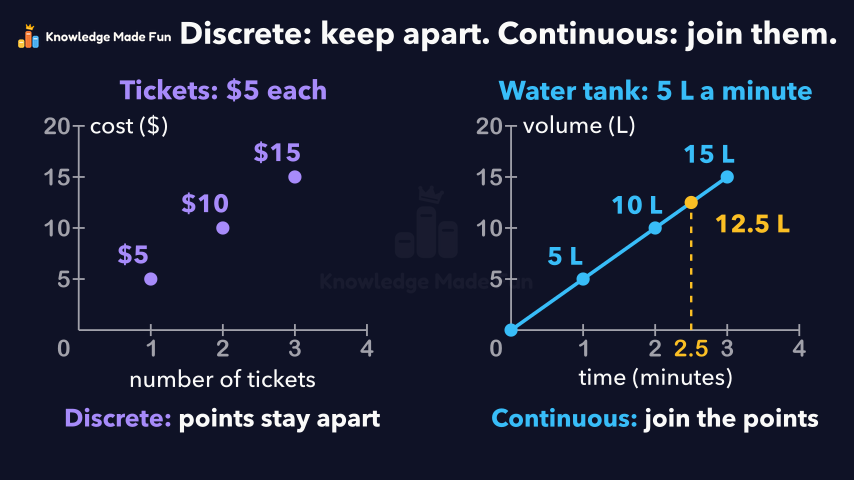 1 min 57 s
Discrete or Continuous: When to Join the Points
Grade 9 · 1 min 57 s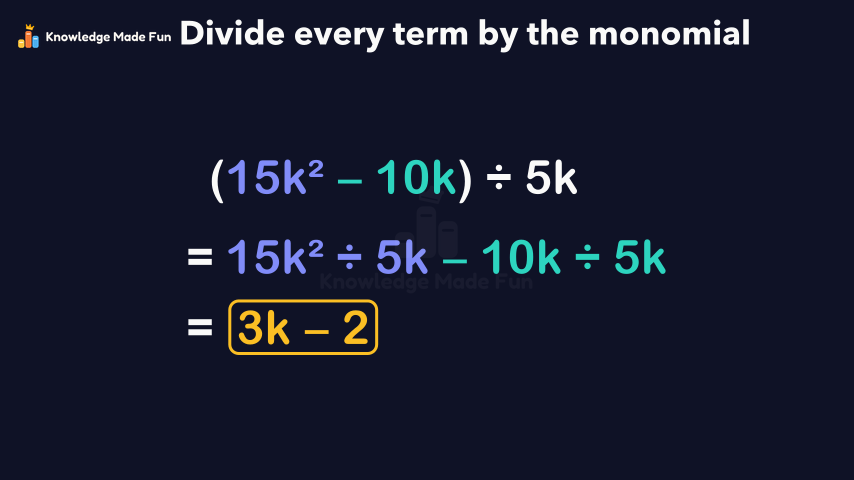 2 min 11 s
Dividing a Polynomial by a Monomial
Grade 9 · 2 min 11 s 1 min 14 s
Equal and Not Equal on a Balance
Grade 1 · 1 min 14 s
- All Grade 6 Mathematics lessons
- Teachers: the maths worksheets for Grade 6 are in the dashboard, each with a worked example and a proven answer key.
- Try the graph paper, free for everyone, no account needed.
- Create a free account to watch three lessons a day, no payment and no card.