Lesson · Grade 8 · Mathematics
Finding the original amount before an increase
- Grade 8
- Mathematics
- 2 min 3 s
- British Columbia
- BC8-MA-09
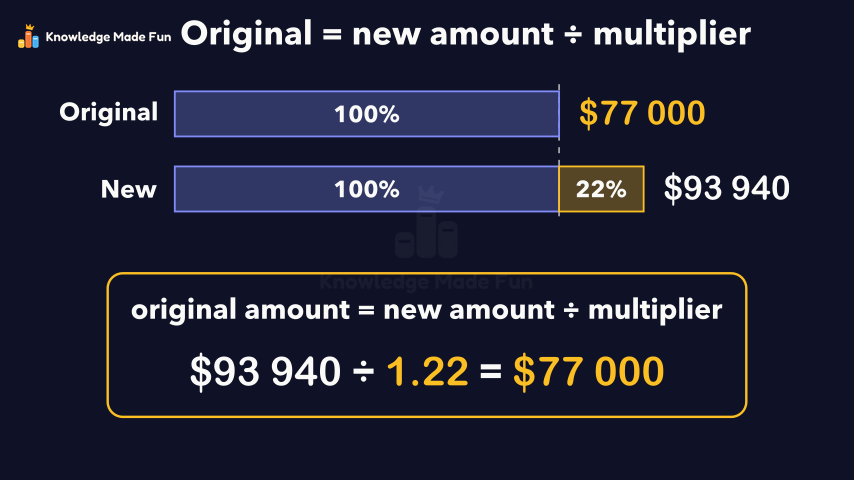
A salary is now $93 940, which is 122% of what it was. A bar model shows that this is the original 100% plus a 22% increase; writing 122% as the multiplier 1.22 and dividing gives the original salary, $93 940 ÷ 1.22 = $77 000, which is checked by 77 000 × 1.22 = 93 940. The video then shows the common mistake of taking 22% off the new salary ($73 273.20), shows on the bars why it takes off too much, and ends on the recap: original amount = new amount ÷ multiplier.
Anyone can watch two lessons on the website without an account. Signing in is free, no payment and no card, and opens three a day; Plus has no limit.
Loading
In one sentence
The question this lesson answers
A salary is now $93,940. That is 122% of what it was before. What was it before?
The amount before a change is called the original amount. It is the whole, so it is 100%.
Transcript
What the lesson says
A salary is now $93,940. That is 122% of what it was before. What was it before?
The amount before a change is called the original amount. It is the whole, so it is 100%.
The new salary is the whole 100%, plus a 22% increase. A percent over 100 means more than the whole.
Write 122% as a decimal: 122 divided by 100 is 1.22.
1.22 is the multiplier: the number you multiply the original by to get the new amount.
So the original salary times 1.22 equals $93,940.
To undo multiplying by 1.22, divide by 1.22.
$93,940 divided by 1.22 is $77,000. That was the original salary.
Check: $77,000 times 1.22 is $93,940, the new salary. It works.
A common mistake is taking 22% off the new salary. That leaves 78%, and $93,940 times 0.78 is $73,273.20.
That is wrong. The increase was 22% of the original, but 22% of the new salary is a bigger piece, so too much comes off.
So to find the original amount, divide the new amount by the multiplier: $93,940 divided by 1.22 is $77,000.
Curriculum
Where this fits
- British Columbia, Grade 8
Mathematics, Number: percents less than 1 and greater than 100 (decimal and fractional percents)BC8-MA-09
Previous: Percent increase: finding the new amountNext: Rates and Unit Rates: How Much for One
The outcomes and strands follow the British Columbia curriculum.
Keep going
 1 min 26 s
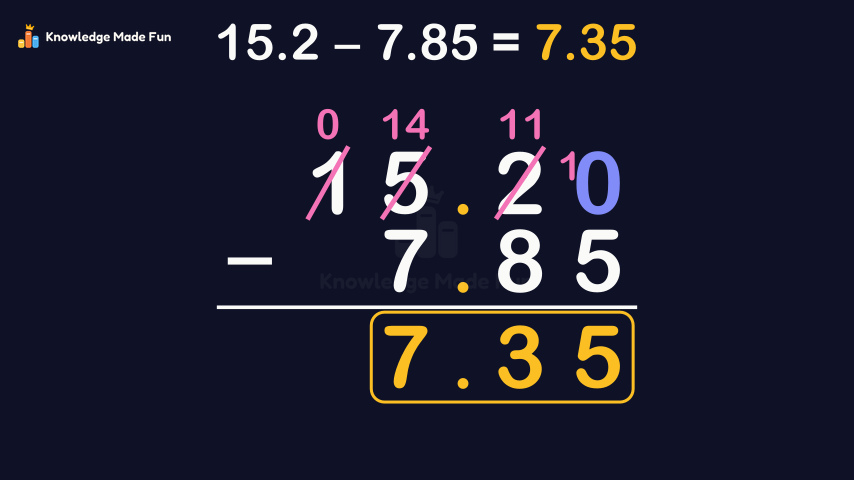
15.2 − 7.85
Grade 4 · 1 min 26 s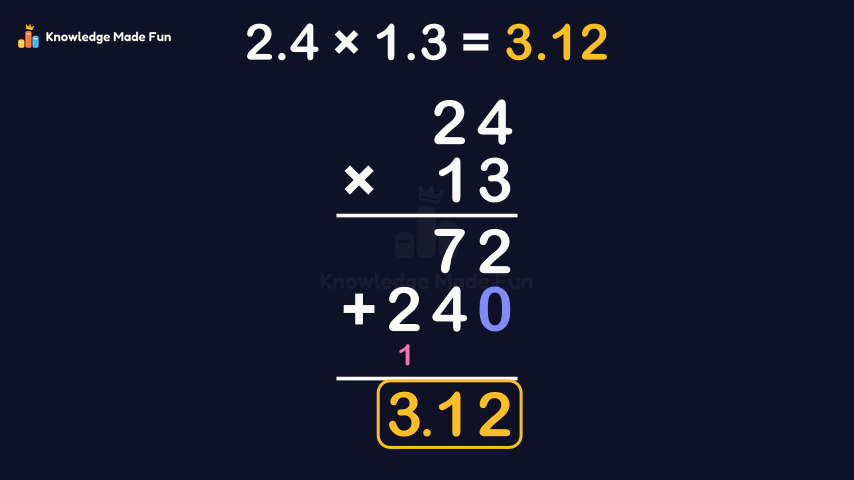 1 min 37 s
2.4 × 1.3
Grade 7 · 1 min 37 s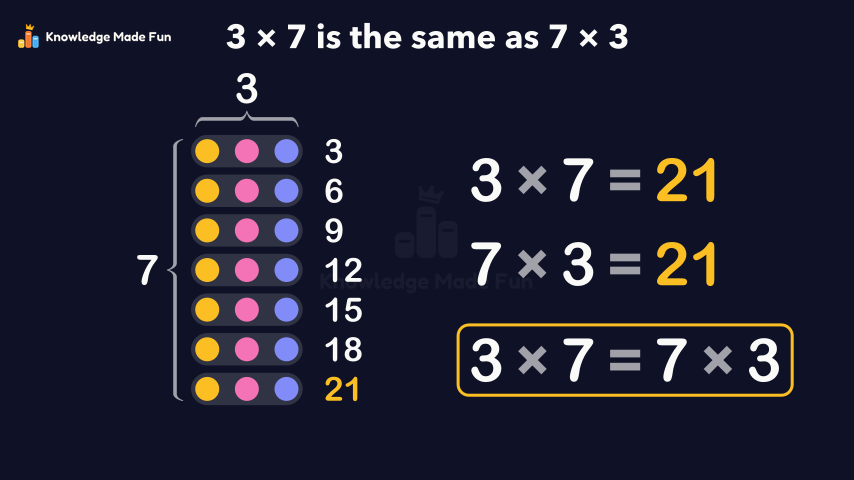 1 min 4 s
3 × 7 = 7 × 3: Equal Groups, Skip Counting and Arrays
Grade 4 · 1 min 4 s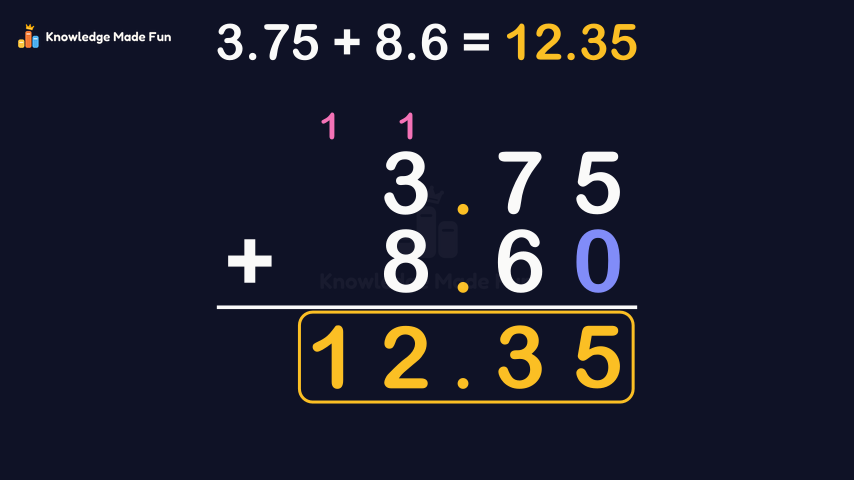 59 s
3.75 + 8.6
Grade 4 · 59 s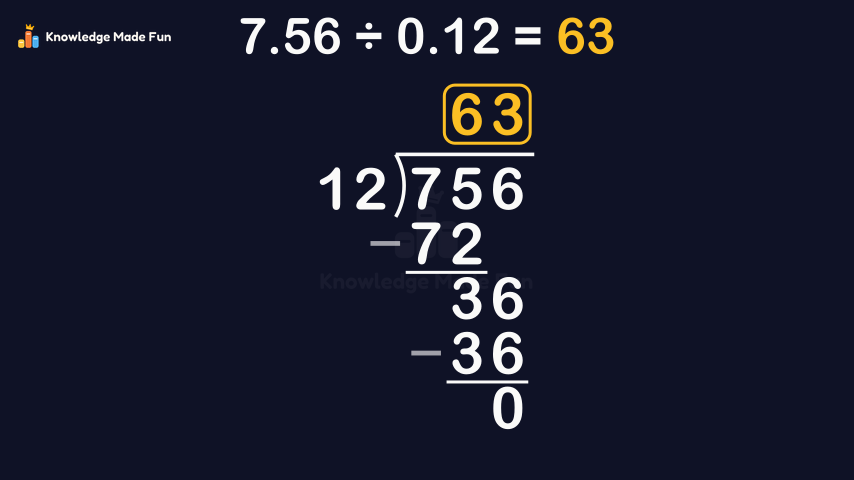 1 min 32 s
7.56 ÷ 0.12
Grade 7 · 1 min 32 s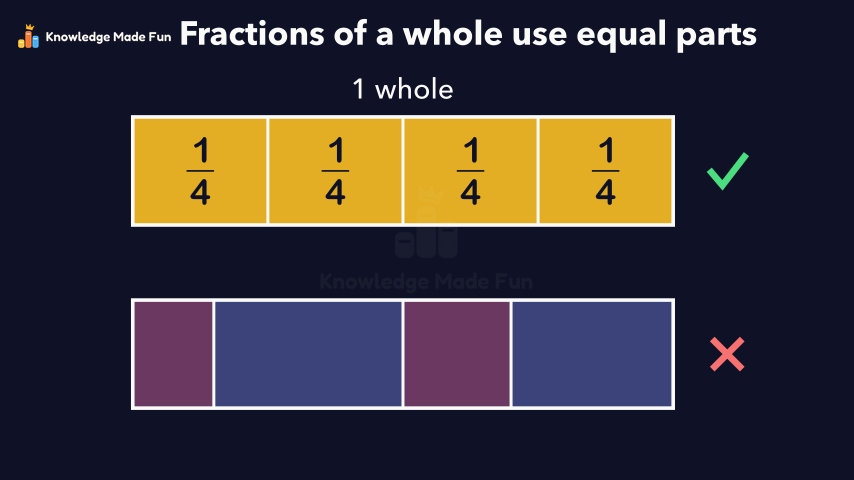 56 s
A Fraction Is Equal Parts of One Whole
Grade 3 · 56 s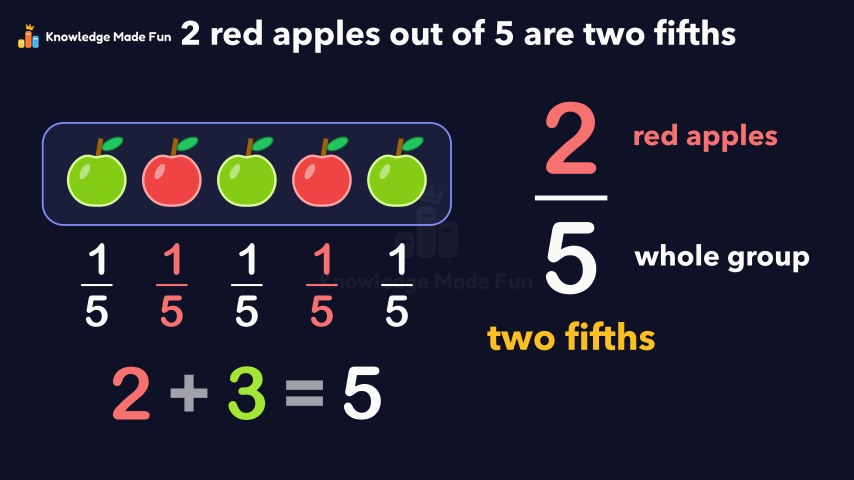 57 s
A Fraction of a Group
Grade 3 · 57 s 1 min 23 s
Adding and subtracting are related
Grade 1 · 1 min 23 s
- All Grade 8 Mathematics lessons
- Try the graph paper, free for everyone, no account needed.
- Create a free account to watch three lessons a day, no payment and no card.