Lesson · Grade 7 · Mathematics
Equivalent fractions and lowest form
- Grade 7
- Mathematics
- 1 min 9 s
- British Columbia
- BC7-MA-30
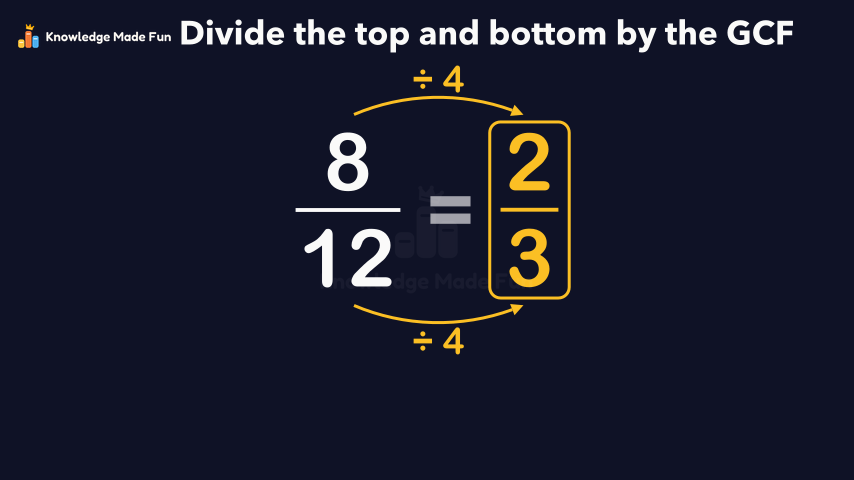
Fraction bars show that 8/12, 4/6 and 2/3 shade the same amount, because dividing (or multiplying) the top and bottom by the same number makes an equivalent fraction. The video then checks that only 1 divides both 2 and 3, and shows that dividing by the GCF, 4, gets 8/12 to its lowest form, 2/3, in one step.
Anyone can watch two lessons on the website without an account. Signing in is free, no payment and no card, and opens three a day; Plus has no limit.
Loading
In one sentence
The question this lesson answers
How do we write eight twelfths in lowest form?
Here is a bar cut into 12 equal parts, with 8 of them shaded.
Transcript
What the lesson says
How do we write eight twelfths in lowest form?
Here is a bar cut into 12 equal parts, with 8 of them shaded.
Grouping the parts in twos makes 6 equal parts, with 4 shaded.
Grouping them in twos again makes 3 equal parts, with 2 shaded.
The shaded amount never changed, so all three fractions are equivalent.
Each time, we divided the top and the bottom by the same number, 2.
Multiplying the top and the bottom by the same number works too.
Only 1 divides both 2 and 3, so we cannot divide any further.
That means eight twelfths in lowest form is two thirds.
A faster way uses 4, the greatest common factor, or GCF, of 8 and 12.
Dividing the top and the bottom by 4 gets to two thirds in one step.
To write a fraction in lowest form, divide the top and the bottom by their greatest common factor.
Curriculum
Where this fits
- British Columbia, Grade 7
Mathematics, Number: relationships between decimals, fractions, ratios, and percentsBC7-MA-30
Previous: Why 1/3 is 0.333...Next: Comparing fractions on a number line
The outcomes and strands follow the British Columbia curriculum.
Keep going
 1 min 26 s
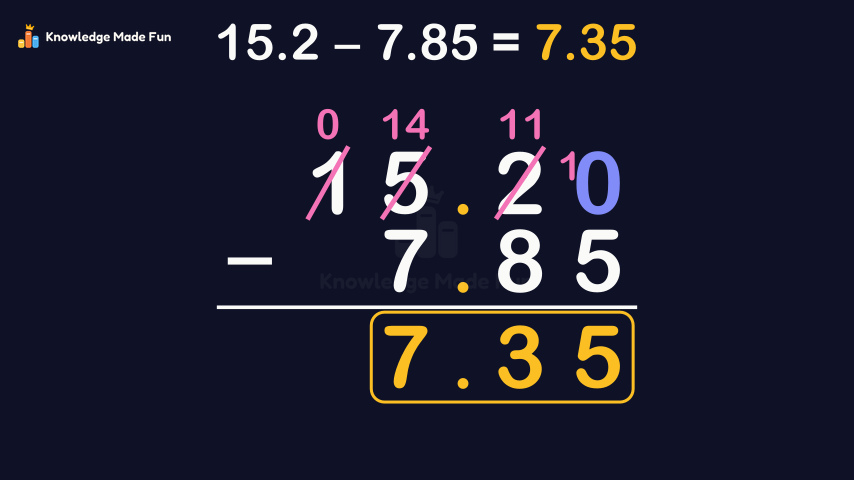
15.2 − 7.85
Grade 4 · 1 min 26 s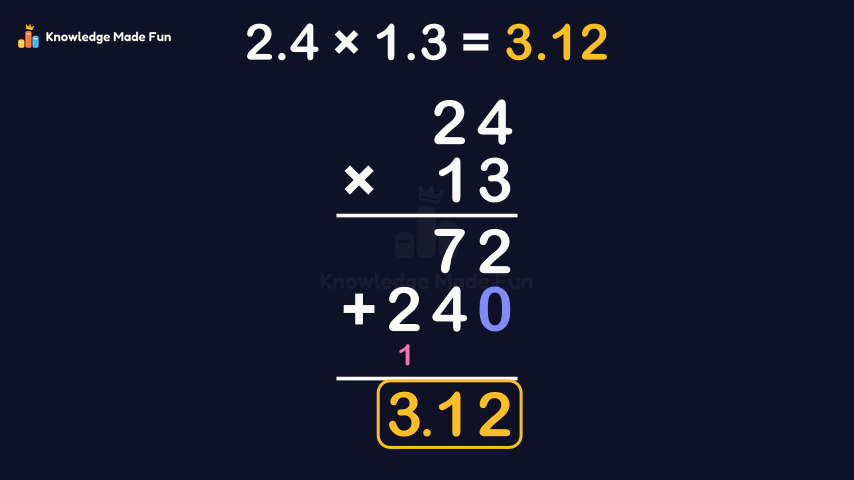 1 min 37 s
2.4 × 1.3
Grade 7 · 1 min 37 s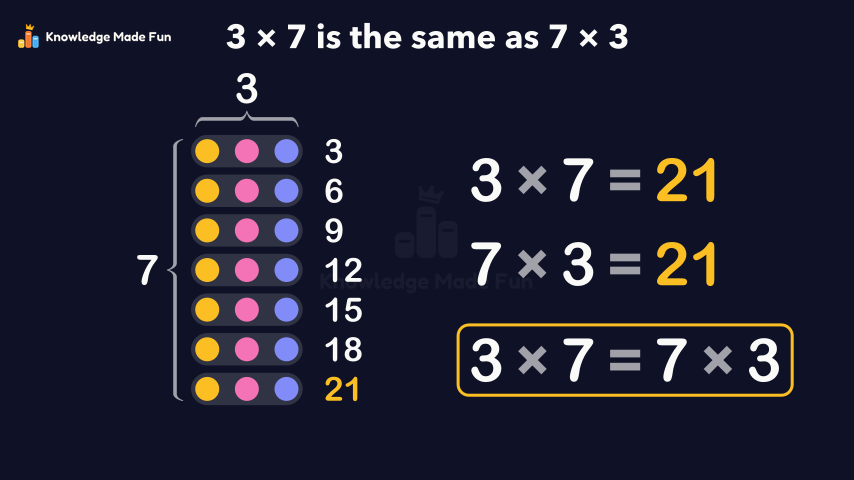 1 min 4 s
3 × 7 = 7 × 3: Equal Groups, Skip Counting and Arrays
Grade 4 · 1 min 4 s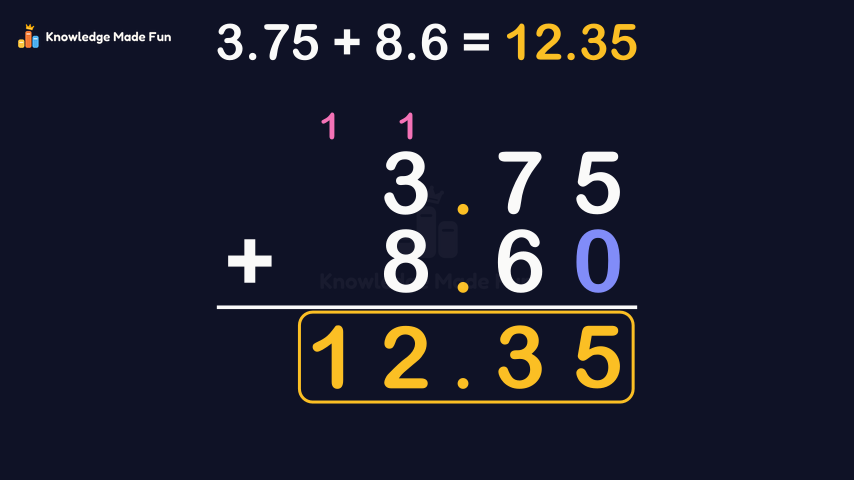 59 s
3.75 + 8.6
Grade 4 · 59 s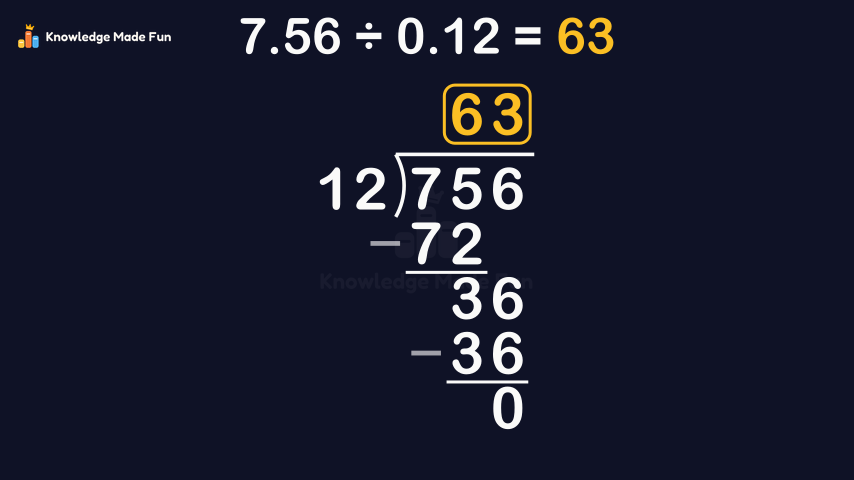 1 min 32 s
7.56 ÷ 0.12
Grade 7 · 1 min 32 s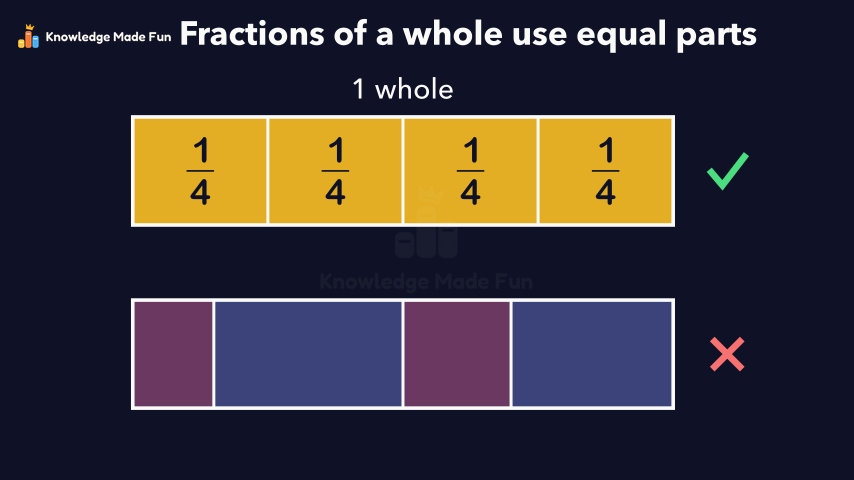 56 s
A Fraction Is Equal Parts of One Whole
Grade 3 · 56 s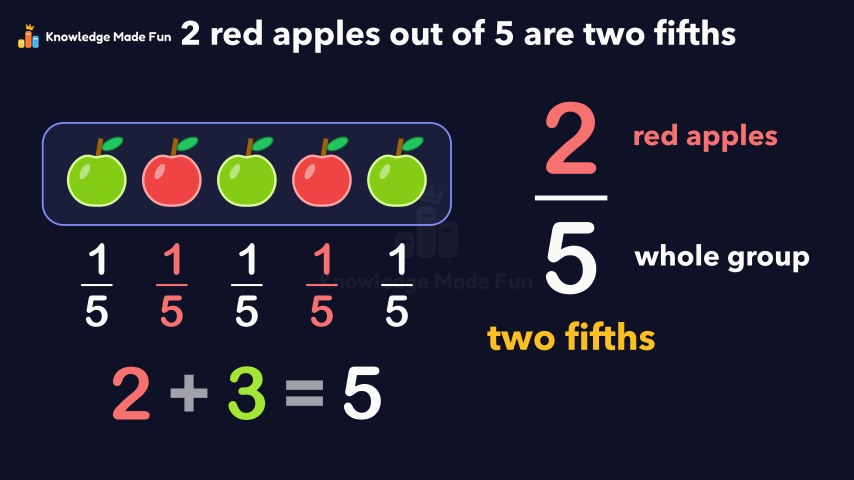 57 s
A Fraction of a Group
Grade 3 · 57 s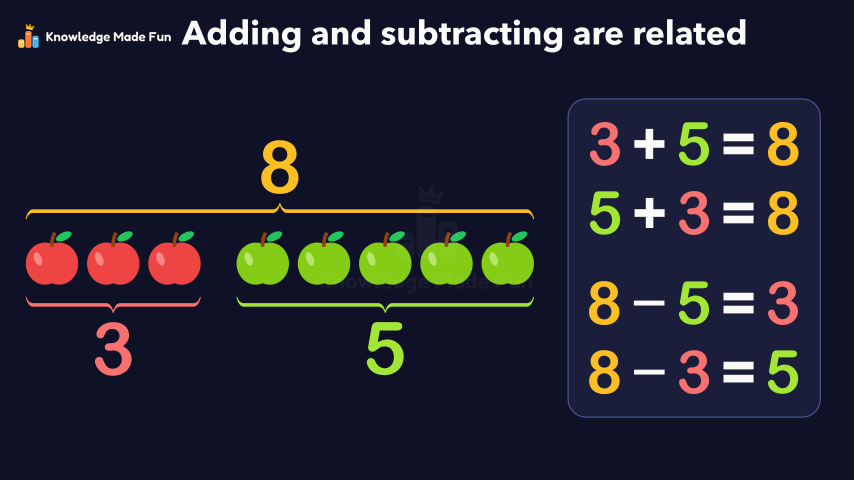 1 min 23 s
Adding and subtracting are related
Grade 1 · 1 min 23 s
- All Grade 7 Mathematics lessons
- Teachers: the maths worksheets for Grade 7 are in the dashboard, each with a worked example and a proven answer key.
- Try the graph paper, free for everyone, no account needed.
- Create a free account to watch three lessons a day, no payment and no card.