Lesson · Grade 5 · English Language Arts
Past, Present and Future Tense
- Grade 5
- English Language Arts
- 1 min 10 s
- British Columbia
- BC5-EN-22
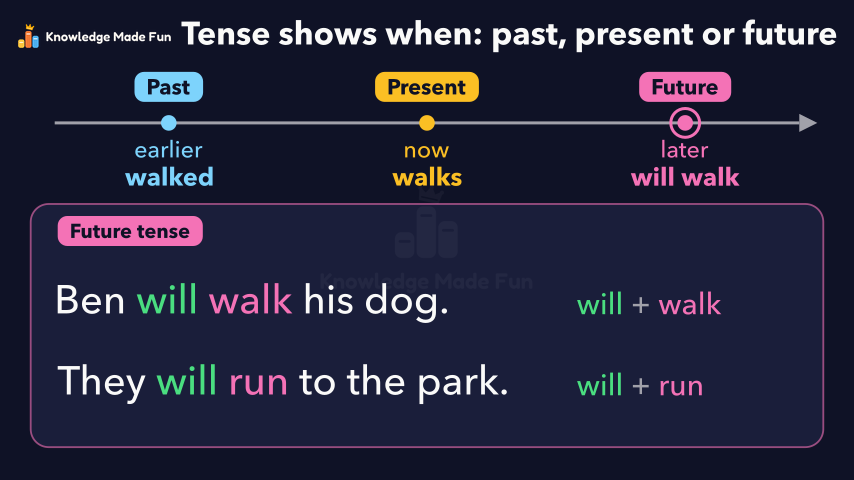
A short text about Ben and his dog is rewritten as a ring moves along a timeline from now to earlier to later: walk adds "ed", run changes to "ran", and "will" goes before each verb in the future. Walked, walks and will walk end up side by side to show that a verb's tense tells when something happens.
Anyone can watch two lessons on the website without an account. Signing in is free, no payment and no card, and opens three a day; Plus has no limit.
Loading
In one sentence
The question this lesson answers
How can a verb show when something happens?
Here is a short text about Ben and his dog.
Transcript
What the lesson says
How can a verb show when something happens?
Here is a short text about Ben and his dog.
Its verbs, the action words, are walks and run.
The tense of a verb shows when the action happens.
We will look at three tenses: past, present and future.
Our text is in the present tense: it tells about now.
To tell about earlier, we use the past tense.
Many verbs add the letters e and d, so walk becomes walked.
Some verbs change in other ways, so run becomes ran.
To tell about later, we use the future tense.
One common way is to put will before the verb: will walk, will run.
Walked, walks and will walk show one action at three different times.
A verb's tense shows when it happens: in the past, the present or the future.
Curriculum
Where this fits
- British Columbia, Grade 5
English Language Arts, Language features, structures, and conventions: sentence structure and grammarBC5-EN-22
Previous: Parts of Speech: Nouns, Verbs, Adjectives and AdverbsNext: Subject-Verb Agreement: Make the Verb Match Its Subject
The outcomes and strands follow the British Columbia curriculum.
Keep going
 42 s
A Sentence Tells a Whole Idea: Who Did What
Grade 1 · 42 s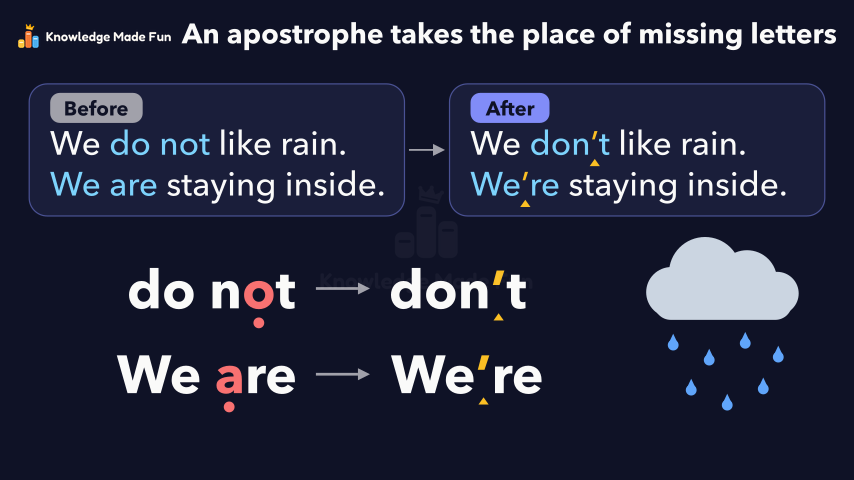 1 min 1 s
Apostrophes in Contractions: Do Not Becomes Don't
Grade 3 · 1 min 1 s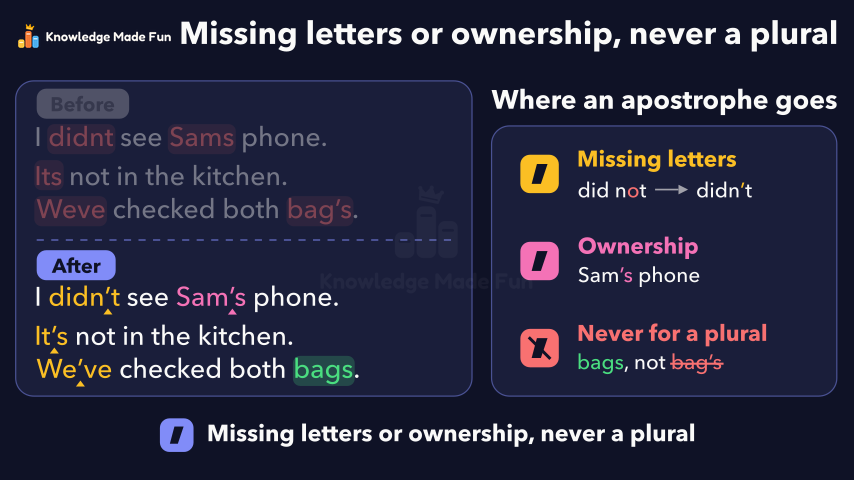 1 min 45 s
Apostrophes: Missing Letters or Ownership, Never a Plural
Grade 4 · 1 min 45 s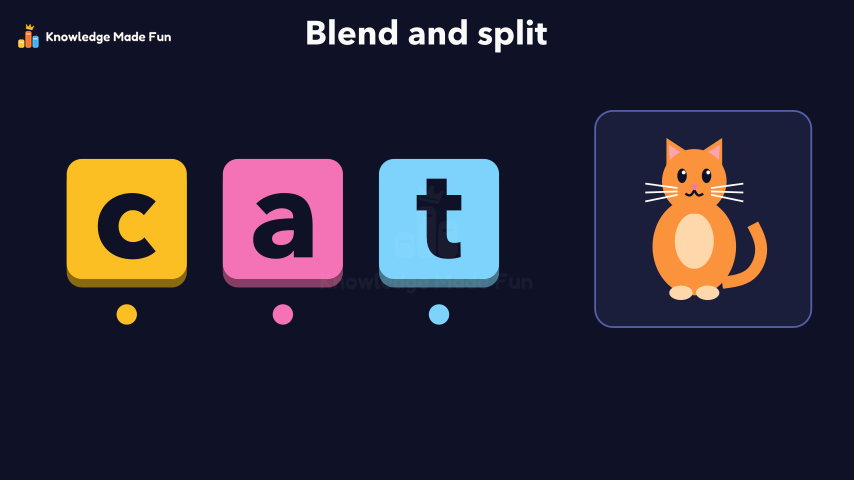 54 s
Blending and Splitting Sounds: c, a, t Makes cat
Grade 1 · 54 s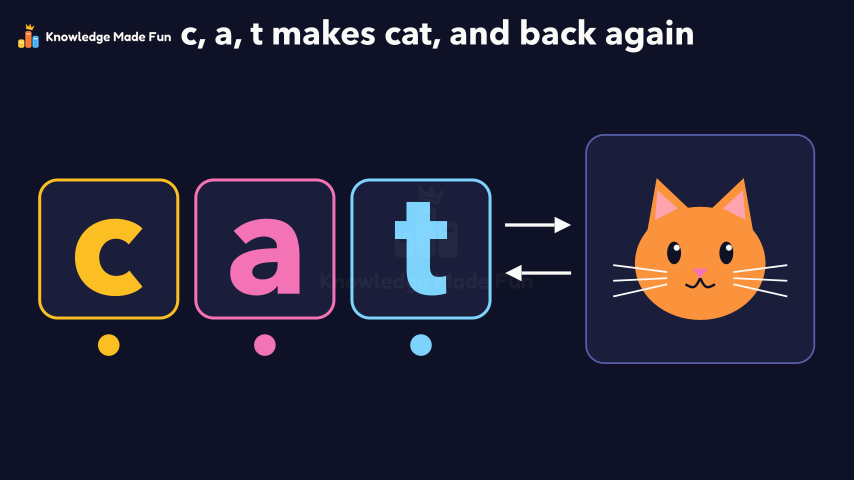 54 s
Blending Sounds: c, a, t Makes cat
Kindergarten · 54 s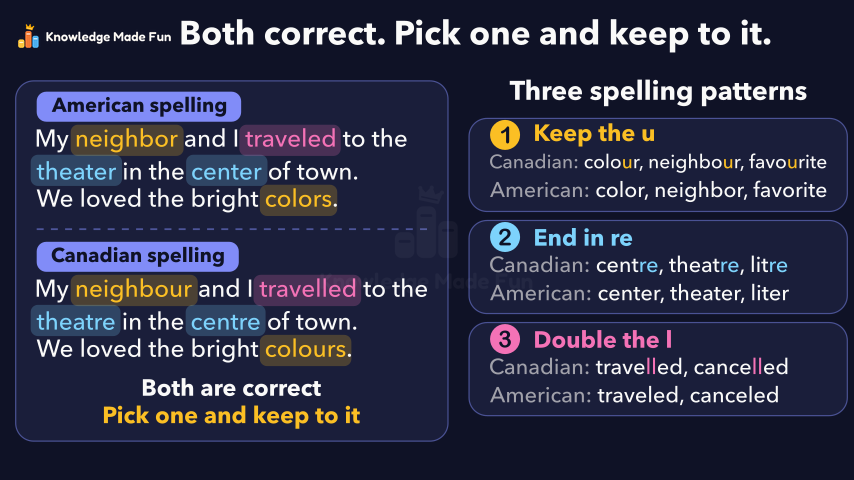 1 min 5 s
Canadian and American Spelling: Two Ways, Both Correct
Grade 5 · 1 min 5 s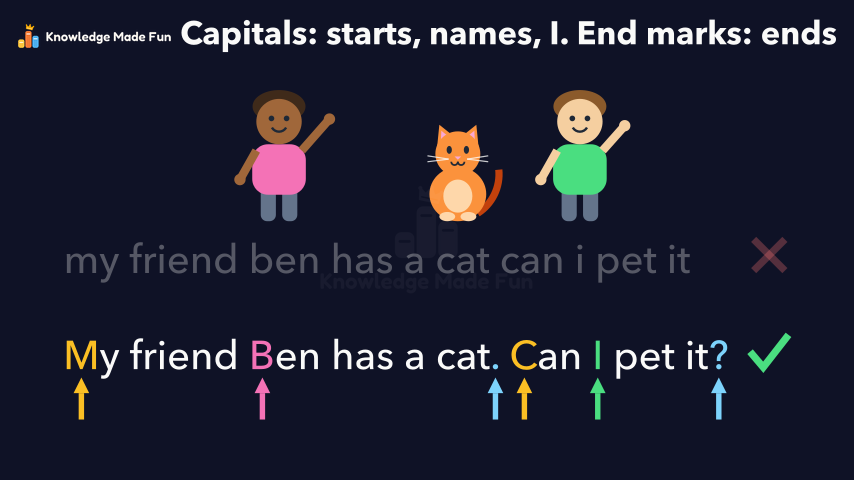 53 s
Capital Letters and End Marks
Grade 2 · 53 s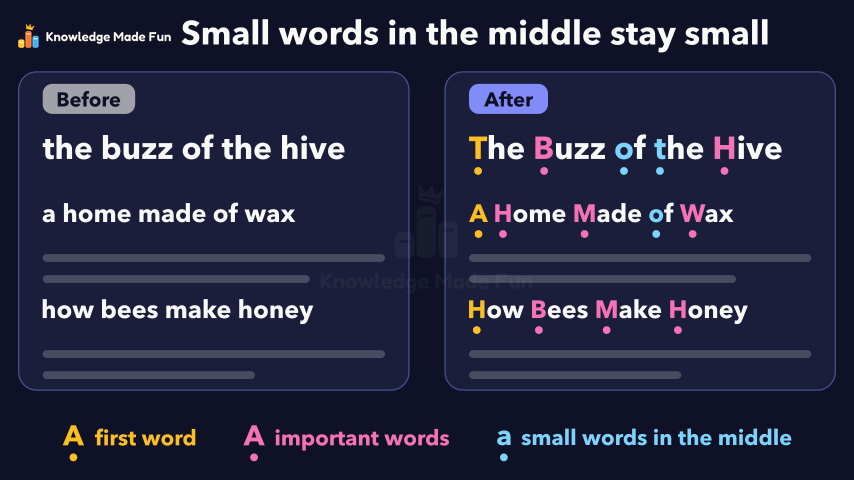 1 min 12 s
Capital Letters in Titles and Headings
Grade 5 · 1 min 12 s
- All Grade 5 English Language Arts lessons
- Create a free account to watch three lessons a day, no payment and no card.