Lesson · Grade 2 · Arts Education
Loud and soft, fast and slow
- Grade 2
- Arts Education
- 1 min 10 s
- British Columbia
- BC2-AR-05
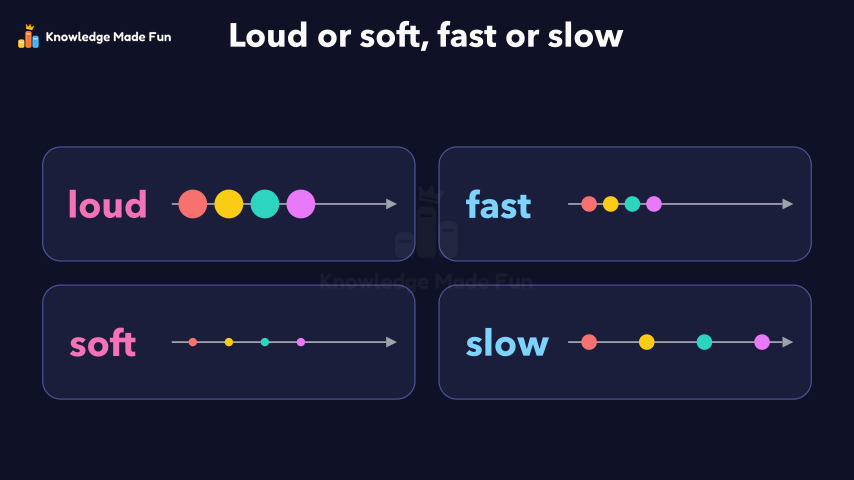
A short original tune plays on a rainbow xylophone, and each note drops a dot on a line of time. Played loud it makes big dots and played soft it makes small dots, which shows dynamics; played fast the dots sit close together and played slow they sit far apart, which shows tempo, and the video ends on four cards: loud, soft, fast and slow.
Anyone can watch two lessons on the website without an account. Signing in is free, no payment and no card, and opens three a day; Plus has no limit.
Loading
In one sentence
The question this lesson answers
How can music change? Listen to this little tune.
We draw a dot for each note we hear.
Transcript
What the lesson says
How can music change? Listen to this little tune.
We draw a dot for each note we hear.
Now the tune plays loud. Listen!
Now the tune plays soft. Listen!
Loud notes make big dots. Soft notes make small dots.
Dynamics means how loud or soft music is.
Now the tune plays fast. Listen!
Now the tune plays slow. Listen!
Fast notes make dots close together. Slow notes make dots far apart.
Tempo means how fast or slow music is.
Music can be loud or soft, fast or slow.
Curriculum
Where this fits
- British Columbia, Grade 2
Arts Education, Music: music: beat/pulse, duration, rhythm (music), tempo, pitch, timbre, dynamics (music), form (music), textureBC2-AR-05
The outcomes and strands follow the British Columbia curriculum.
Keep going
 1 min 13 s
Beat and Rhythm
Grade 2 · 1 min 13 s 1 min 6 s
Beat and Rhythm: The Steady Pulse and the Pattern on Top
Grade 1 · 1 min 6 s 1 min 25 s
Beat, metre and rhythm: how music moves in time
Grade 5 · 1 min 25 s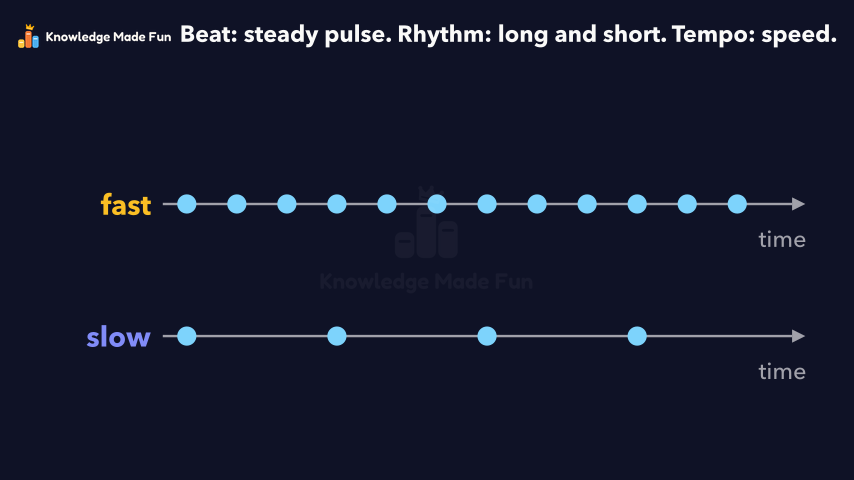 1 min 21 s
Beat, Rhythm and Tempo
Grade 3 · 1 min 21 s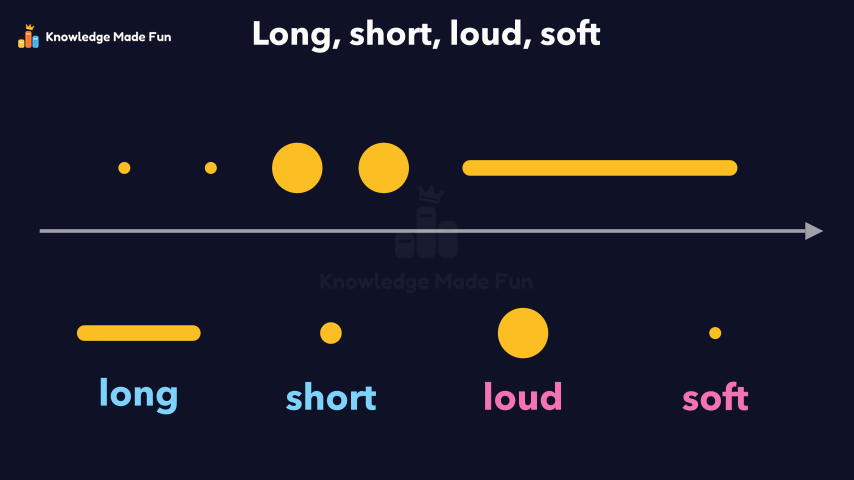 1 min 3 s
Drawing Sounds: Long, Short, Loud and Soft
Grade 1 · 1 min 3 s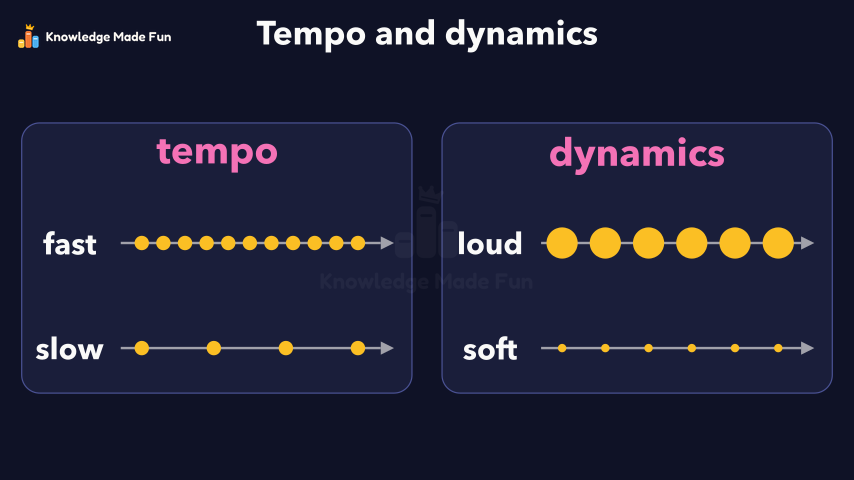 1 min 12 s
Fast or Slow, Loud or Soft: Tempo and Dynamics
Grade 1 · 1 min 12 s 1 min 6 s
High and Low Sounds
Grade 2 · 1 min 6 s 1 min 14 s
High or Low, Loud or Soft
Kindergarten · 1 min 14 s
- All Grade 2 Arts Education lessons
- Create a free account to watch three lessons a day, no payment and no card.