Lesson · Grade 11 · Chemistry
Limiting and Excess Reactants
- Grade 11
- Chemistry
- 1 min 58 s
- British Columbia
- BC11-SC-29
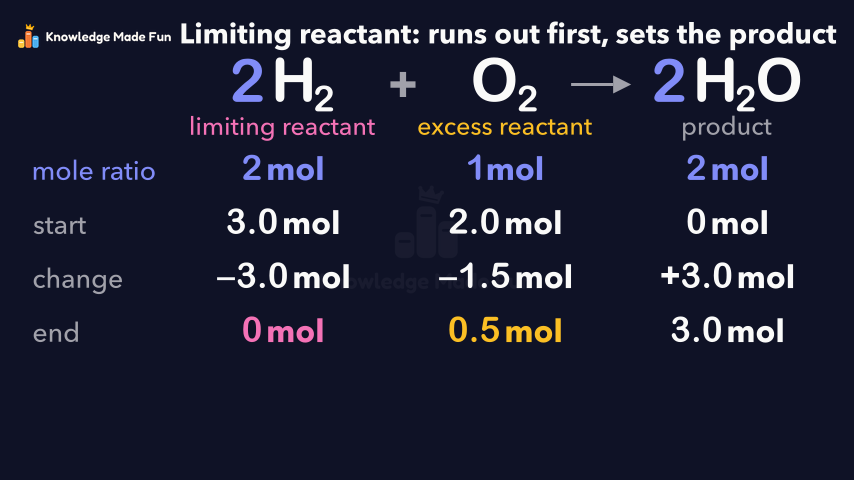
A sandwich recipe (2 slices of bread and 1 of cheese, with 10 slices of bread and 3 of cheese) shows that the cheese runs out first and limits you to 3 sandwiches, while 4 slices of bread are left over as the excess. The same diagram then works through 2 H₂ + O₂ → 2 H₂O with 3.0 mol H₂ and 2.0 mol O₂ in a start, change and end table, using the mole ratio and significant figures to show that hydrogen is limiting even though there are more moles of it, 0.5 mol O₂ is left over and 3.0 mol H₂O forms.
Anyone can watch two lessons on the website without an account. Signing in is free, no payment and no card, and opens three a day; Plus has no limit.
Loading
In one sentence
The question this lesson answers
Which reactant runs out first in a reaction, and how much product can form?
Think of sandwiches: each takes two slices of bread and one slice of cheese.
Transcript
What the lesson says
Which reactant runs out first in a reaction, and how much product can form?
Think of sandwiches: each takes two slices of bread and one slice of cheese.
You have ten slices of bread and three slices of cheese.
Make sandwiches until something runs out: one sandwich, two sandwiches, three.
The cheese runs out first and limits you to three: it is the limiting reactant.
Four slices of bread are left over: the bread is the excess reactant.
Now a reaction: hydrogen burns in oxygen to make water.
The coefficients, the numbers in front, give the mole ratio: 2 moles of hydrogen and 1 mole of oxygen make 2 moles of water.
We start with 3.0 moles of hydrogen, 2.0 moles of oxygen and no water.
3.0 moles of hydrogen needs half as much oxygen: 1.5 moles.
The ratio is exact, so 1.5 keeps the two significant figures of 3.0.
We have 2.0 moles of oxygen, more than enough, so hydrogen is limiting and oxygen is in excess.
All the hydrogen is used up, along with 1.5 moles of oxygen.
Hydrogen to water is 2 to 2, so 3.0 moles of water form.
Oxygen left over is 2.0 minus 1.5, or 0.5 moles: a subtraction keeps the fewest decimal places.
Hydrogen had more moles, yet it ran out first. So the limiting reactant is not always the one with fewer moles or less mass.
The limiting reactant runs out first and sets how much product forms.
Curriculum
Where this fits
- British Columbia, Grade 11
Chemistry 11, The mole and stoichiometry: stoichiometric calculations using significant figuresBC11-SC-29
The outcomes and strands follow the British Columbia curriculum.
Keep going
 2 min 20 s
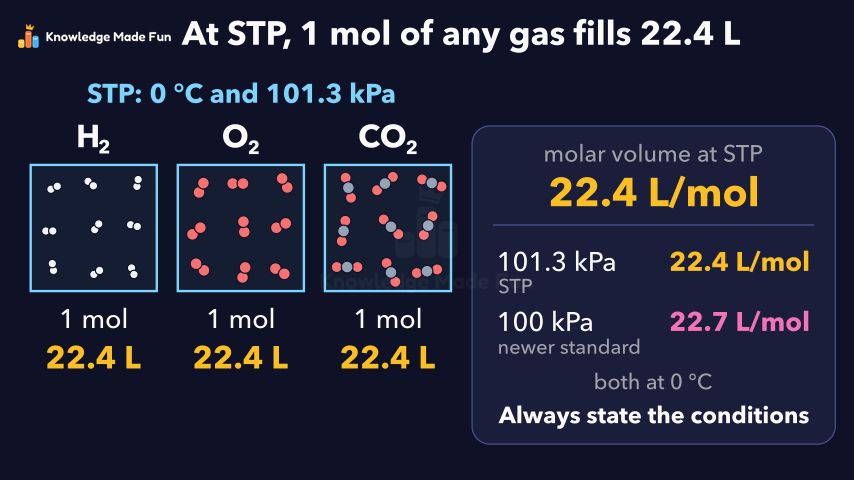
Gas volumes: one mole of any gas at STP
Grade 11 · 2 min 20 s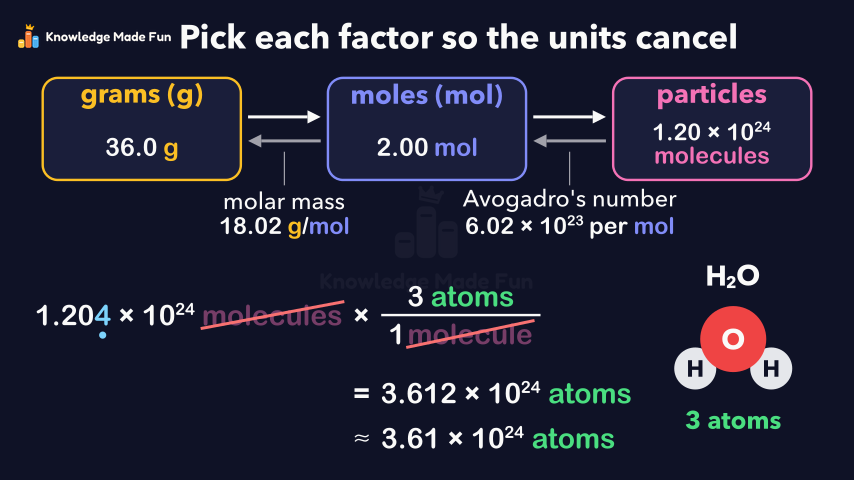 1 min 57 s
Grams to Moles to Particles
Grade 11 · 1 min 57 s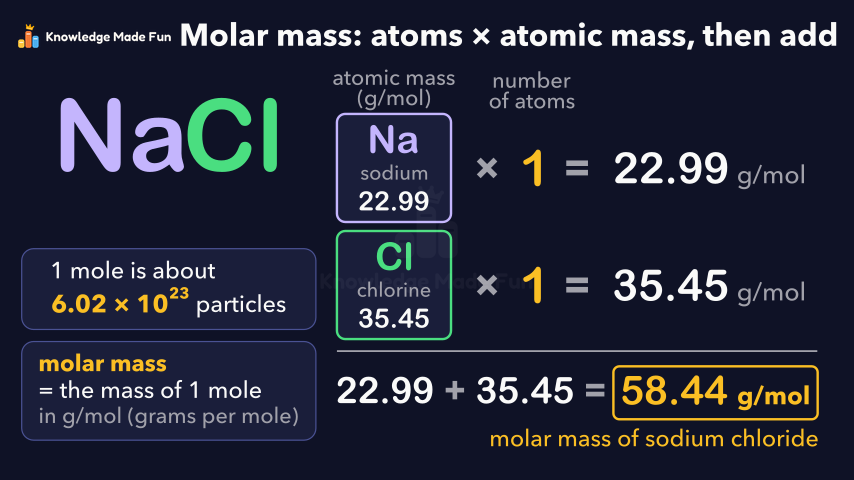 2 min 15 s
Molar mass: adding up atomic masses
Grade 11 · 2 min 15 s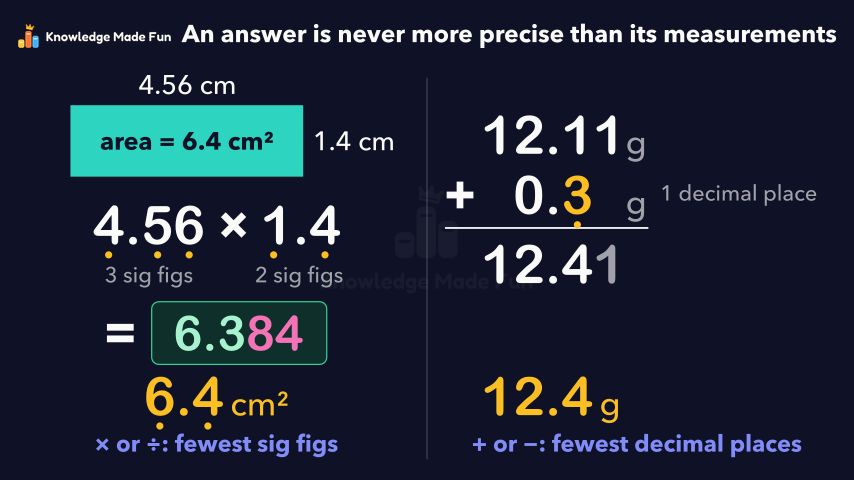 1 min 53 s
Significant Figures: How Precise Is Your Answer?
Grade 11 · 1 min 53 s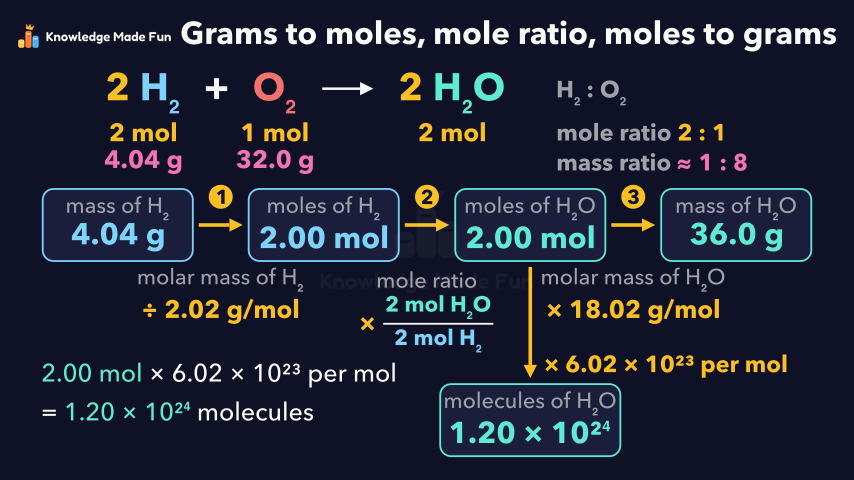 2 min 1 s
Stoichiometry: Using Mole Ratios to Predict Amounts
Grade 11 · 2 min 1 s 2 min
The factor-label method: let the units guide you
Grade 11 · 2 min 2 min 6 s
The mole: counting particles by weighing
Grade 11 · 2 min 6 s 1 min 40 s
Acids and bases: the pH scale
Grade 10 · 1 min 40 s
- All Grade 11 Chemistry lessons
- Create a free account to watch three lessons a day, no payment and no card.