Lesson · Grade 11 · Chemistry
Grams to Moles to Particles
- Grade 11
- Chemistry
- 1 min 57 s
- British Columbia
- BC11-SC-23
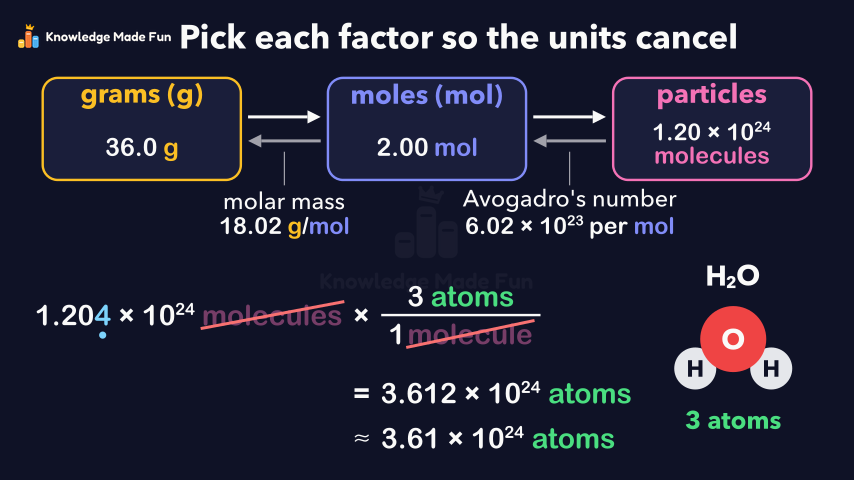
A road map of three boxes (grams, moles, particles), linked by molar mass and Avogadro's number, builds up while 36.0 g of water is converted step by step: to 2.00 mol, then 1.20 × 10²⁴ molecules, then 3.61 × 10²⁴ atoms. Each conversion factor is written as a fraction and the cancelling units are struck through, so students see how dimensional analysis picks each factor and why the answers keep three significant figures.
Concept: Converting grams to moles to particles
Anyone can watch two lessons on the website without an account. Signing in is free, no payment and no card, and opens three a day; Plus has no limit.
Loading
In one sentence
The question this lesson answers
How many water molecules are in 36.0 grams of water?
We can't count molecules directly, so we go from grams, to moles, to particles.
Transcript
What the lesson says
How many water molecules are in 36.0 grams of water?
We can't count molecules directly, so we go from grams, to moles, to particles.
A mole is a counting unit: 6.02 times 10 to the power of 23 particles, called Avogadro's number.
Molar mass is the mass of one mole: for water, 18.02 grams per mole.
Start with 36.0 grams and multiply by 1 mole over 18.02 grams, a fraction equal to one.
Grams cancel, leaving 2.00 moles. Choosing factors so units cancel is called dimensional analysis.
36.0 has three significant figures, the meaningful digits, so our answers keep three.
Next, multiply 2.00 moles by 6.02 times 10 to the power of 23 molecules over 1 mole.
Moles cancel, giving 1.204 times 10 to the power of 24 molecules.
To three significant figures, that is 1.20 times 10 to the power of 24 molecules.
Each water molecule has exactly three atoms: one oxygen and two hydrogen.
Start from 1.204, the value before rounding, and multiply by 3 atoms over 1 molecule.
Molecules cancel, giving 3.612, which rounds to 3.61 times 10 to the power of 24 atoms.
The map works both ways: pick each factor so the units cancel, from grams to particles or back.
Curriculum
Where this fits
- British Columbia, Grade 11
Chemistry 11, The mole and stoichiometry: dimensional analysisBC11-SC-23
Previous: Significant Figures: How Precise Is Your Answer?Next: Stoichiometry: Using Mole Ratios to Predict Amounts
The outcomes and strands follow the British Columbia curriculum.
Keep going
 2 min 20 s
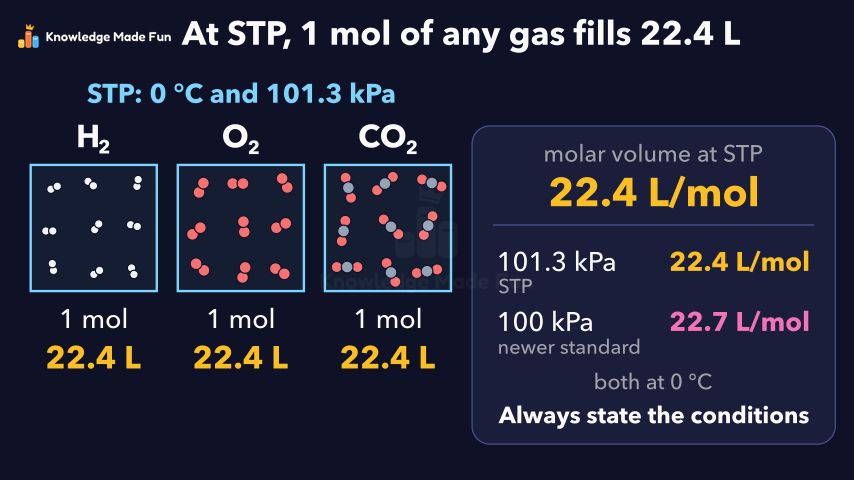
Gas volumes: one mole of any gas at STP
Grade 11 · 2 min 20 s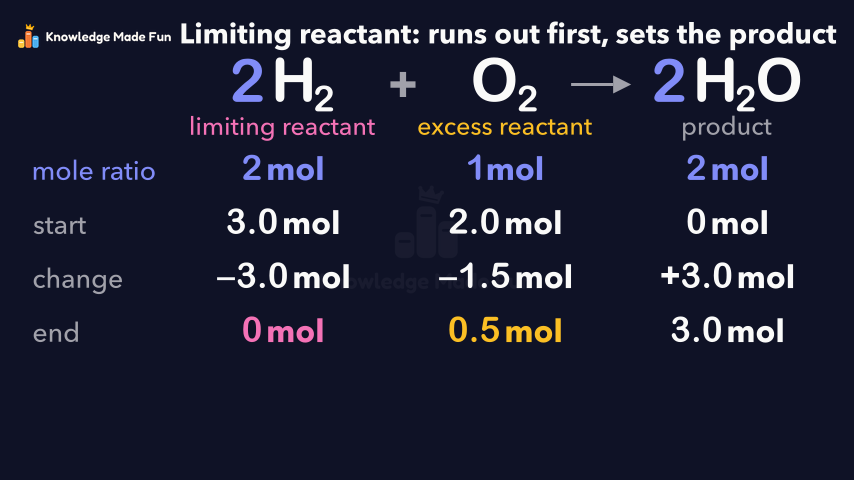 1 min 58 s
Limiting and Excess Reactants
Grade 11 · 1 min 58 s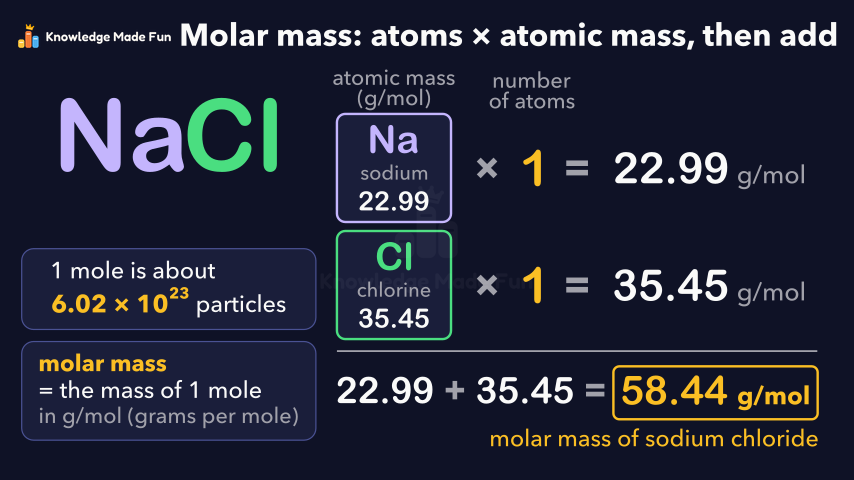 2 min 15 s
Molar mass: adding up atomic masses
Grade 11 · 2 min 15 s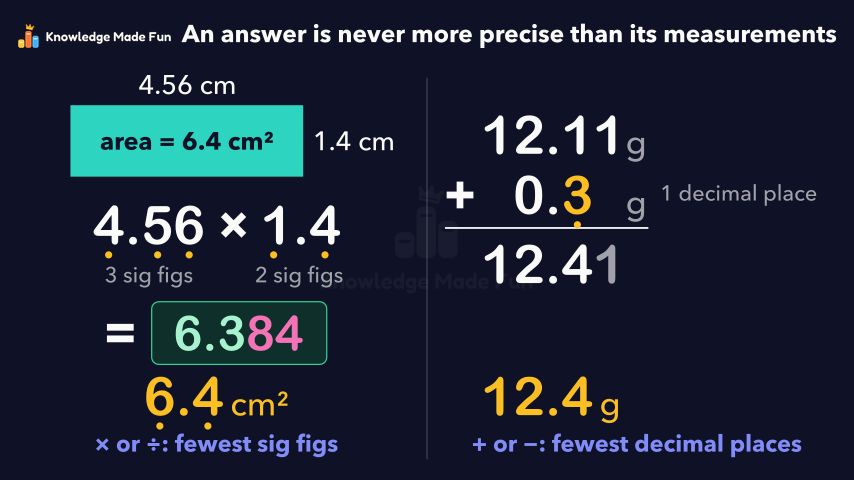 1 min 53 s
Significant Figures: How Precise Is Your Answer?
Grade 11 · 1 min 53 s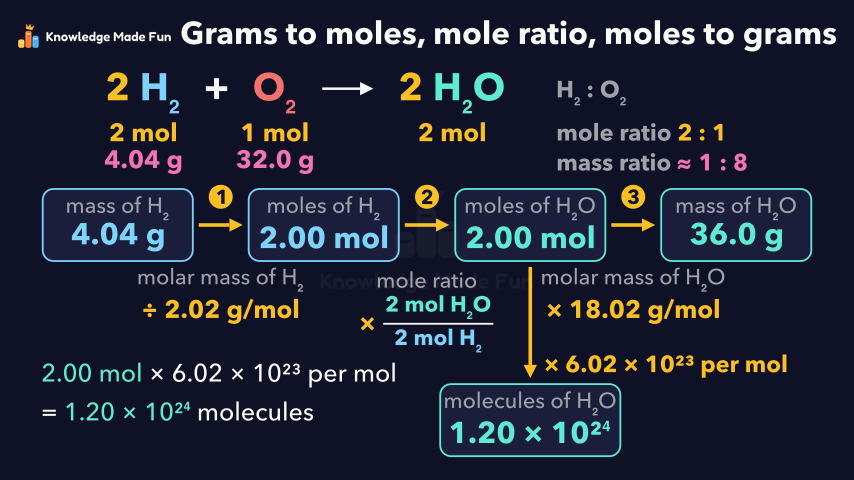 2 min 1 s
Stoichiometry: Using Mole Ratios to Predict Amounts
Grade 11 · 2 min 1 s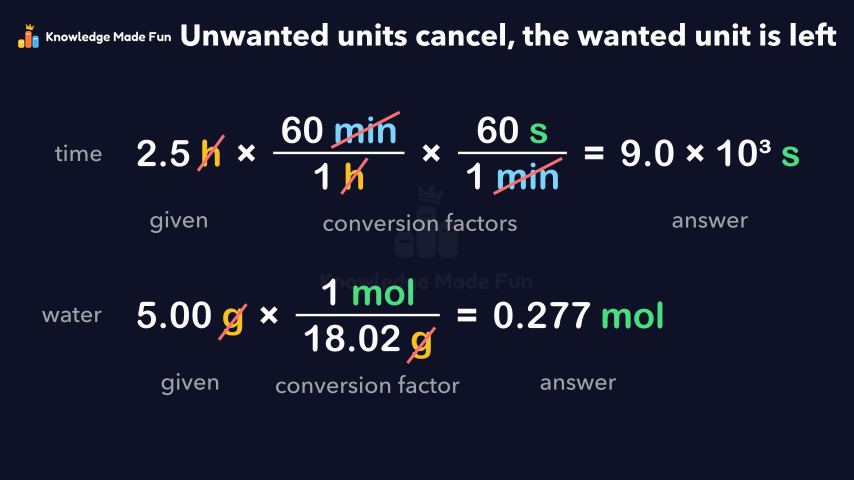 2 min
The factor-label method: let the units guide you
Grade 11 · 2 min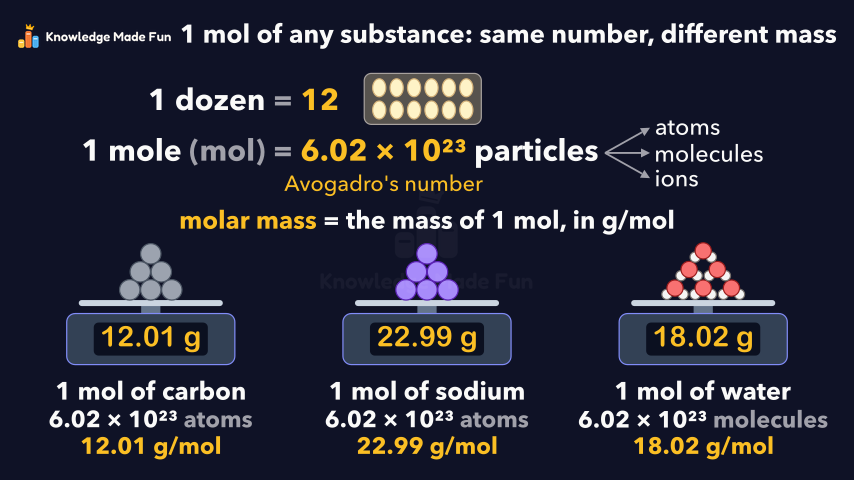 2 min 6 s
The mole: counting particles by weighing
Grade 11 · 2 min 6 s 1 min 40 s
Acids and bases: the pH scale
Grade 10 · 1 min 40 s
- All Grade 11 Chemistry lessons
- Create a free account to watch three lessons a day, no payment and no card.