Lesson · Grade 11 · Chemistry
Electronegativity difference decides the bond type
- Grade 11
- Chemistry
- 1 min 58 s
- British Columbia
- BC11-SC-07
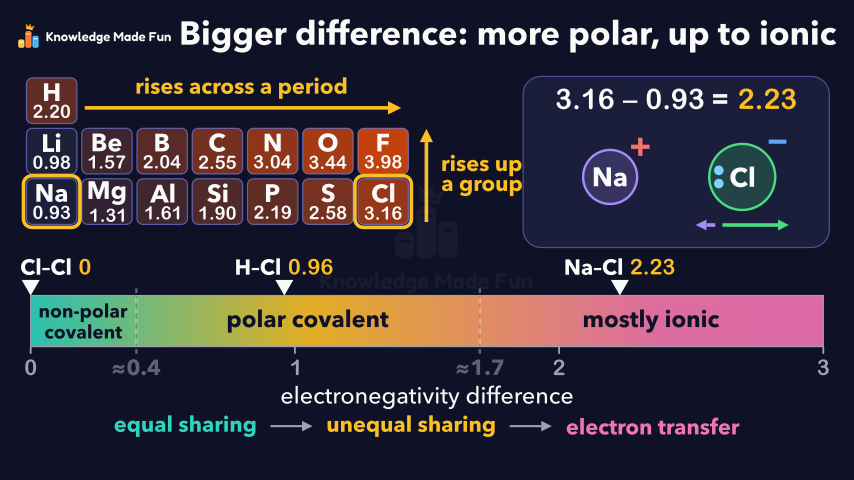
Part of the periodic table with Pauling values shows electronegativity rising across a period and up a group, with fluorine highest at about 4. A number line of the difference is then split at about 0.4 and 1.7 into non-polar covalent, polar covalent and mostly ionic; Cl–Cl (0), H–Cl (0.96, with δ+ and δ−) and Na–Cl (2.23, forming ions) are worked out and pinned on it, and the video ends by showing that bonds form a continuum rather than separate boxes.
Anyone can watch two lessons on the website without an account. Signing in is free, no payment and no card, and opens three a day; Plus has no limit.
Loading
In one sentence
The question this lesson answers
When two atoms bond, what decides if they share electrons or transfer them?
The key is electronegativity: how strongly an atom pulls on a shared pair of electrons.
Transcript
What the lesson says
When two atoms bond, what decides if they share electrons or transfer them?
The key is electronegativity: how strongly an atom pulls on a shared pair of electrons.
On the Pauling scale, it generally rises across a period and up a group.
Fluorine is the highest of all: 3.98, or about 4.
What decides the bond is the difference between the two atoms' values.
Up to about 0.4, the bond is non-polar covalent: the pair is shared about equally.
From about 0.4 to 1.7, it is polar covalent: the pair is shared unequally.
Above about 1.7, it is mostly ionic: electrons are transferred, forming charged ions.
Chlorine with chlorine: 3.16 minus 3.16 is 0, non-polar covalent.
Hydrogen chloride: 3.16 minus 2.20 is 0.96, polar covalent.
Chlorine pulls the pair closer, so it gets a partial negative charge, delta minus, and hydrogen delta plus.
Sodium chloride: 3.16 minus 0.93 is 2.23, mostly ionic.
Chlorine takes the pair, forming a positive sodium ion and a negative chloride ion.
But bonds form a continuum, not separate boxes, and the cutoffs vary between textbooks.
As the difference grows, sharing goes from equal, to unequal, to electron transfer.
The bigger the electronegativity difference, the more polar the bond, up to ionic.
Curriculum
Where this fits
- British Columbia, Grade 11
Chemistry 11, Bonding: chemical bonding based on electronegativityBC11-SC-07
Previous: Ionic and Covalent Bonds: Transfer or Share?Next: Polar Bonds, Polar Molecules: Shape Decides
The outcomes and strands follow the British Columbia curriculum.
Keep going
 1 min 58 s
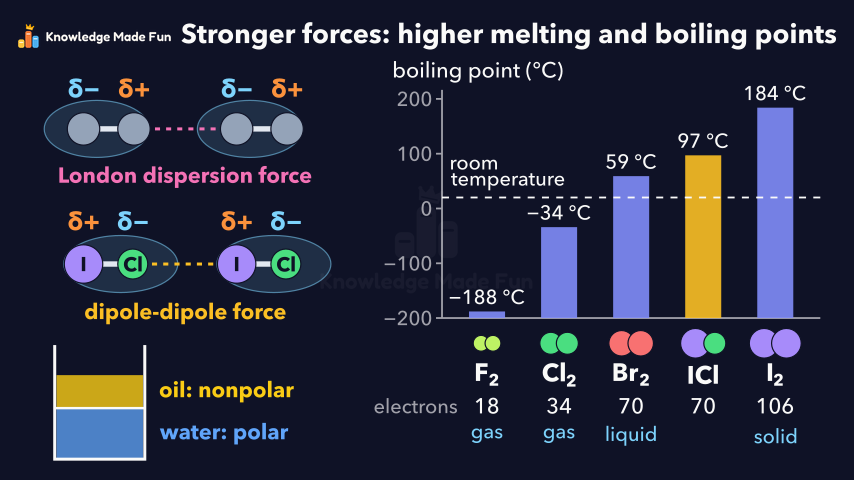
Dispersion and Dipole Forces: Why Some Substances Boil Higher
Grade 11 · 1 min 58 s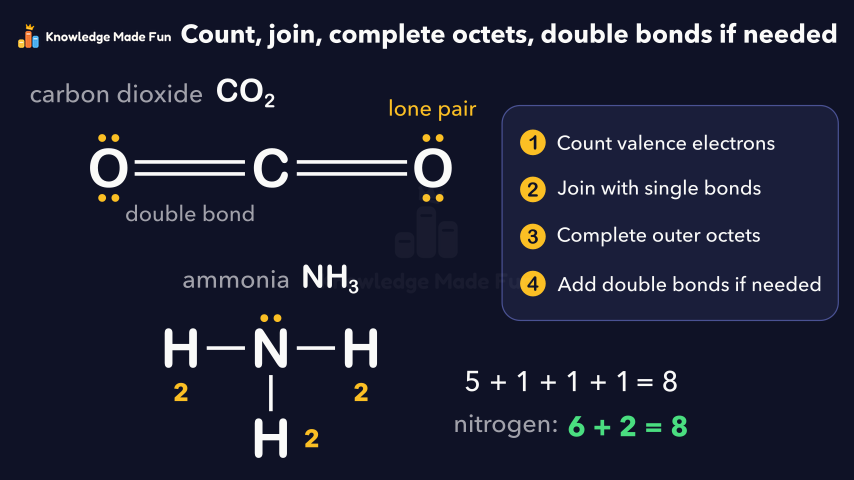 2 min 3 s
Drawing Lewis structures step by step
Grade 11 · 2 min 3 s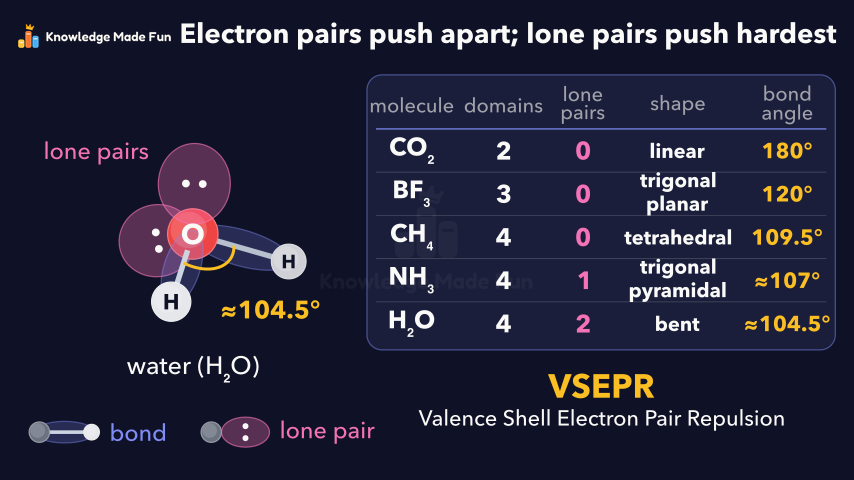 1 min 55 s
Electron Pairs Push Apart: VSEPR Molecule Shapes
Grade 11 · 1 min 55 s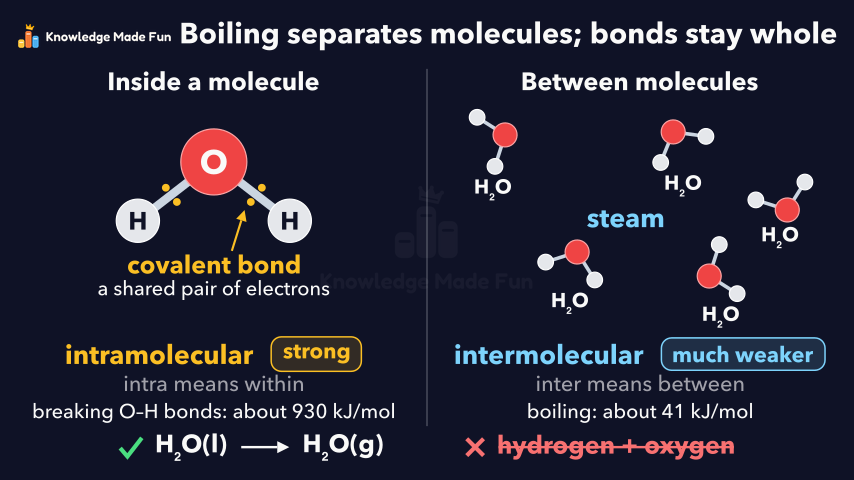 1 min 40 s
Forces Inside Molecules vs Forces Between Molecules
Grade 11 · 1 min 40 s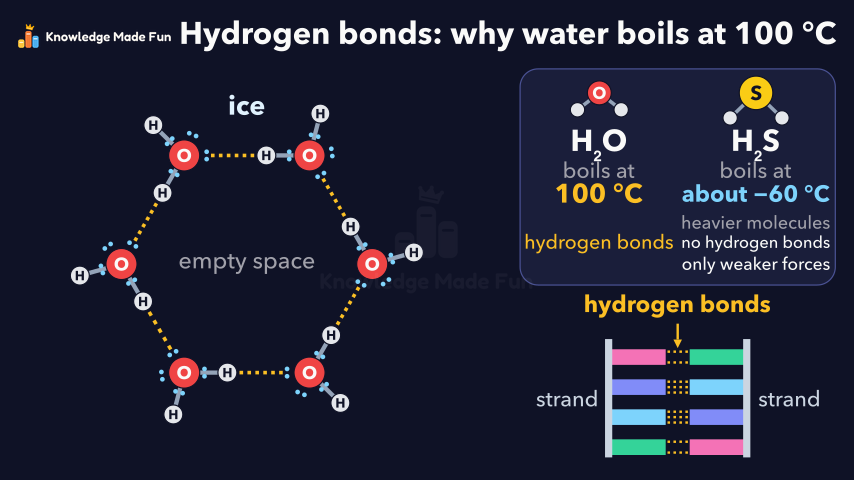 1 min 56 s
Hydrogen Bonds: Why Water Boils at 100 °C
Grade 11 · 1 min 56 s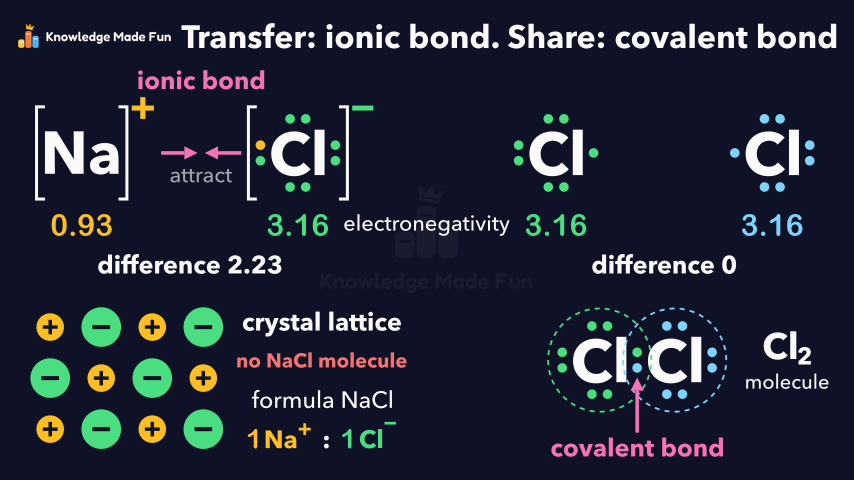 1 min 56 s
Ionic and Covalent Bonds: Transfer or Share?
Grade 11 · 1 min 56 s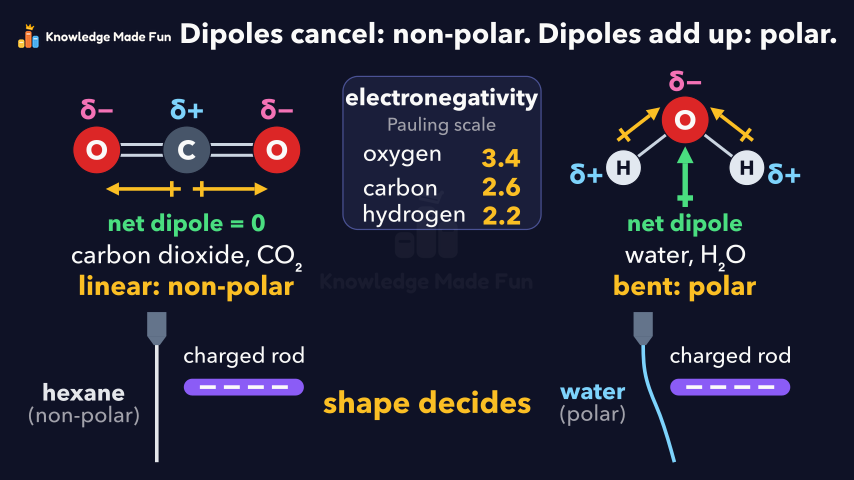 1 min 54 s
Polar Bonds, Polar Molecules: Shape Decides
Grade 11 · 1 min 54 s 1 min 40 s
Acids and bases: the pH scale
Grade 10 · 1 min 40 s
- All Grade 11 Chemistry lessons
- Create a free account to watch three lessons a day, no payment and no card.