Lesson · Grade 11 · Pre Calculus
Solving a Quadratic Inequality with Sign Analysis
- Grade 11
- Pre Calculus
- 2 min 12 s
- British Columbia
- BC11-MA-78
The video solves x² − 5x + 6 > 0: it factors it to (x − 2)(x − 3) > 0, marks the zeros 2 and 3 on a number line, and tests x = 0, 2.5 and 4 to find the sign in each of the three intervals. It keeps the positive intervals to get x < 2 or x > 3, written (−∞, 2) ∪ (3, ∞), and warns against answering only x = 2 and x = 3. It then checks the answer on the parabola, applies the method to a ball whose height h = −5t² + 20t + 1 is above 16 m when 1 < t < 3, and ends on a one-line recap.
Anyone can watch two lessons on the website without an account. Signing in is free, no payment and no card, and opens three a day; Plus has no limit.
Loading
In one sentence
The question this lesson answers
Solve the quadratic inequality x squared minus 5 x plus 6 is greater than 0.
Factor: negative 2 and negative 3 multiply to 6 and add to negative 5, giving x minus 2 times x minus 3.
Transcript
What the lesson says
Solve the quadratic inequality x squared minus 5 x plus 6 is greater than 0.
Factor: negative 2 and negative 3 multiply to 6 and add to negative 5, giving x minus 2 times x minus 3.
The zeros, where the product is 0, are 2 and 3. They split the number line into three intervals: less than 2, between 2 and 3, and greater than 3.
Sign analysis means testing one value in each interval to find the sign of the product.
Try x equals 0: negative 2 times negative 3 is 6, positive.
Try x equals 2.5: 0.5 times negative 0.5 is negative 0.25, negative.
Try x equals 4: 2 times 1 is 2, positive.
We want greater than 0, so keep the positive intervals: x less than 2 or x greater than 3.
A common mistake is to solve it like an equation: only x equals 2 and x equals 3. In fact the product there is 0, which is not greater than 0, so 2 and 3 are left out.
In interval notation: negative infinity to 2, union 3 to infinity. Union joins the parts, and round brackets leave the ends out.
The graph agrees: the parabola is above the x axis left of 2 and right of 3.
In context: a ball is negative 5 t squared plus 20 t plus 1 metres high after t seconds. When is it above 16 metres?
It is 16 metres high at t equals 1 and 3, and 21 at t equals 2, so it is above 16 metres when 1 is less than t is less than 3.
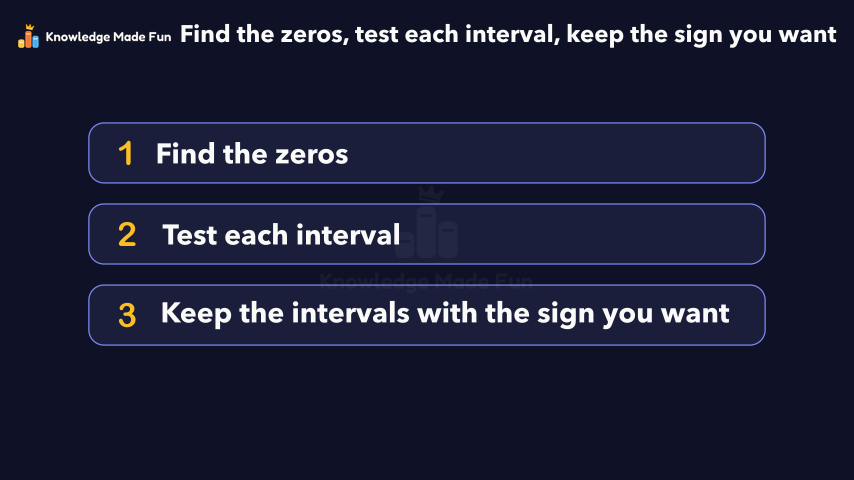
Find the zeros, test each interval, and keep the intervals with the sign you want.
Curriculum
Where this fits
- British Columbia, Grade 11
Pre Calculus 11, Inequalities: linear and quadratic inequalitiesBC11-MA-78
The outcomes and strands follow the British Columbia curriculum.
Keep going
 2 min 9 s
Solving Linear Inequalities and Interval Notation
Grade 11 · 2 min 9 s 2 min 11 s
Adding and Subtracting Rational Expressions
Grade 11 · 2 min 11 s 2 min 3 s
Angles in Standard Position and Reference Angles
Grade 11 · 2 min 3 s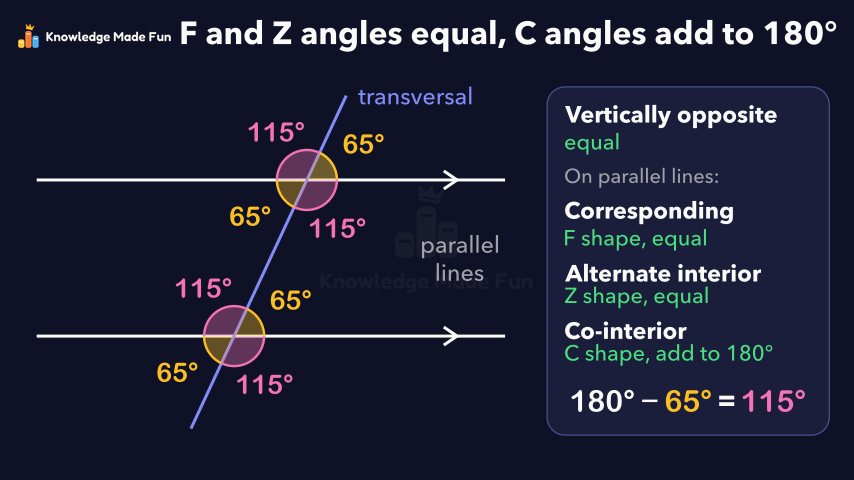 1 min 58 s
Angles made by parallel lines and a transversal
Grade 11 · 1 min 58 s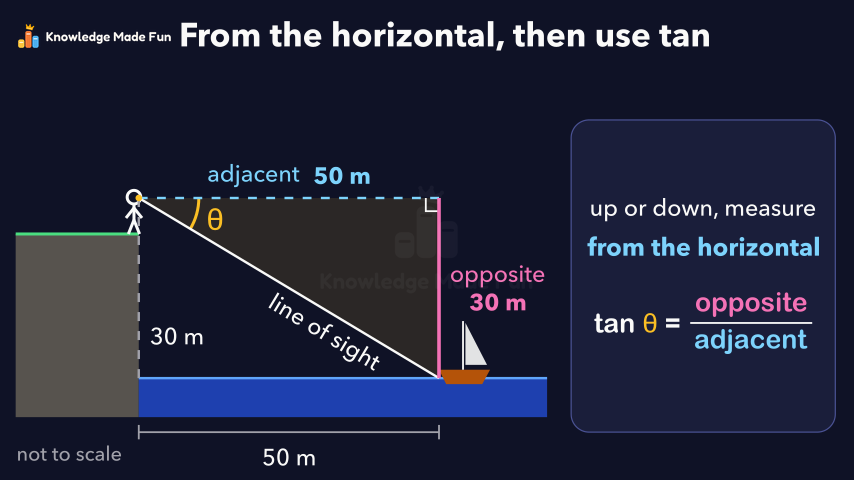 2 min 12 s
Angles of Elevation and Depression: Measuring What You Cannot Reach
Grade 10 · 2 min 12 s 1 min 58 s
Choosing the best average: mean, median or mode
Grade 8 · 1 min 58 s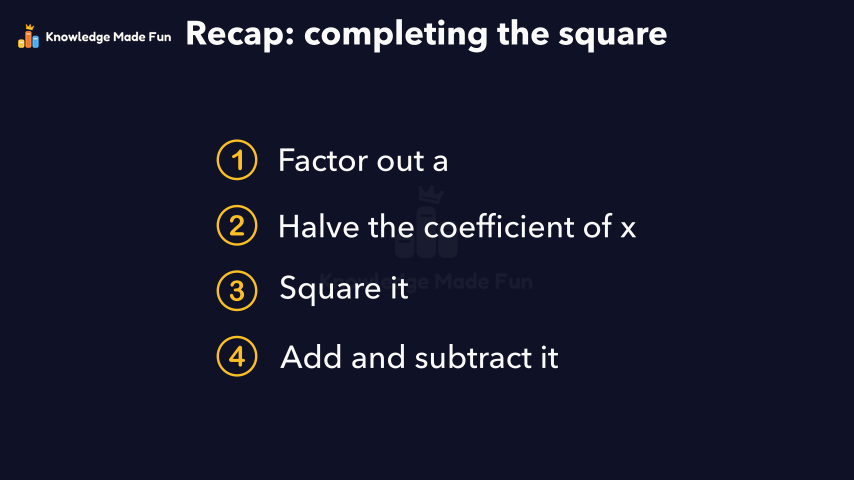 2 min 24 s
Completing the Square: From Standard Form to Vertex Form
Grade 11 · 2 min 24 s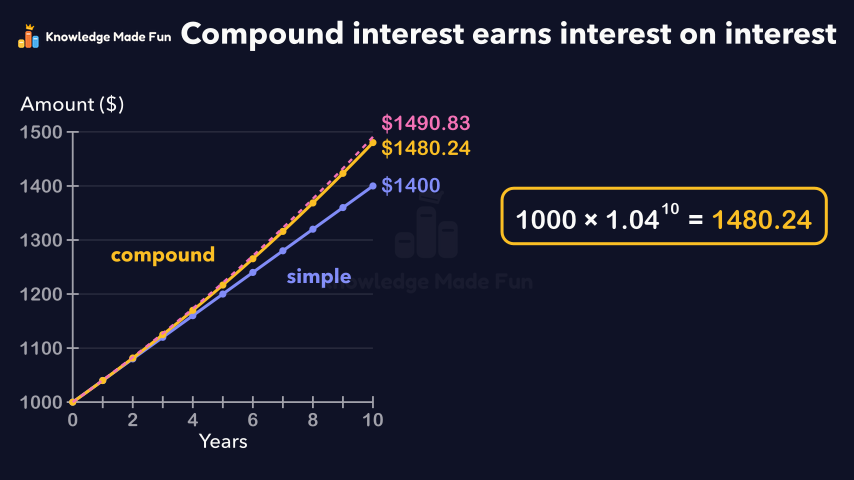 2 min 7 s
Compound interest: earning interest on interest
Grade 11 · 2 min 7 s
- All Grade 11 Pre Calculus lessons
- Create a free account to watch three lessons a day, no payment and no card.