Lesson · Grade 10 · Workplace Mathematics
Converting between metric and imperial lengths
- Grade 10
- Workplace Mathematics
- 2 min 14 s
- British Columbia
- BC10-MA-53
Using the facts 1 in = 2.54 cm exactly and 1 mile ≈ 1.609 km, the video multiplies by a conversion factor equal to 1 so the units cancel: 6 ft 2 in becomes 74 in × 2.54 cm/1 in = 187.96 cm, about 188 cm, and 10 km × 1 mile/1.609 km gives 10 ÷ 1.609 ≈ 6.2 miles. It then shows the common mistake of multiplying (16.09 miles), rules it out by checking whether the answer should be bigger or smaller, and ends on a one-line recap.
Anyone can watch two lessons on the website without an account. Signing in is free, no payment and no card, and opens three a day; Plus has no limit.

Loading
In one sentence
The question this lesson answers
Metric units, like centimetres, metres and kilometres, go up in powers of ten.
Imperial units, like inches, feet and miles, are still used in some places.
Transcript
What the lesson says
Metric units, like centimetres, metres and kilometres, go up in powers of ten.
Imperial units, like inches, feet and miles, are still used in some places.
These facts link them. One foot is 12 inches. One inch is exactly 2.54 centimetres. One mile is about 1.609 kilometres.
A person is 6 feet 2 inches tall. How tall is that in centimetres?
First, change it all to inches. 6 feet is 6 times 12, which is 72 inches.
Add the other 2 inches to get 74 inches.
As a fraction, 2.54 centimetres over 1 inch is a conversion factor. It equals 1, because the top and bottom are the same length.
Multiplying by 1 keeps the length the same, and the inches cancel, leaving centimetres.
74 times 2.54 is 187.96 centimetres, so the person is about 188 centimetres tall.
Check: a centimetre is shorter than an inch, so there should be more centimetres. 188 is more than 74, so it makes sense.
Now the other way: how many miles is a 10 kilometre run?
We want miles, so miles go on top: 1 mile over 1.609 kilometres.
The kilometres cancel, so we divide: 10 divided by 1.609 is about 6.2 miles.
A common mistake is to multiply instead: 10 times 1.609 is 16.09 miles.
But a mile is longer than a kilometre, so there should be fewer miles. 16.09 is too big, and 6.2 makes sense.
To convert, multiply by a fraction with the unit you want on top and the unit you have below. Then check: bigger or smaller?
Curriculum
Where this fits
- British Columbia, Grade 10
Workplace Mathematics 10, Geometry and measurement: metric and imperial measurement and conversionsBC10-MA-53
Previous: Reading a Tape Measure to the Nearest SixteenthNext: Rearranging a volume formula to find a missing height
- British Columbia, Grade 12
Apprenticeship Mathematics 12, Measurement: measuring: using tools with graduated scales; conversions using metric and imperialBC12-MA-003
This lesson is also listed in Grade 12.
The outcomes and strands follow the British Columbia curriculum.
Keep going
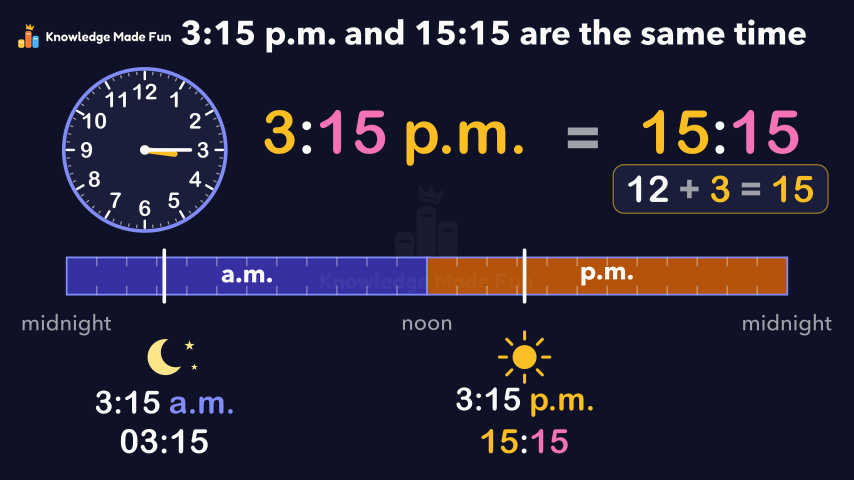 1 min 12 s
3:15 p.m. or 15:15? Morning, afternoon and the 24-hour clock
Grade 4 · 1 min 12 s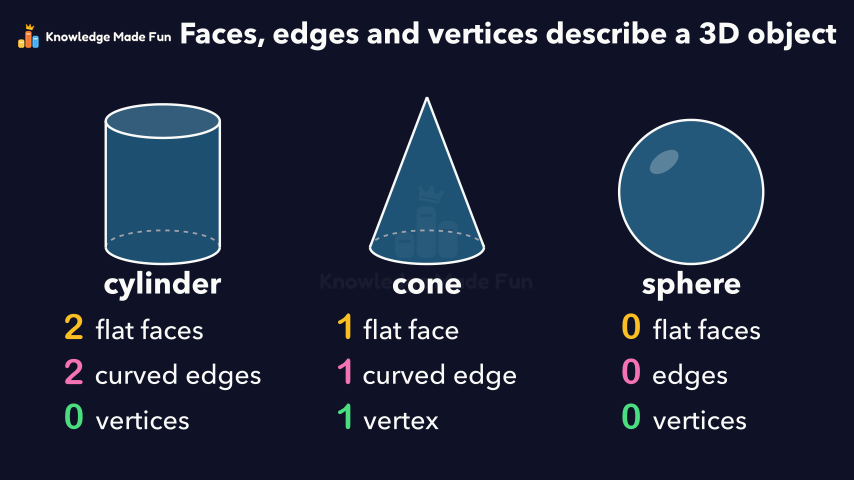 1 min 26 s
3D Objects: Faces, Edges and Vertices
Grade 3 · 1 min 26 s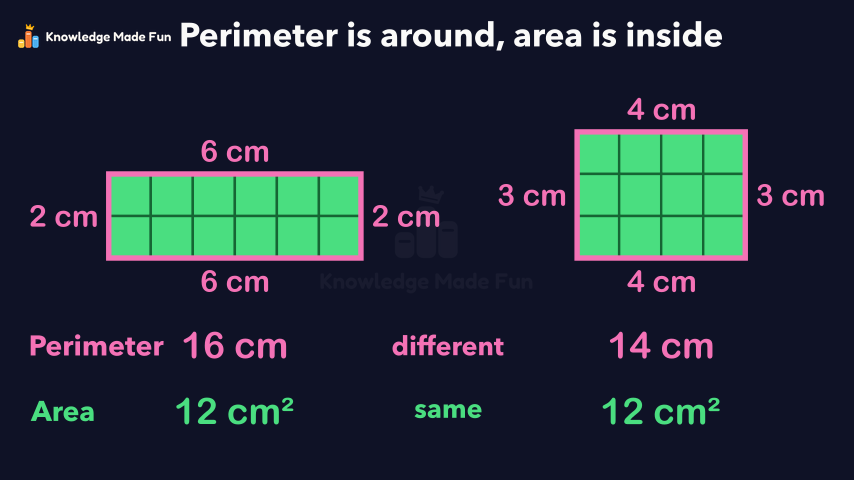 1 min 21 s
Area and Perimeter: What Is the Difference?
Grade 5 · 1 min 21 s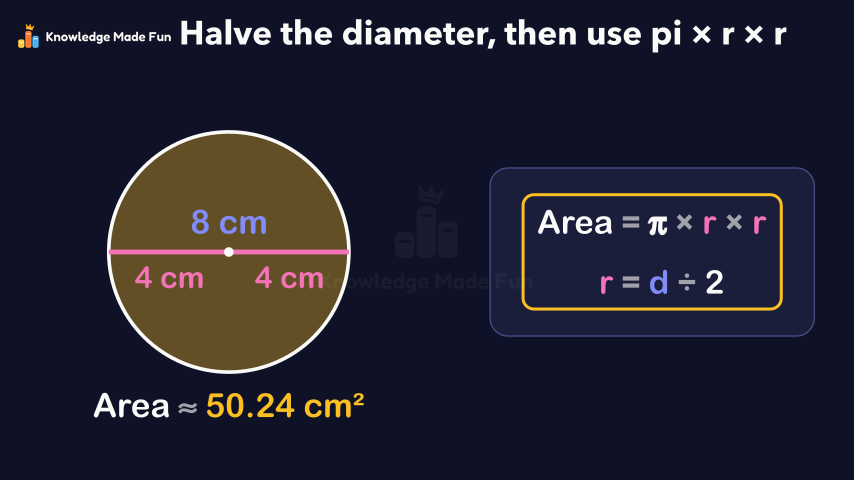 1 min 5 s
Area of a Circle from the Radius or the Diameter
Grade 7 · 1 min 5 s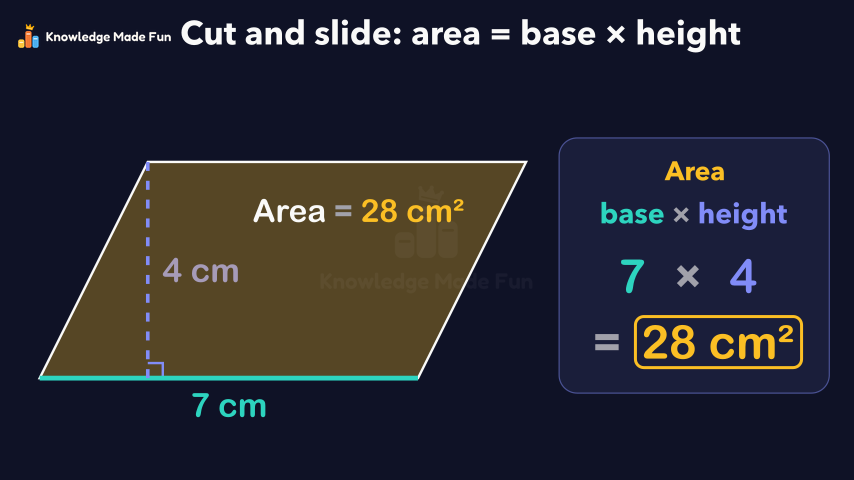 1 min 14 s
Area of a Parallelogram: Cut and Slide into a Rectangle
Grade 6 · 1 min 14 s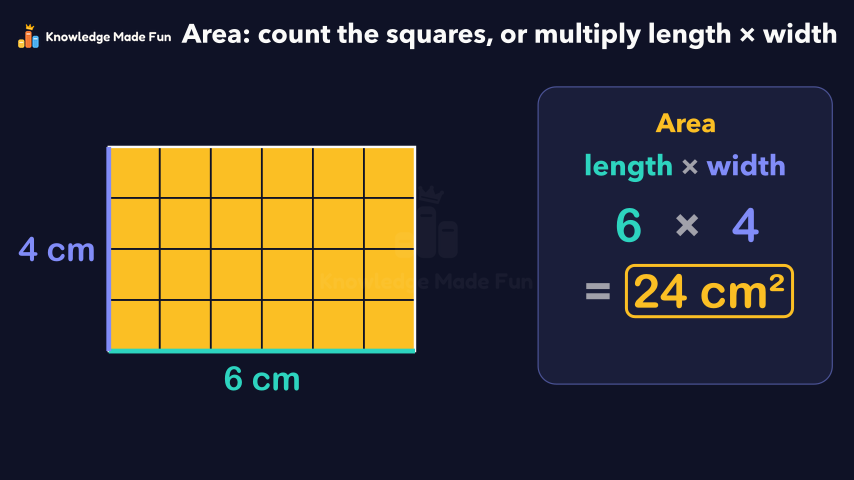 1 min 18 s
Area of a Rectangle: Count the Squares, Then Multiply
Grade 5 · 1 min 18 s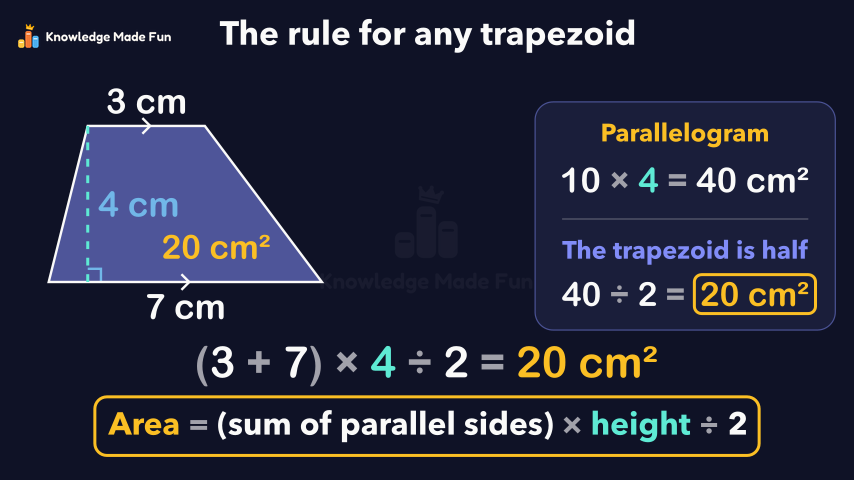 1 min 16 s
Area of a Trapezoid: Two Copies Make a Parallelogram
Grade 6 · 1 min 16 s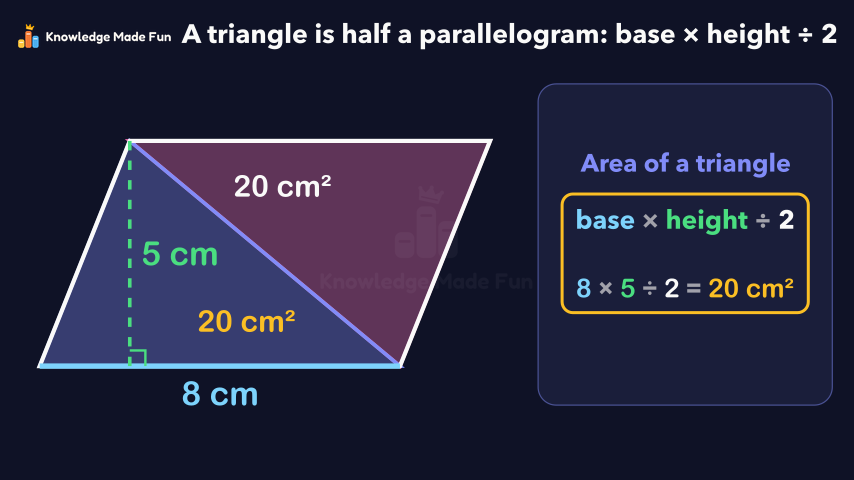 1 min 19 s
Area of a Triangle: Half of a Parallelogram
Grade 6 · 1 min 19 s
- All Grade 10 Workplace Mathematics lessons
- Create a free account to watch three lessons a day, no payment and no card.