Lesson · Grade 3 · Mathematics
3D Objects: Faces, Edges and Vertices
- Grade 3
- Mathematics
- 1 min 26 s
- British Columbia
- BC3-MA-27
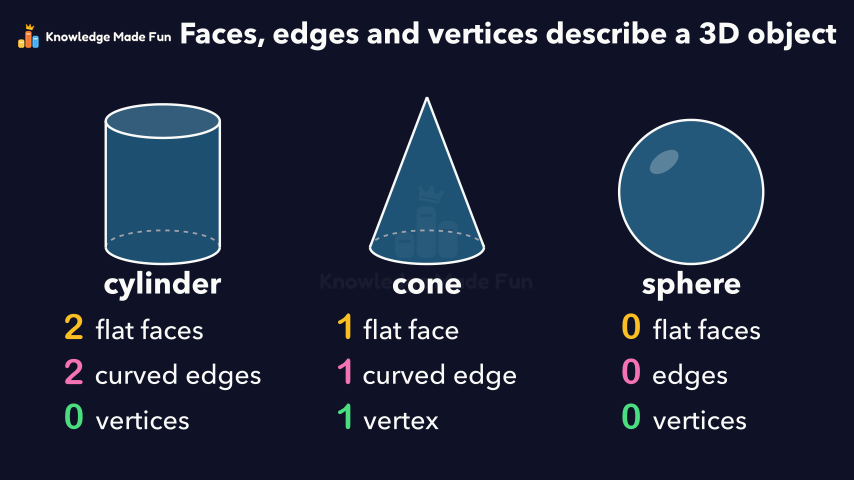
A see-through cube is the worked example: its faces are counted in pairs (2 + 2 + 2 = 6), its edges in fours (4 + 4 + 4 = 12) and its corners in fours (4 + 4 = 8), and a rectangular prism has the same numbers but rectangle faces, even after it is tipped onto its end. Then a cylinder, a cone and a sphere show their curved surfaces and their own counts, ending on the recap that faces, edges and vertices describe a 3D object.
Anyone can watch two lessons on the website without an account. Signing in is free, no payment and no card, and opens three a day; Plus has no limit.
Loading
In one sentence
The question this lesson answers
How can we describe a 3D object, like this cube?
A face is a flat surface.
Transcript
What the lesson says
How can we describe a 3D object, like this cube?
A face is a flat surface.
An edge is where two faces meet.
A vertex is a corner.
A cube has 6 faces: top and bottom, front and back, left and right.
It has 12 edges: 4 on top, 4 on the bottom and 4 going up the sides.
It has 8 vertices: 4 on top and 4 on the bottom.
A rectangular prism also has 6 faces, 12 edges and 8 vertices.
But a cube's faces are all squares, and this prism's faces are rectangles.
Turning the prism does not change it: it still has 6 faces, 12 edges and 8 vertices.
A cylinder, a cone and a sphere each have a curved surface.
A cylinder has 2 flat faces, 2 curved edges and no vertices.
A cone has 1 flat face, 1 curved edge and 1 vertex at its tip.
A sphere has no flat faces, no edges and no vertices.
We describe a 3D object by its faces, edges and vertices.
Curriculum
Where this fits
- British Columbia, Grade 3
Mathematics, Geometry and measurement: construction of 3D objectsBC3-MA-27
Previous: Units of Time: From Seconds to YearsNext: Nets: Folding a Cube, Unfolding a Box
The outcomes and strands follow the British Columbia curriculum.
Keep going
 1 min 12 s
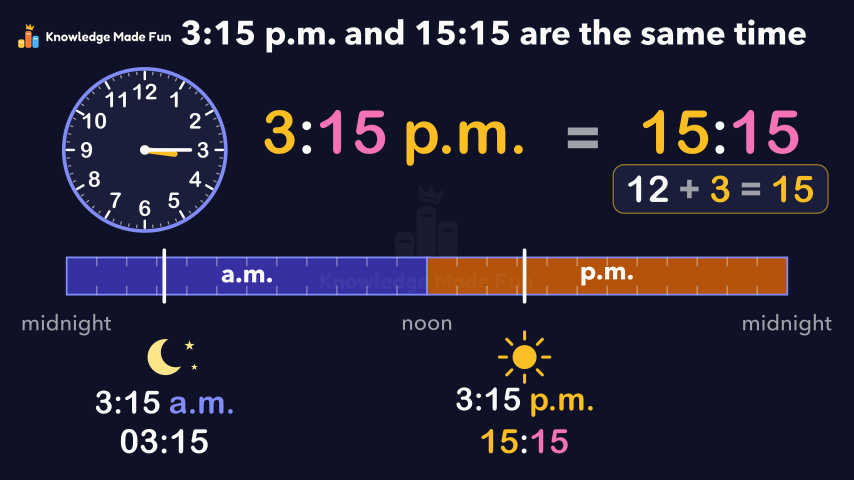
3:15 p.m. or 15:15? Morning, afternoon and the 24-hour clock
Grade 4 · 1 min 12 s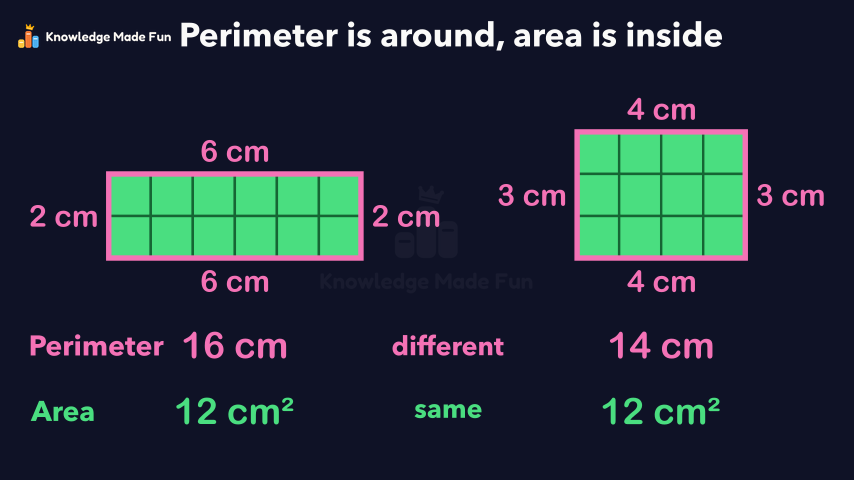 1 min 21 s
Area and Perimeter: What Is the Difference?
Grade 5 · 1 min 21 s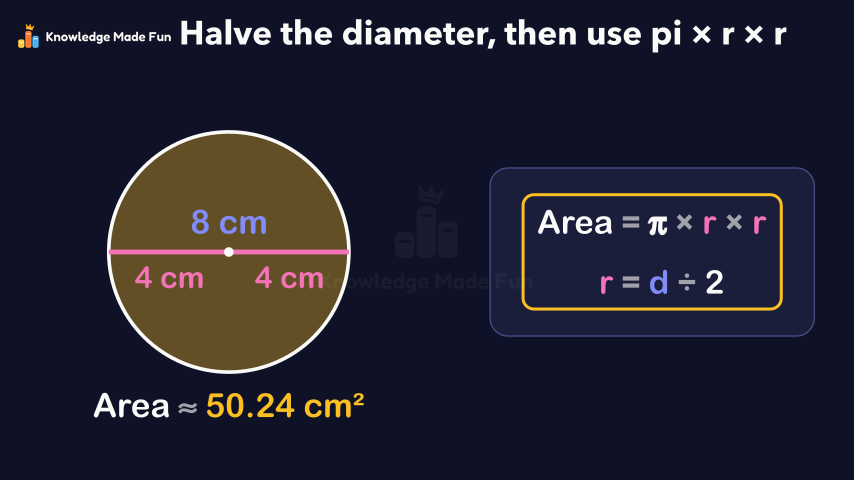 1 min 5 s
Area of a Circle from the Radius or the Diameter
Grade 7 · 1 min 5 s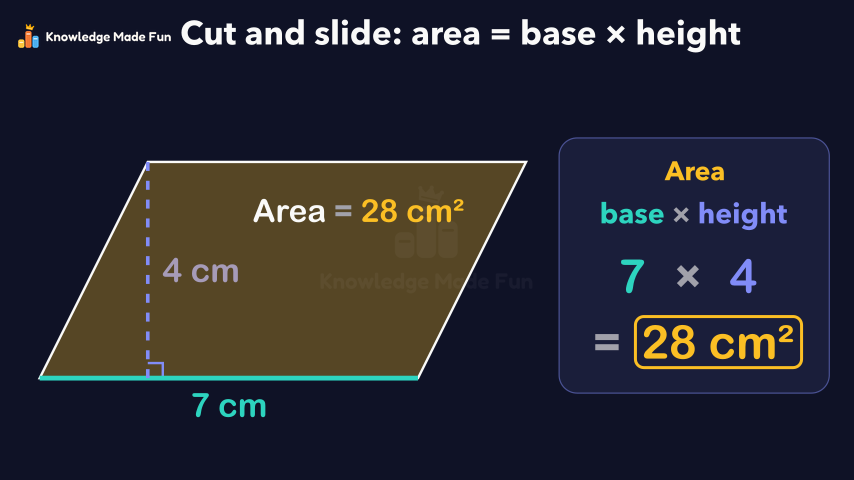 1 min 14 s
Area of a Parallelogram: Cut and Slide into a Rectangle
Grade 6 · 1 min 14 s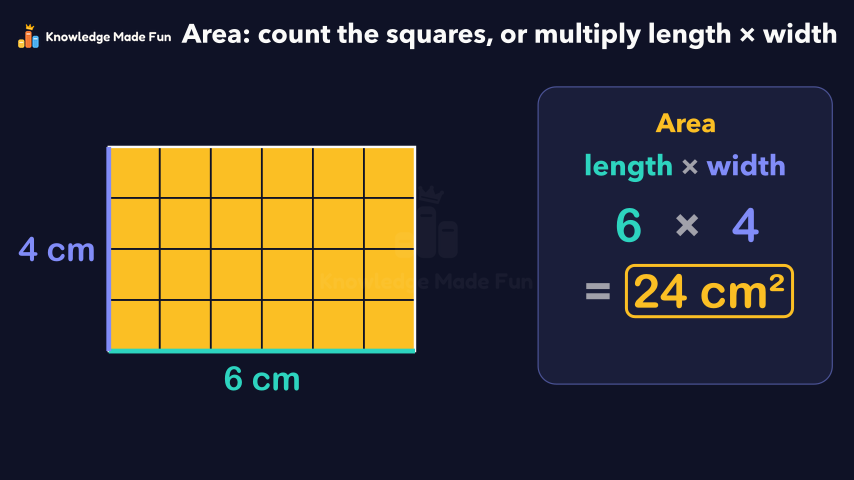 1 min 18 s
Area of a Rectangle: Count the Squares, Then Multiply
Grade 5 · 1 min 18 s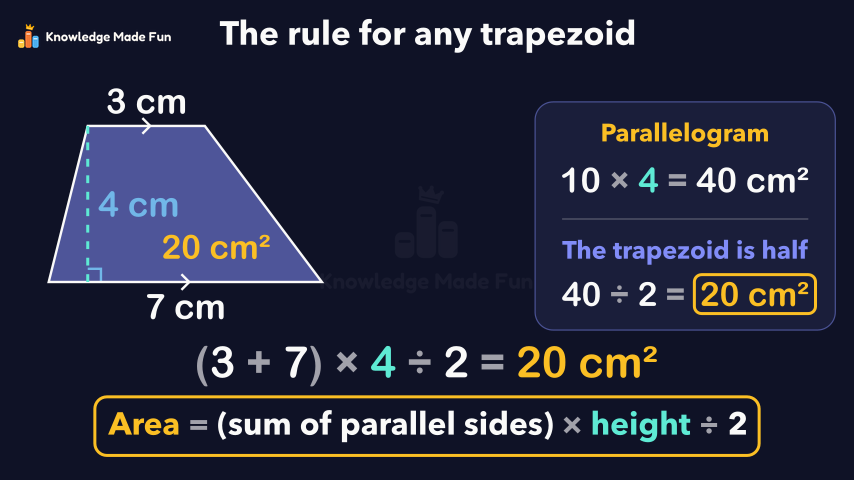 1 min 16 s
Area of a Trapezoid: Two Copies Make a Parallelogram
Grade 6 · 1 min 16 s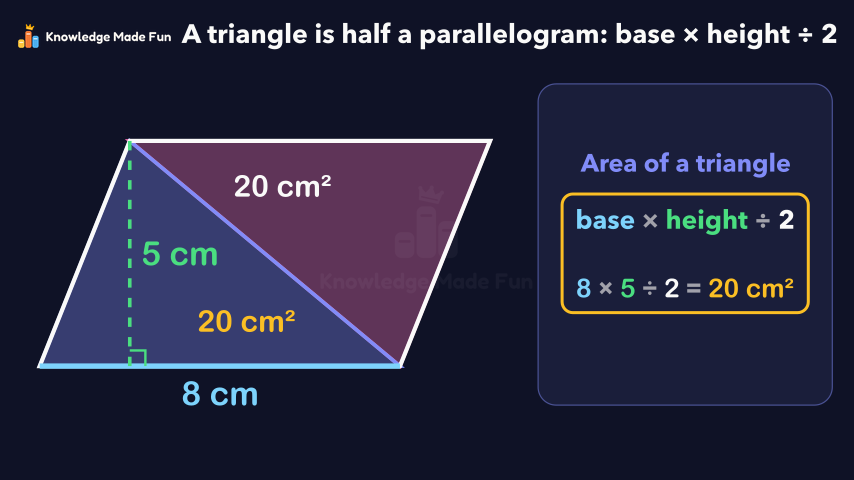 1 min 19 s
Area of a Triangle: Half of a Parallelogram
Grade 6 · 1 min 19 s 1 min 4 s
Area: How Many Squares Cover a Shape
Grade 3 · 1 min 4 s
- All Grade 3 Mathematics lessons
- Teachers: the maths worksheets for Grade 3 are in the dashboard, each with a worked example and a proven answer key.
- Try the graph paper, free for everyone, no account needed.
- Create a free account to watch three lessons a day, no payment and no card.