Lesson · Grade 6 · Applied Design, Skills and Technologies
What Makes a Brand: Name, Logo and Promise
- Grade 6
- Applied Design, Skills and Technologies
- 1 min 7 s
- British Columbia
- BC6-AD-21
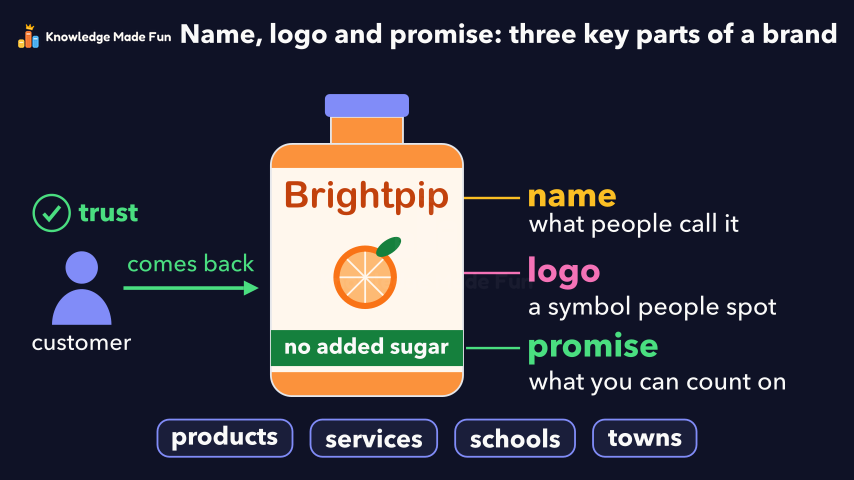
A plain juice bottle becomes the made-up brand Brightpip as its name, its orange-slice logo and its "no added sugar" promise are added and labelled one at a time. A customer stops trusting the brand when the promise is broken and comes back when it is kept, and the video ends by showing that products, services, schools and towns can all have brands.
Concept: What a brand is: name, logo and promise
Anyone can watch two lessons on the website without an account. Signing in is free, no payment and no card, and opens three a day; Plus has no limit.
Loading
In one sentence
The question this lesson answers
What is a brand, and why does a business need one?
This juice has a plain label, so shoppers have nothing to remember it by.
Transcript
What the lesson says
What is a brand, and why does a business need one?
This juice has a plain label, so shoppers have nothing to remember it by.
Three key parts of a brand are its name, its logo and its promise.
The name is what people call the product.
Our made-up juice is called Brightpip, which is short and easy to remember.
The logo is a symbol or design that people can spot quickly.
The promise is what customers can count on every time, like no added sugar.
If a business breaks its promise, customers stop trusting it.
When it keeps its promise, customers trust the brand and come back.
Together, the name, the logo and the promise help people recognize a product and trust it.
Products, services, schools and even towns can have brands too.
Three key parts of a brand are a name people remember, a logo they spot and a promise they trust.
Curriculum
Where this fits
- British Columbia, Grade 6
Applied Design, Skills and Technologies, Entrepreneurship and marketing: branding of products, services, institutions, or placesBC6-AD-21
Previous: Finding a Market NicheNext: Setting a Price: Profit or Break Even
The outcomes and strands follow the British Columbia curriculum.
Keep going
 1 min 5 s
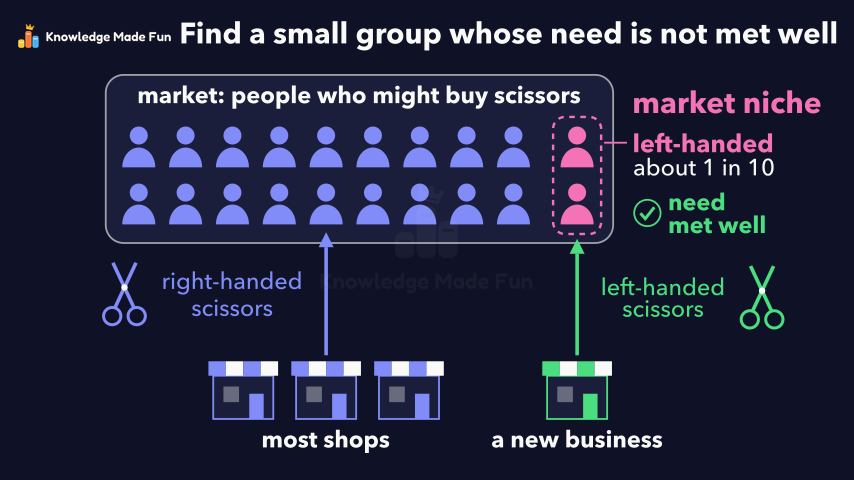
Finding a Market Niche
Grade 6 · 1 min 5 s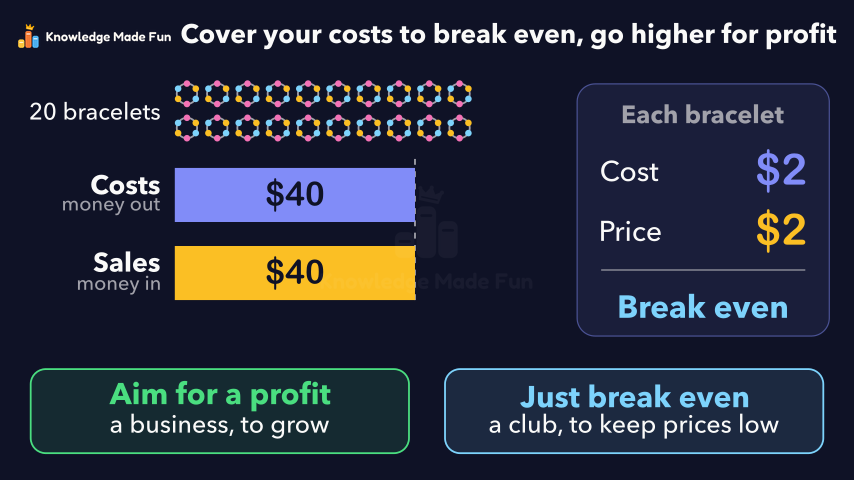 1 min 15 s
Setting a Price: Profit or Break Even
Grade 6 · 1 min 15 s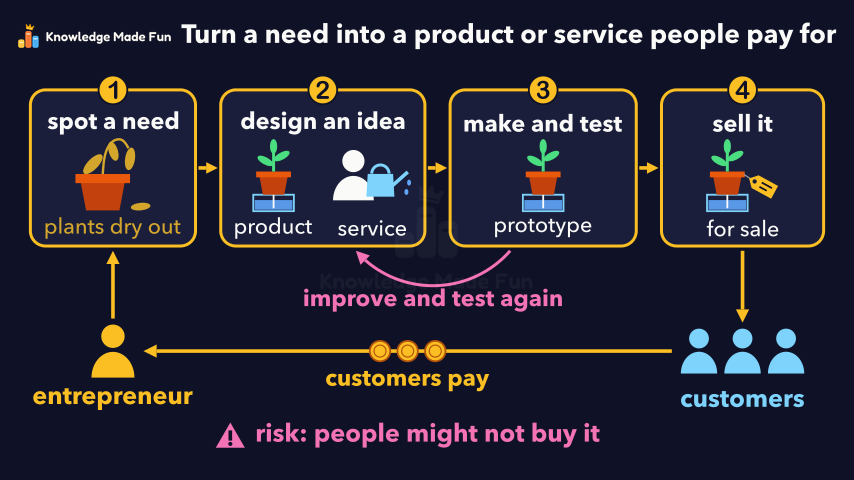 1 min 3 s
What an entrepreneur does
Grade 6 · 1 min 3 s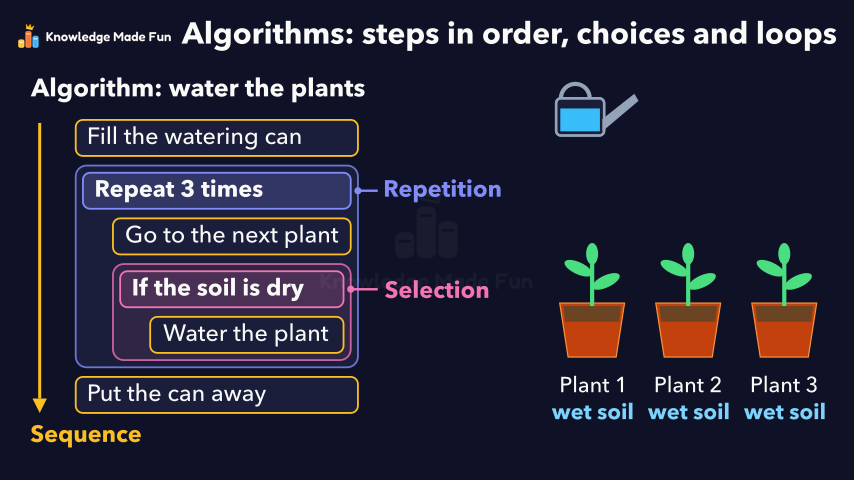 1 min 19 s
Algorithms: Steps in Order, Choices and Loops
Grade 6 · 1 min 19 s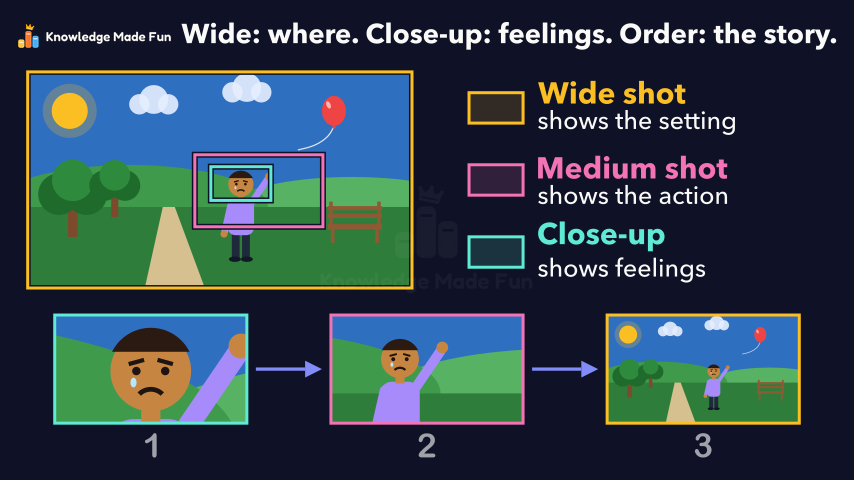 1 min 7 s
Camera Shots: How Close-Ups and Wide Shots Tell a Story
Grade 6 · 1 min 7 s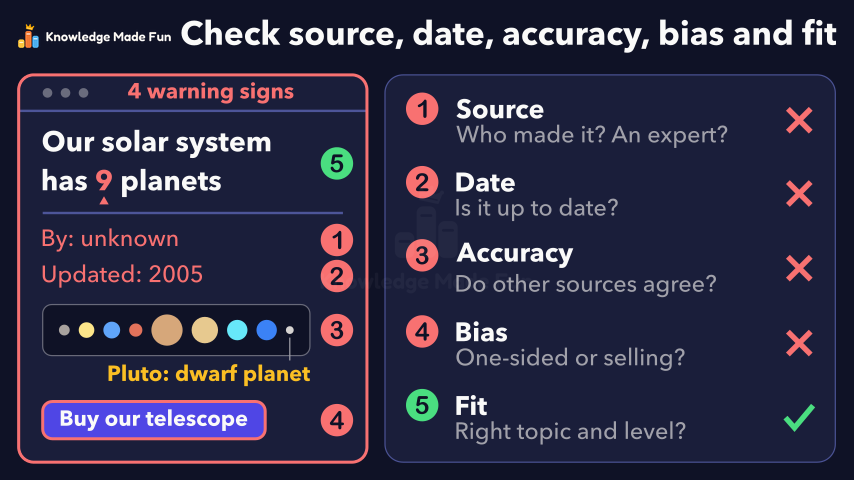 1 min 11 s
Can You Trust This Website? Five Checks
Grade 6 · 1 min 11 s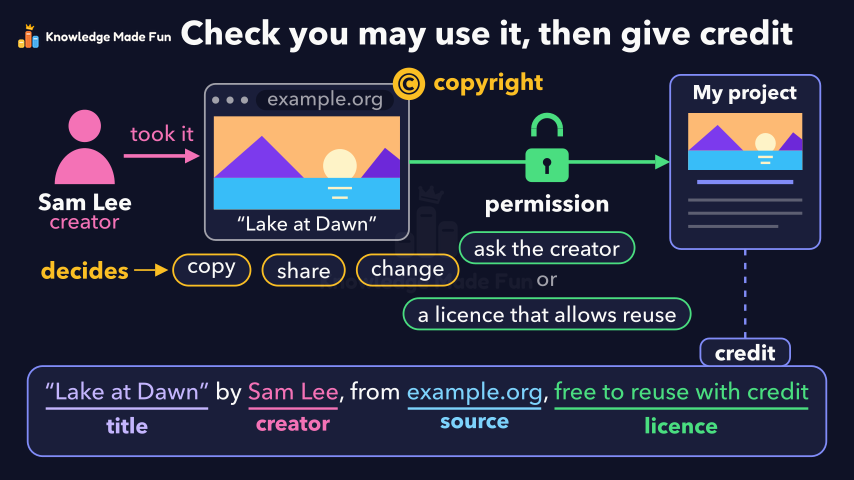 1 min 3 s
Copyright and Giving Credit
Grade 6 · 1 min 3 s 1 min 10 s
Energy Is Never Used Up
Grade 6 · 1 min 10 s
- All Grade 6 Applied Design, Skills and Technologies lessons
- Create a free account to watch three lessons a day, no payment and no card.