Lesson · Grade 5 · Social Studies
Three Levels of Government
- Grade 5
- Social Studies
- 57 s
- British Columbia
- BC5-SS-11
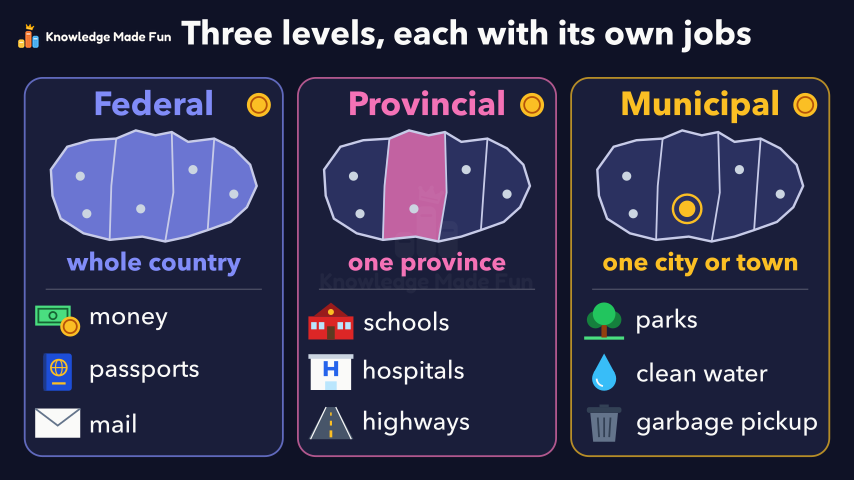
A simple map of a made-up country, split into provinces with a few towns, divides into three cards: federal (the whole country), provincial (one province) and municipal (one city or town). Each card lights up its part of the map and shows three of its jobs as small pictures: money, passports and mail; schools, hospitals and highways; parks, clean water and garbage pickup. Then coins show that most of the money comes from taxes, and the video ends on a one-line recap.
Concept: Three levels of government and what each does
Anyone can watch two lessons on the website without an account. Signing in is free, no payment and no card, and opens three a day; Plus has no limit.
Loading
In one sentence
The question this lesson answers
Who looks after the places where we live?
Some countries are split into parts called provinces.
Transcript
What the lesson says
Who looks after the places where we live?
Some countries are split into parts called provinces.
Each province has cities and towns in it.
There are three levels of government: federal, provincial and municipal.
The federal government looks after the whole country.
It looks after things like money, passports and mail.
A provincial government looks after one province.
It looks after things like schools, hospitals and highways.
A municipal government looks after one city or town.
It looks after things like parks, clean water and garbage pickup.
Most of the money for all these jobs comes from taxes.
Many Indigenous peoples have their own governments too.
Federal, provincial and municipal governments each have their own jobs.
Curriculum
Where this fits
- British Columbia, Grade 5
Social Studies, Government and land: levels of government (First Peoples, federal, provincial, and municipal), their main functions, and sources of fundingBC5-SS-11
The outcomes and strands follow the British Columbia curriculum.
Keep going
 1 min 1 s
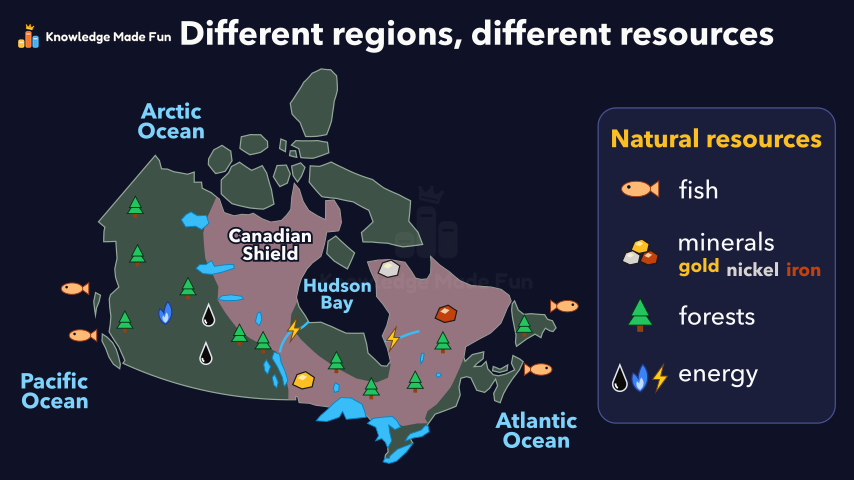
Canada's Natural Resources: What Is Found Where
Grade 5 · 1 min 1 s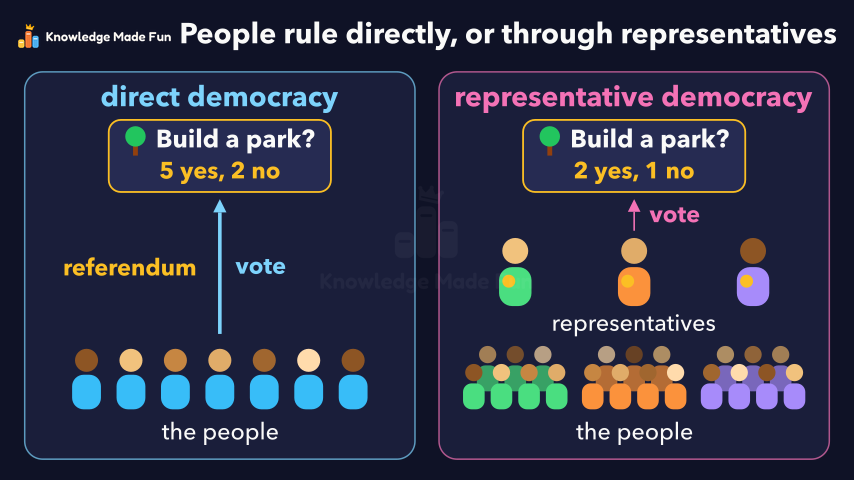 1 min 2 s
Direct and Representative Democracy
Grade 5 · 1 min 2 s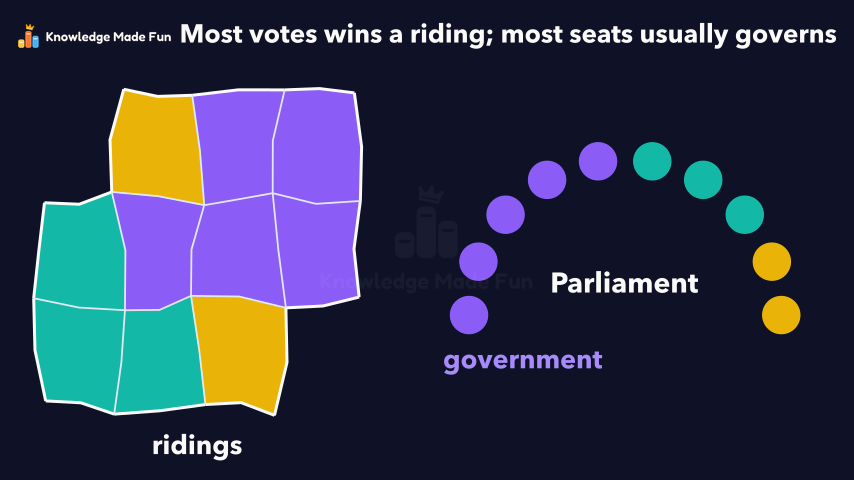 1 min 7 s
How an Election Works: Ridings, Parties and Votes
Grade 5 · 1 min 7 s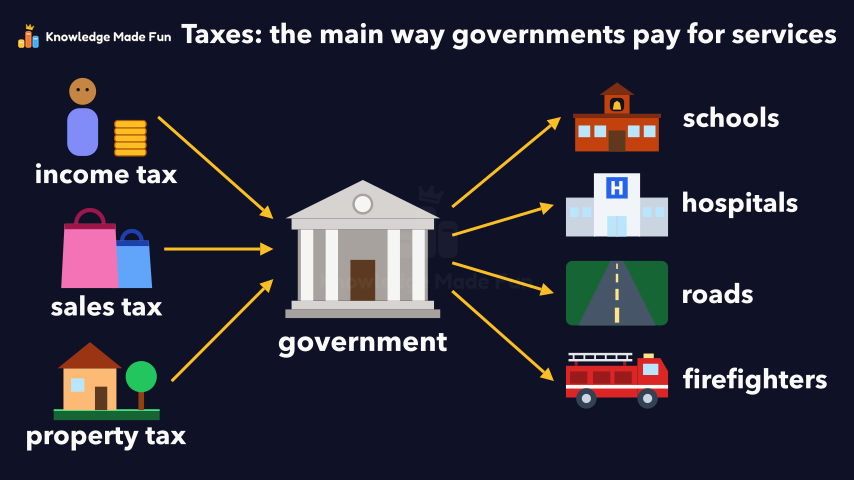 59 s
How Governments Pay for Services: Taxes
Grade 5 · 59 s 1 min 9 s
How Resources Create Jobs and Trade
Grade 5 · 1 min 9 s 1 min 23 s
How Canada's National Symbols Came to Be
Grade 5 · 1 min 23 s 1 min 2 s
Push and pull factors: why people move to a new country
Grade 5 · 1 min 2 s 1 min 22 s
The Charter of Rights and Freedoms
Grade 5 · 1 min 22 s
- All Grade 5 Social Studies lessons
- Create a free account to watch three lessons a day, no payment and no card.