Lesson · Grade 10 · Foundations of Mathematics and Pre Calculus
Solving a System by Graphing: The Point Both Lines Share
- Grade 10
- Foundations of Mathematics and Pre Calculus
- 2 min 8 s
- British Columbia
- BC10-MA-24
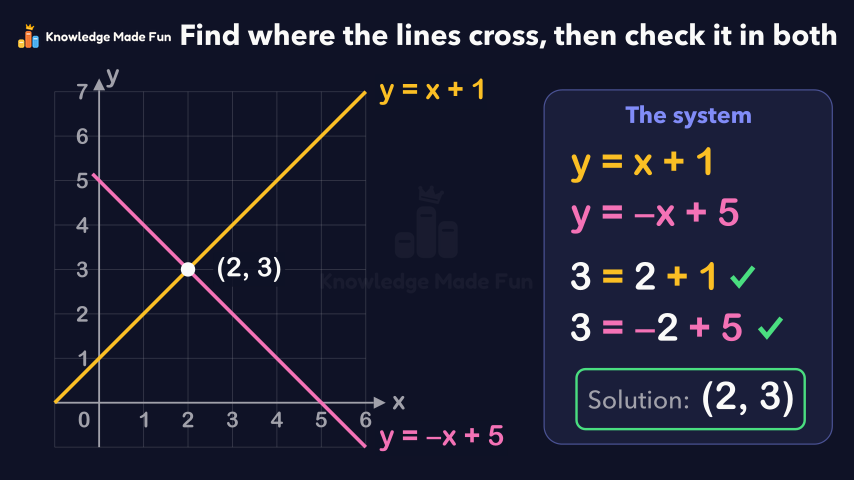
The video graphs y = x + 1 and y = −x + 5 from their y-intercepts and slopes, reads their crossing point (2, 3) from the grid, and checks it in both equations (3 = 2 + 1 and 3 = −2 + 5) to show that this ordered pair is the solution. It then shows that parallel lines with the same slope never meet, so that system has no solution, and that a rough reading of a crossing between grid lines can be wrong: (1.5, 2.5) fails the check, while the exact point (4/3, 7/3) passes in both equations.
Anyone can watch two lessons on the website without an account. Signing in is free, no payment and no card, and opens three a day; Plus has no limit.
Loading
In one sentence
The question this lesson answers
A system of linear equations is two or more equations with the same unknowns. Linear means each graph is a straight line.
Ours is y equals x plus 1, and y equals negative x plus 5.
Transcript
What the lesson says
A system of linear equations is two or more equations with the same unknowns. Linear means each graph is a straight line.
Ours is y equals x plus 1, and y equals negative x plus 5.
A solution is an ordered pair, x and y, that makes both equations true at once.
Line one crosses the y-axis at 1, its y-intercept. Its slope is 1: up 1 for each 1 to the right.
Line two has y-intercept 5 and slope negative 1: down 1 for each 1 to the right.
The lines cross at one point. From the grid, x is 2 and y is 3.
Put x equals 2 and y equals 3 into the first equation: 3 equals 2 plus 1. True.
In the second: 3 equals negative 2 plus 5. True again.
The point is on both lines, so the ordered pair 2, 3 is the solution.
Now take y equals x plus 1 and y equals x plus 3. Both have slope 1 but different y-intercepts, so the lines are parallel.
These parallel lines never meet, so this system has no solution.
Be careful when lines cross between grid lines, like y equals x plus 1 and y equals negative 2x plus 5.
A rough reading gives 1.5, 2.5. It fits the first equation, but negative 2 times 1.5, plus 5, is 2, not 2.5.
So that reading is wrong. The exact crossing is four thirds, seven thirds, and it checks in both.
To solve a system by graphing, find where the lines cross, then check that point in both equations.
Curriculum
Where this fits
- British Columbia, Grade 10
Foundations of Mathematics and Pre Calculus 10, Linear relations: systems of linear equationsBC10-MA-24
Previous: Adding an Arithmetic Series by Pairing TermsNext: Solving a System by Substitution
- British Columbia, Grade 11
Foundations of Mathematics 11, Graphical analysis: systems of equationsBC11-MA-29
Previous: Opening Up or Down: Maximum, Minimum and End BehaviourNext: Linear programming: the best answer is at a corner
This lesson is also listed in Grade 11.
The outcomes and strands follow the British Columbia curriculum.
Keep going
 2 min 18 s
Adding an Arithmetic Series by Pairing Terms
Grade 10 · 2 min 18 s 2 min 11 s
Arithmetic Sequences Are Linear: The Common Difference Is the Slope
Grade 10 · 2 min 11 s 2 min 4 s
Arithmetic sequences: first term and common difference
Grade 10 · 2 min 4 s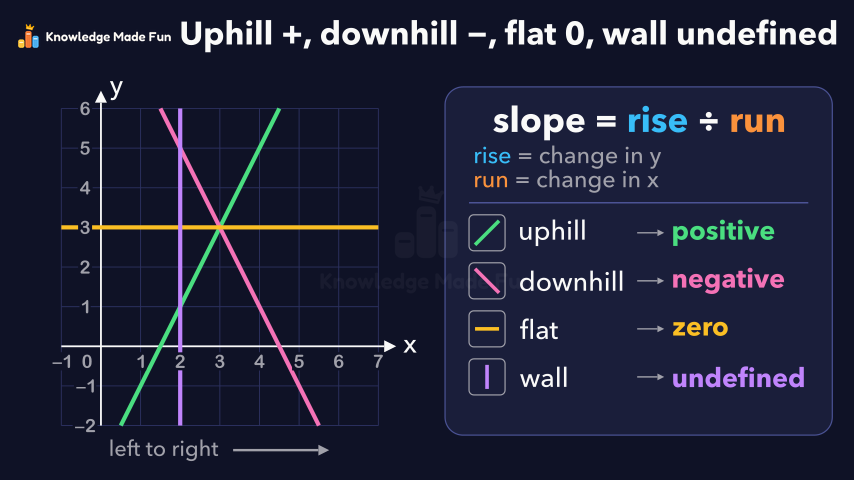 2 min 8 s
Four Kinds of Slope: Uphill, Downhill, Flat and a Wall
Grade 10 · 2 min 8 s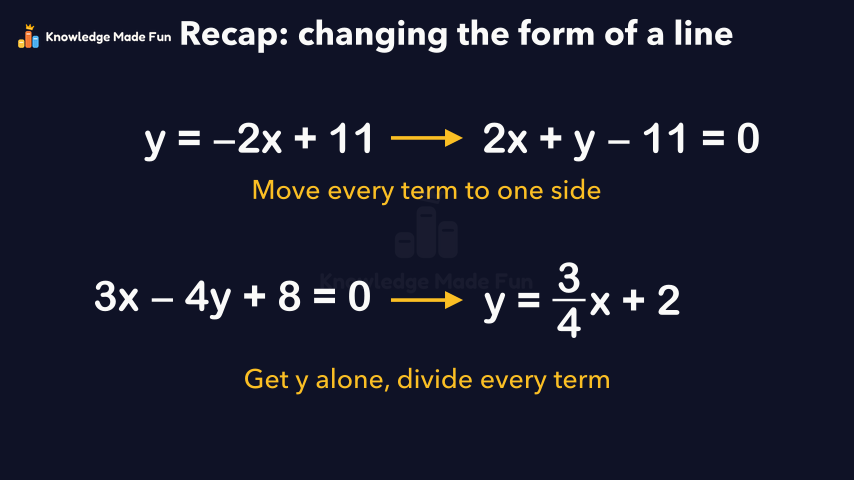 2 min 16 s
General form, and changing between the forms of a line
Grade 10 · 2 min 16 s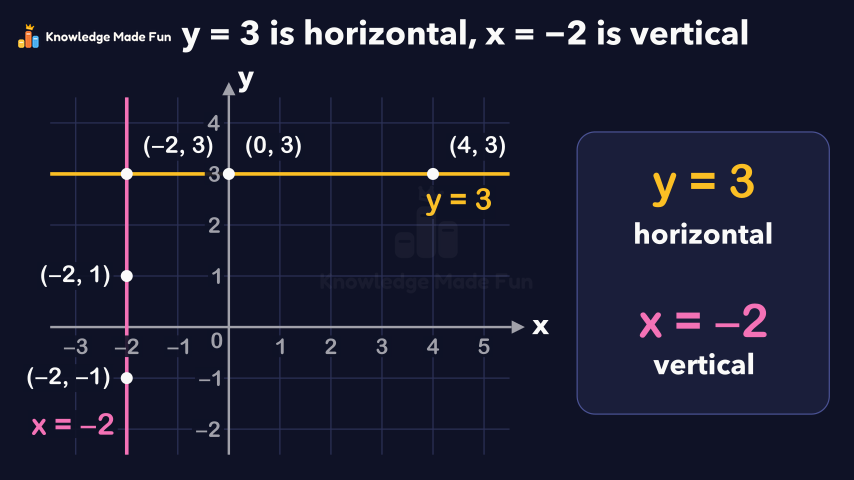 2 min 1 s
Horizontal and vertical lines: y = 3 and x = −2
Grade 9 · 2 min 1 s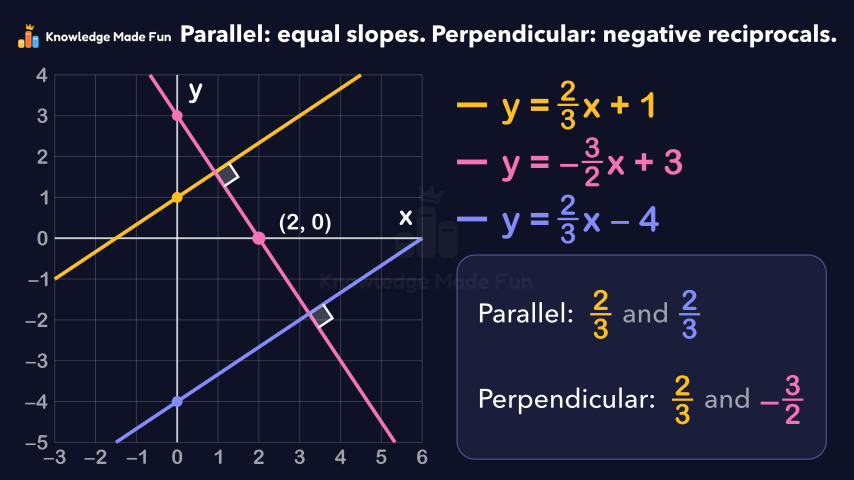 2 min 5 s
Parallel and perpendicular lines: equal slopes and negative reciprocals
Grade 10 · 2 min 5 s 2 min 4 s
Point-slope form: a line from one point and its slope
Grade 10 · 2 min 4 s
- All Grade 10 Foundations of Mathematics and Pre Calculus lessons
- Create a free account to watch three lessons a day, no payment and no card.