Lesson · Grade 8 · Mathematics
Building a 3D Object from Its Top, Front and Side Views
- Grade 8
- Mathematics
- 1 min 51 s
- British Columbia
- BC8-MA-35
Using the top, front and side views of one object made of cubes, the video works out the height of each stack: the footprint comes from the top view, the tallest stack in each column from the front view, and the tallest stack in each row from the side view. It shows the common mistake of guessing heights without the side view, builds and checks an 8-cube answer, then adds one cube to make a 9-cube object with exactly the same three views.
Anyone can watch two lessons on the website without an account. Signing in is free, no payment and no card, and opens three a day; Plus has no limit.
Loading
In one sentence
The question this lesson answers
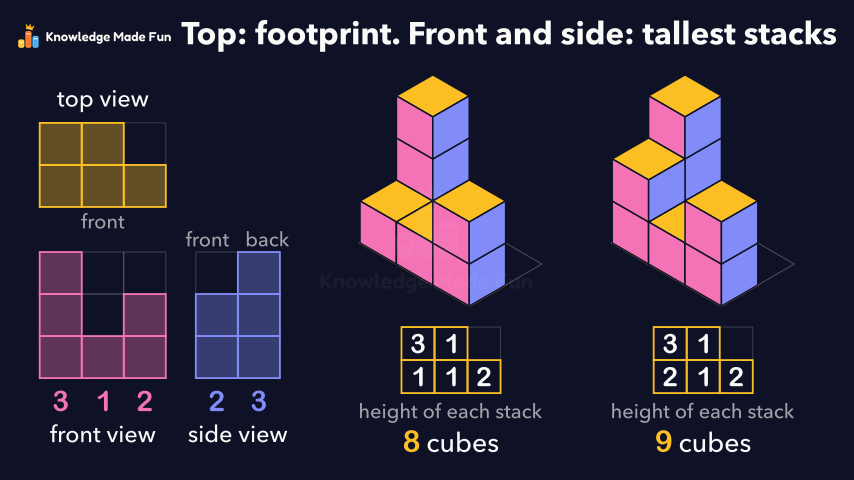
These three views show one object made of cubes. What is the object?
Each view looks straight at the object: the top view from above, the front view from the front, and the side view from the right.
Transcript
What the lesson says
These three views show one object made of cubes. What is the object?
Each view looks straight at the object: the top view from above, the front view from the front, and the side view from the right.
The top view shows the footprint: the squares where cubes stand.
Each square holds a stack of at least one cube, so we need to find five heights.
The front view shows the tallest stack in each column, left to right: 3, 1 and 2.
The middle column is only 1 cube tall, so both of its stacks have 1 cube.
The right column has one square, so that stack has 2 cubes.
The side view shows the tallest stack in each row, front to back: 2 and 3.
A common mistake: skip the side view and guess the left column's 3 is at the front.
Then the front row would be 3 tall, but the side view says 2, so the 3 is at the back.
The front left stack has 1 or 2 cubes, since the front row only reaches 2. Try 1.
Check: from the front, the columns are 3, 1 and 2, and from the side, the rows are 2 and 3.
In all, 1 plus 1 plus 2 plus 3 plus 1 makes 8 cubes.
Now copy it and add a second cube to the front left stack.
The left column is still 3 and the front row is still 2, so no view changes.
Two different objects, with 8 and 9 cubes, have the same three views.
The top view gives the footprint, and the front and side views give the tallest stacks.
Curriculum
Where this fits
- British Columbia, Grade 8
Mathematics, Geometry and measurement: construction, views, and nets of 3D objectsBC8-MA-35
Previous: Top, Front and Side Views of a 3D ObjectNext: Which Nets Fold into a Cube?
The outcomes and strands follow the British Columbia curriculum.
Keep going
 1 min 12 s
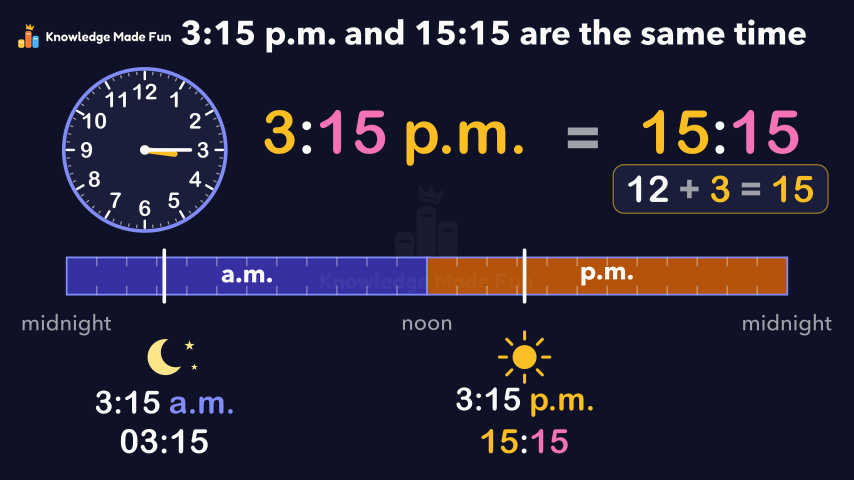
3:15 p.m. or 15:15? Morning, afternoon and the 24-hour clock
Grade 4 · 1 min 12 s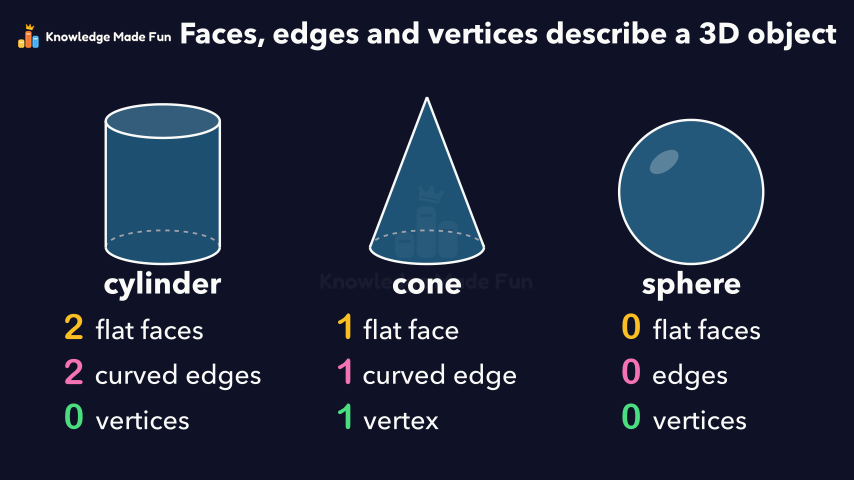 1 min 26 s
3D Objects: Faces, Edges and Vertices
Grade 3 · 1 min 26 s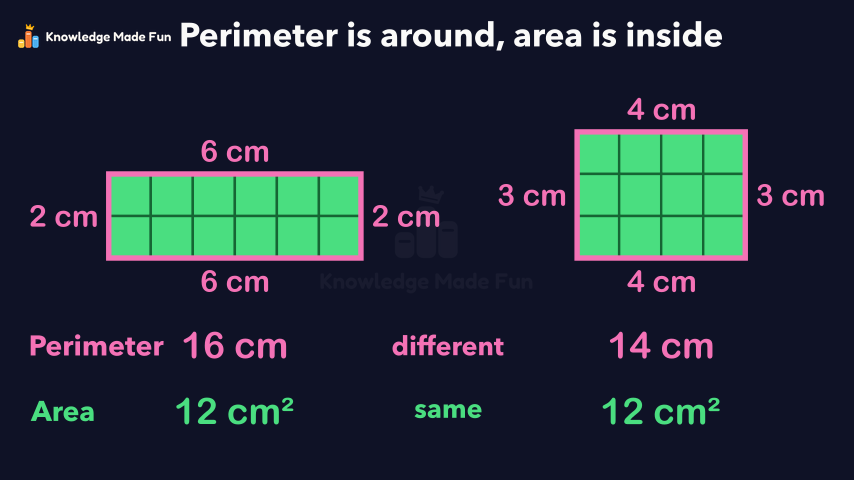 1 min 21 s
Area and Perimeter: What Is the Difference?
Grade 5 · 1 min 21 s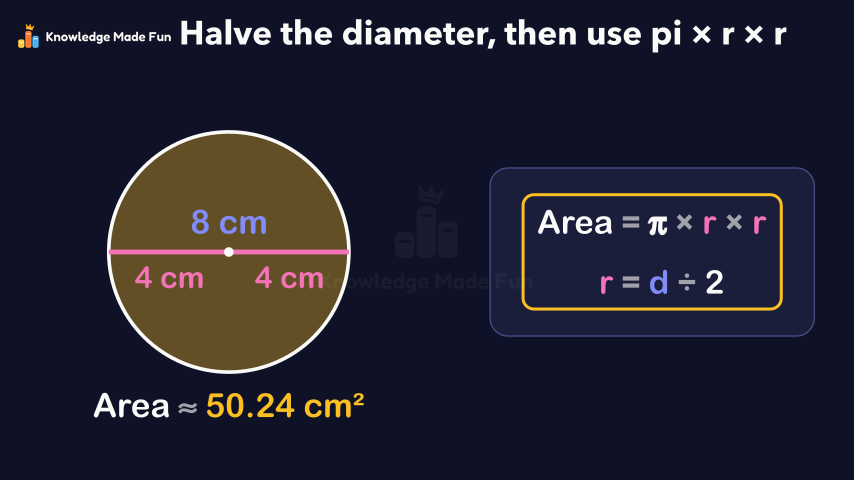 1 min 5 s
Area of a Circle from the Radius or the Diameter
Grade 7 · 1 min 5 s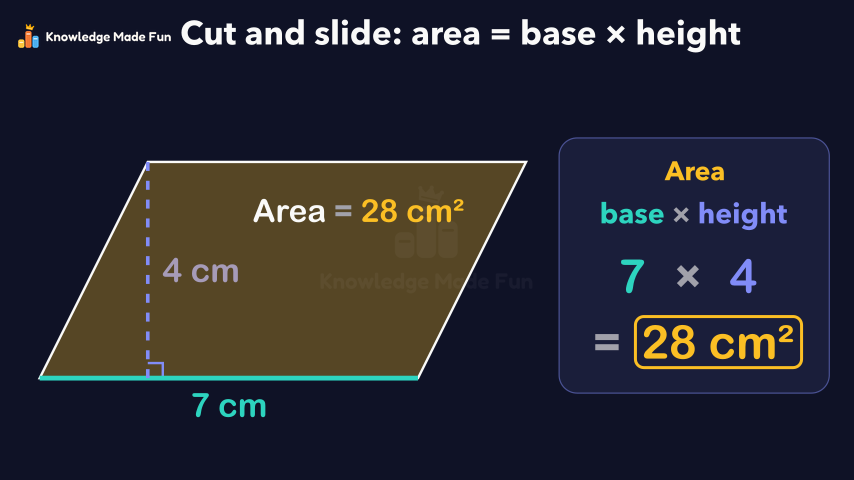 1 min 14 s
Area of a Parallelogram: Cut and Slide into a Rectangle
Grade 6 · 1 min 14 s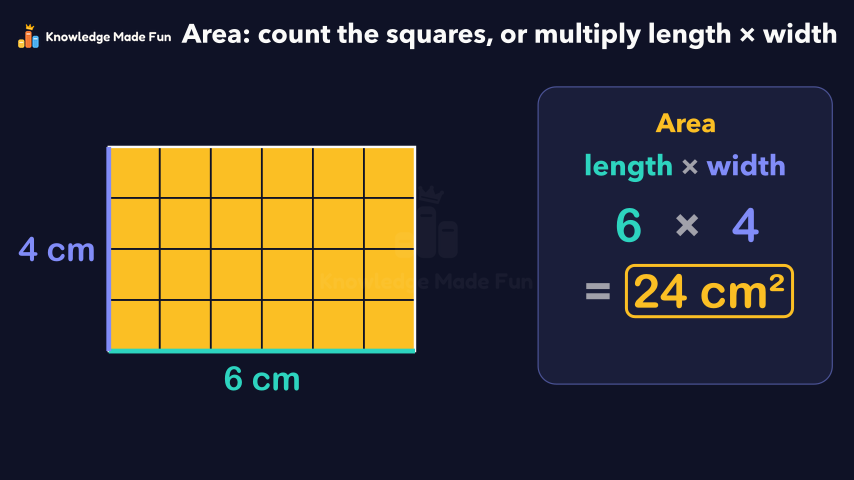 1 min 18 s
Area of a Rectangle: Count the Squares, Then Multiply
Grade 5 · 1 min 18 s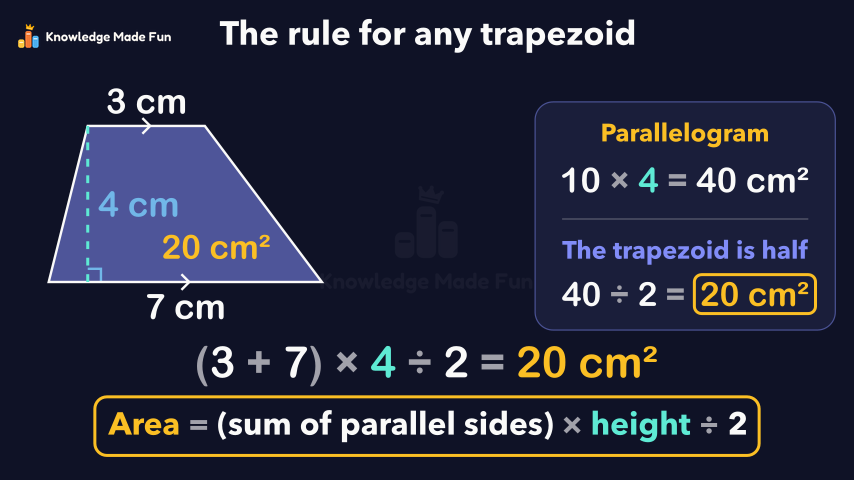 1 min 16 s
Area of a Trapezoid: Two Copies Make a Parallelogram
Grade 6 · 1 min 16 s 1 min 19 s
Area of a Triangle: Half of a Parallelogram
Grade 6 · 1 min 19 s
- All Grade 8 Mathematics lessons
- Try the graph paper, free for everyone, no account needed.
- Create a free account to watch three lessons a day, no payment and no card.